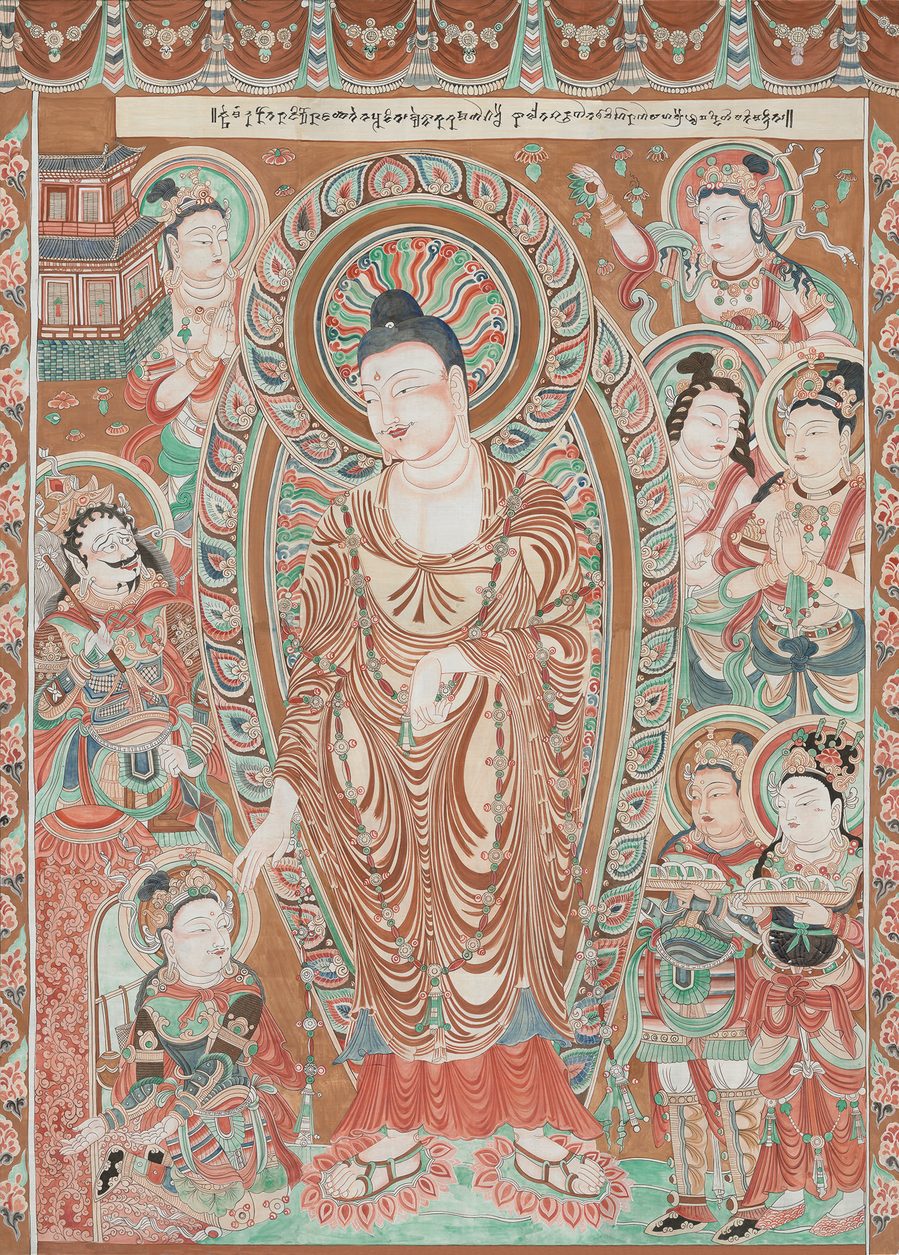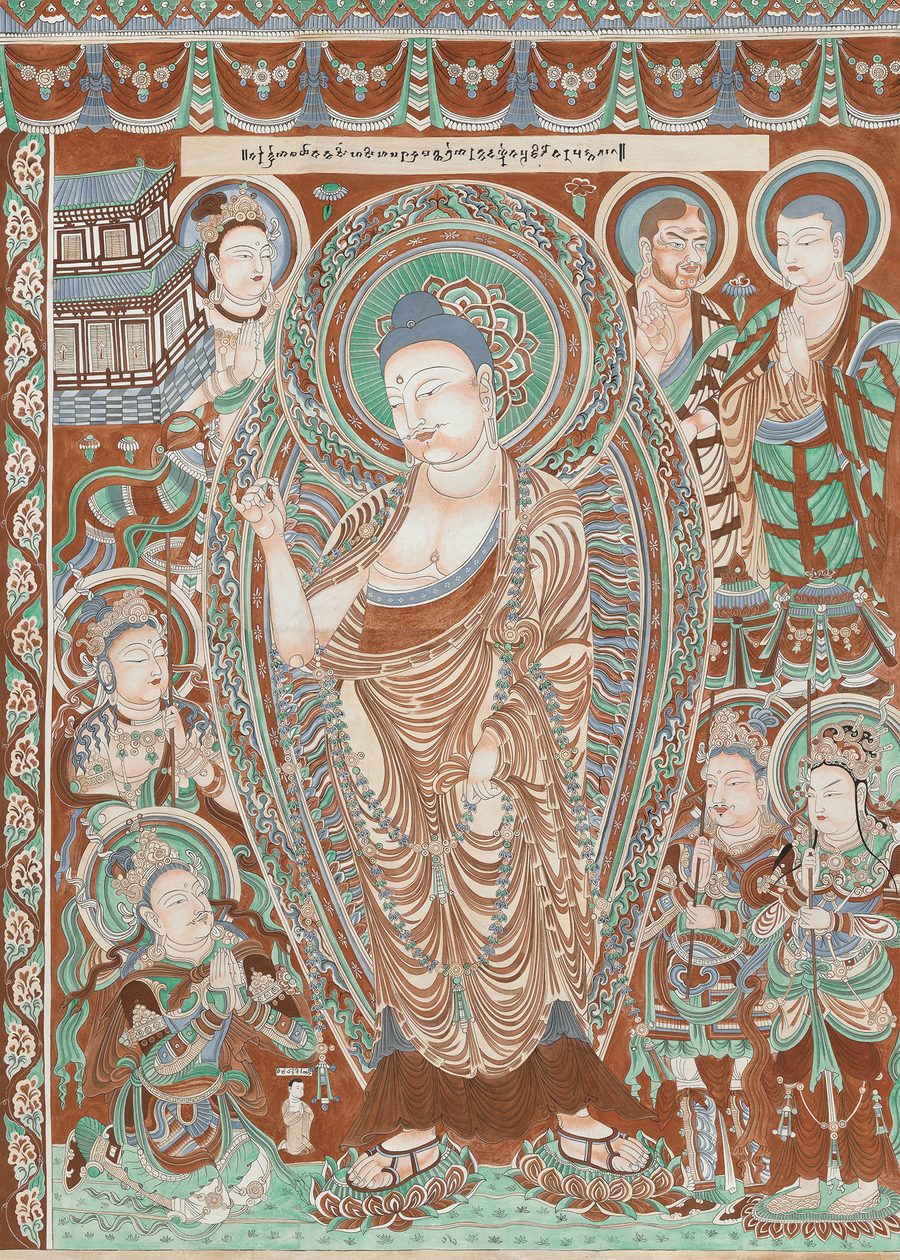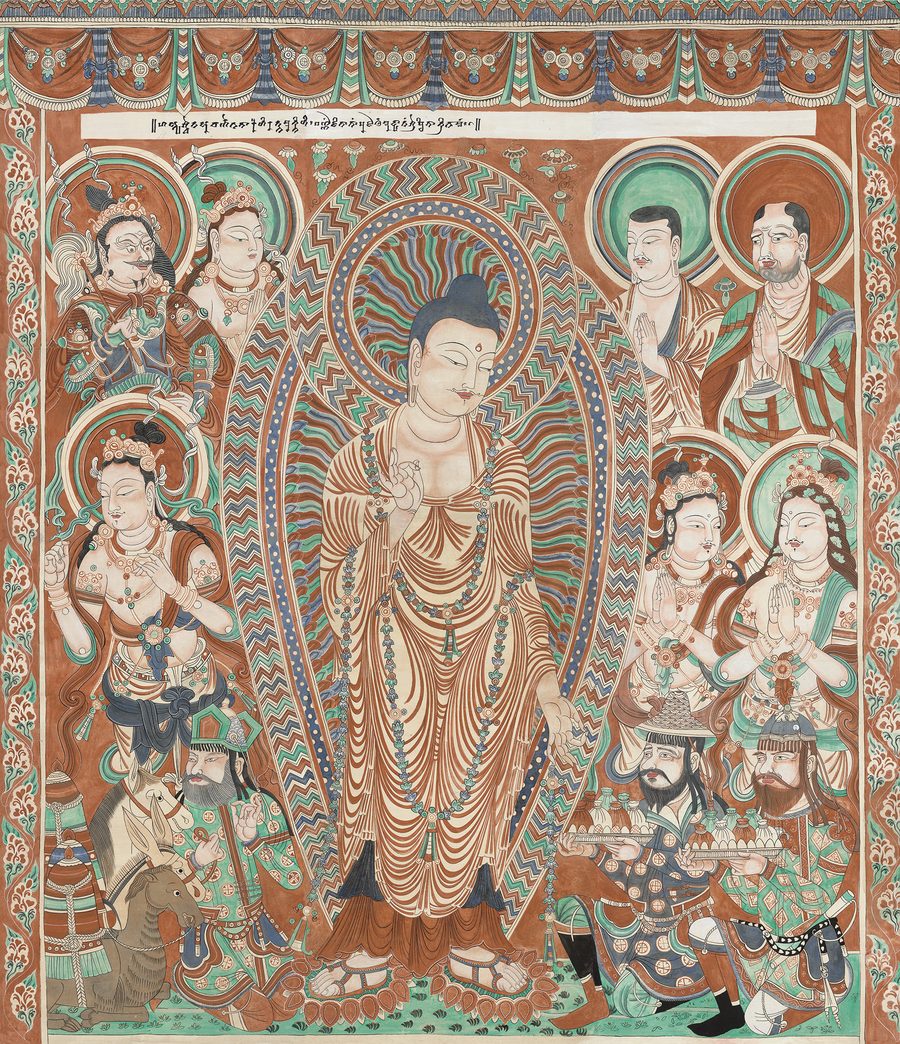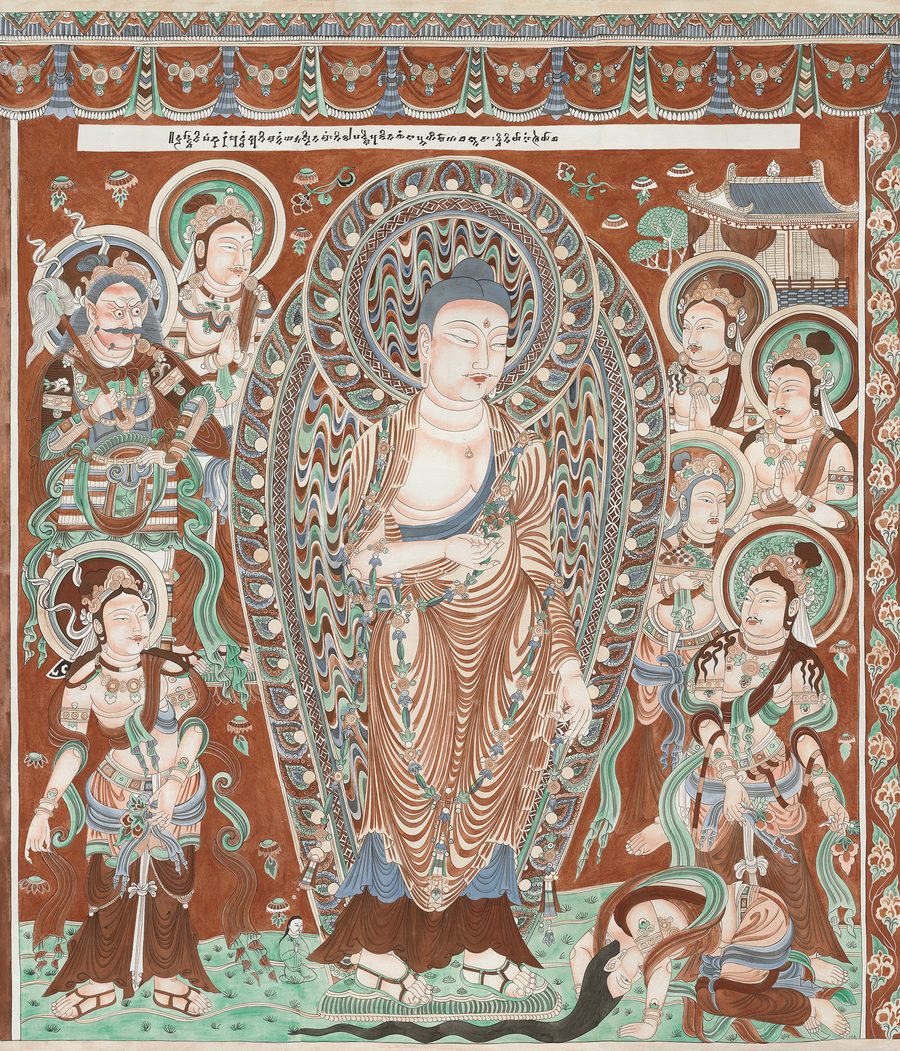
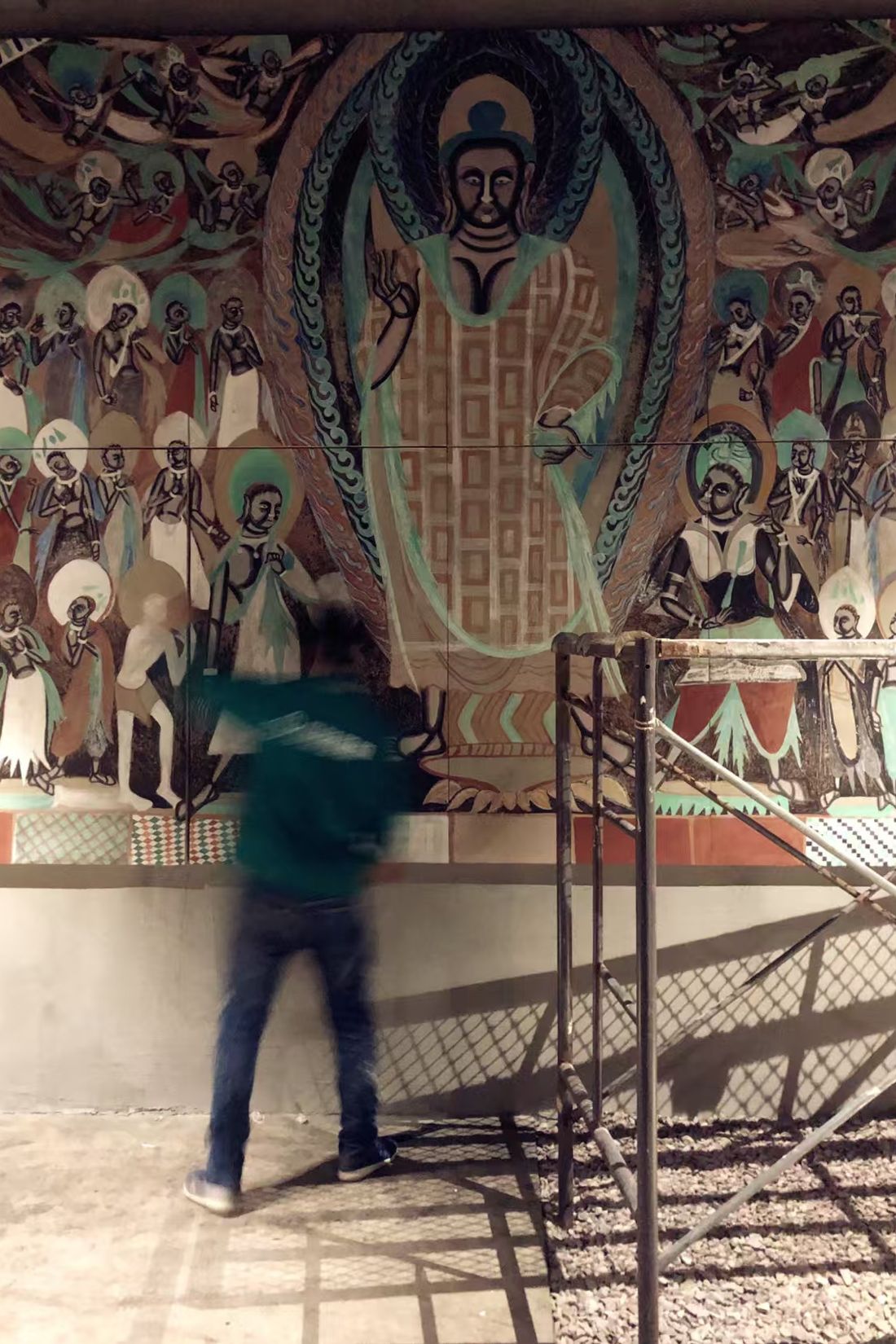
Art · Faith · A living heritage

A thousand years ago,
they painted their faith
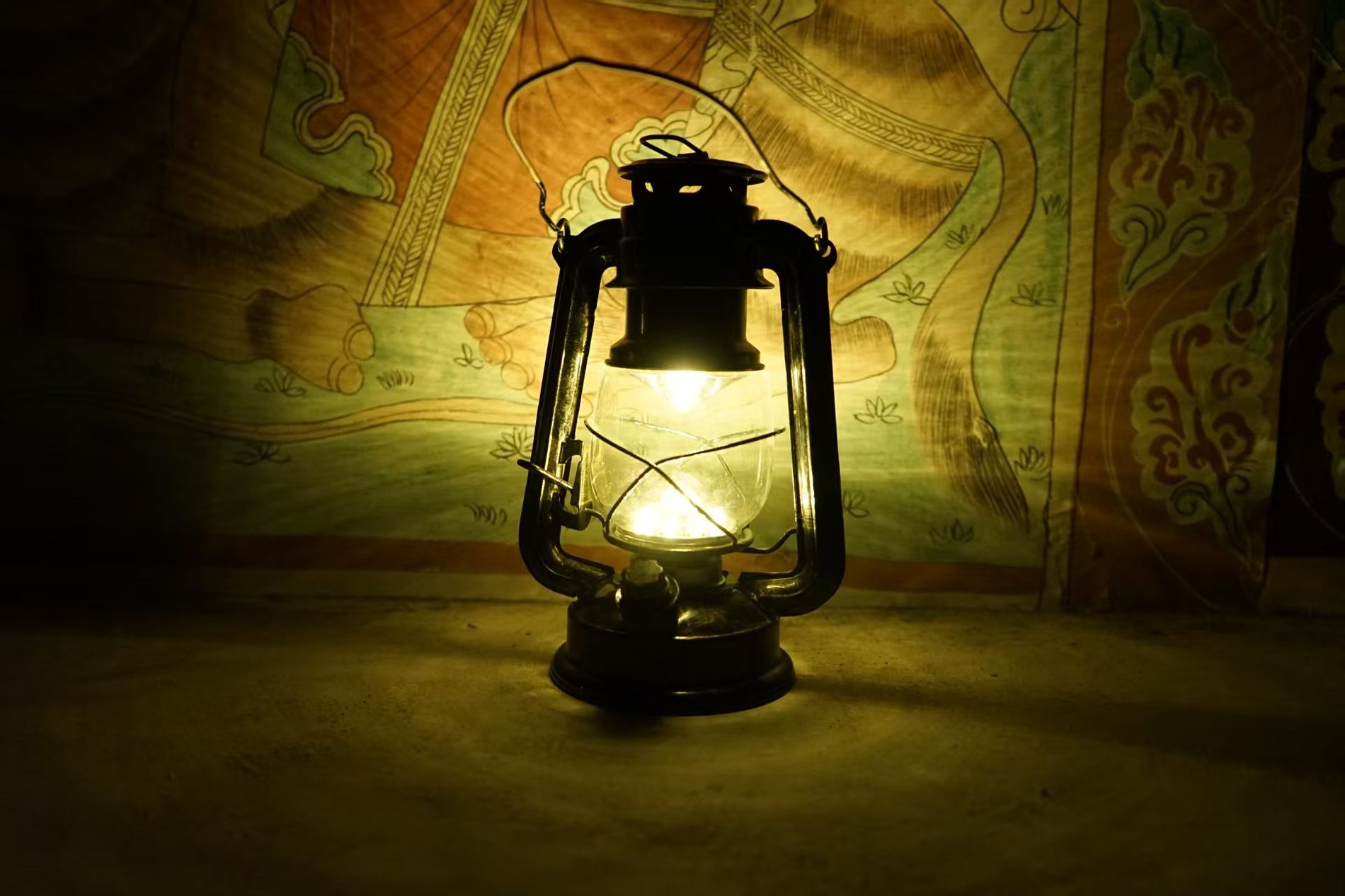
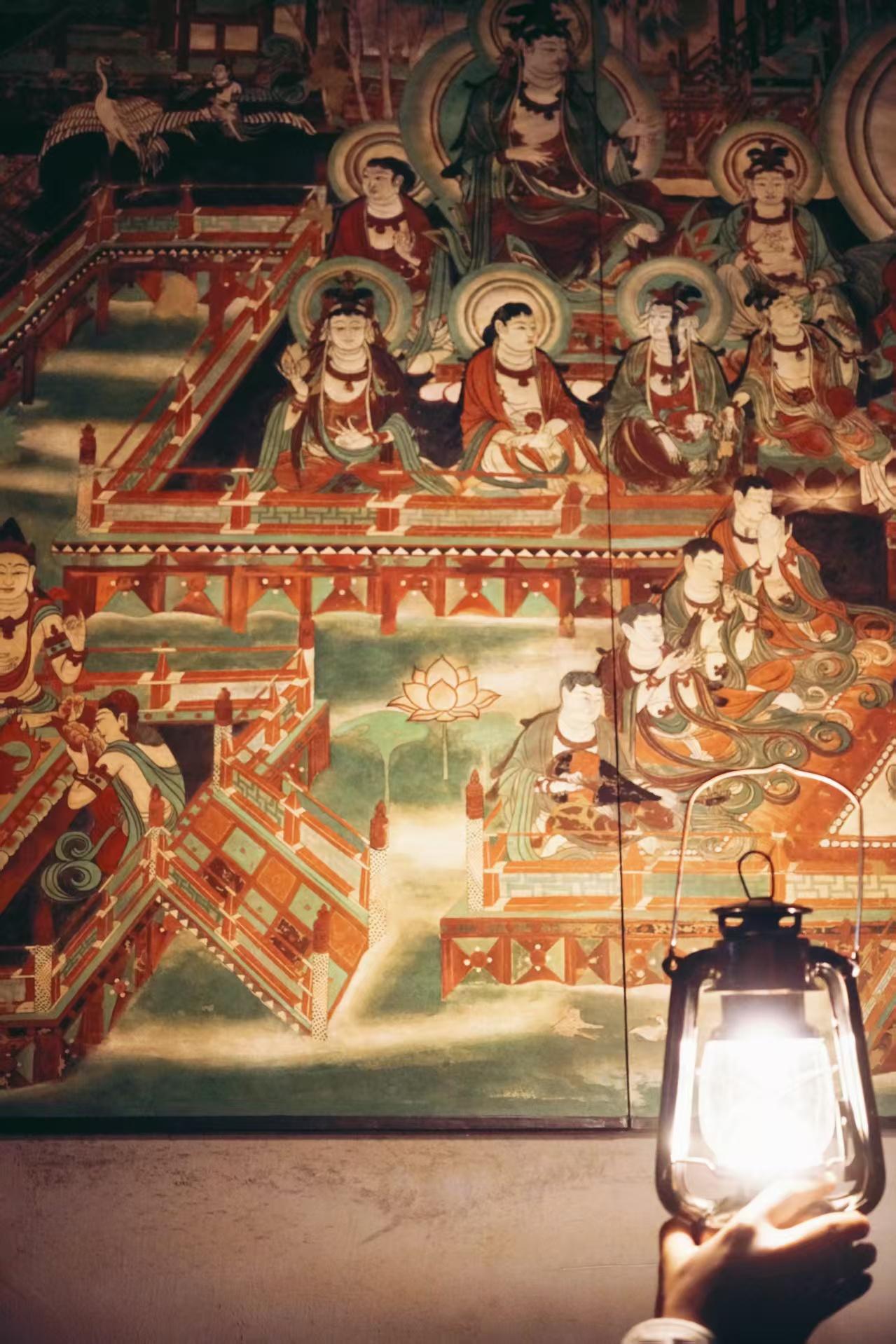
on these walls.Take up this lantern.

Scroll down

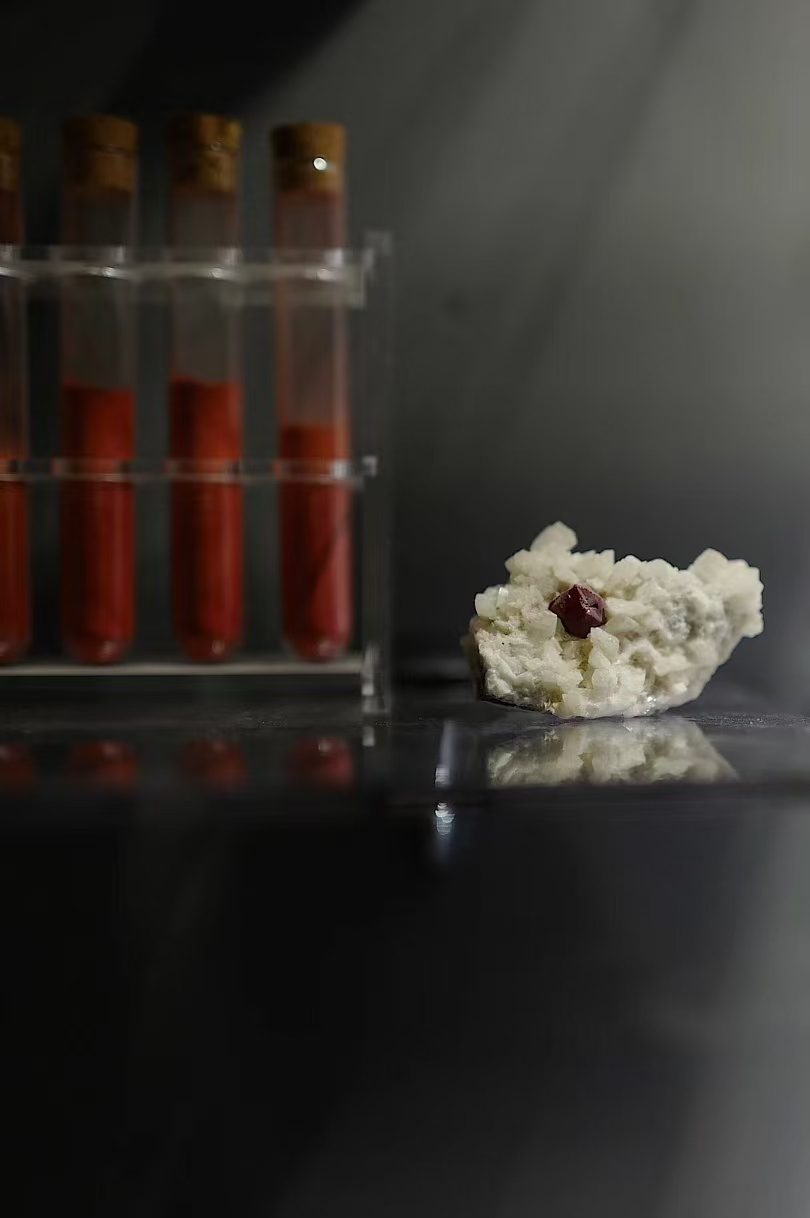
The pigments used in ancient murals were gemstones and minerals.

They are crystals, each refracting light.

As light sweeps across them, the paintings seem to glow from within.

To the people who first saw them, this was no trick of physics. It was the presence of the bodhisattvas.

—Gallery text, “The Colours of Precious Stones”, A Thousand Years of Splendor (TAIS Art Museum, 2020).
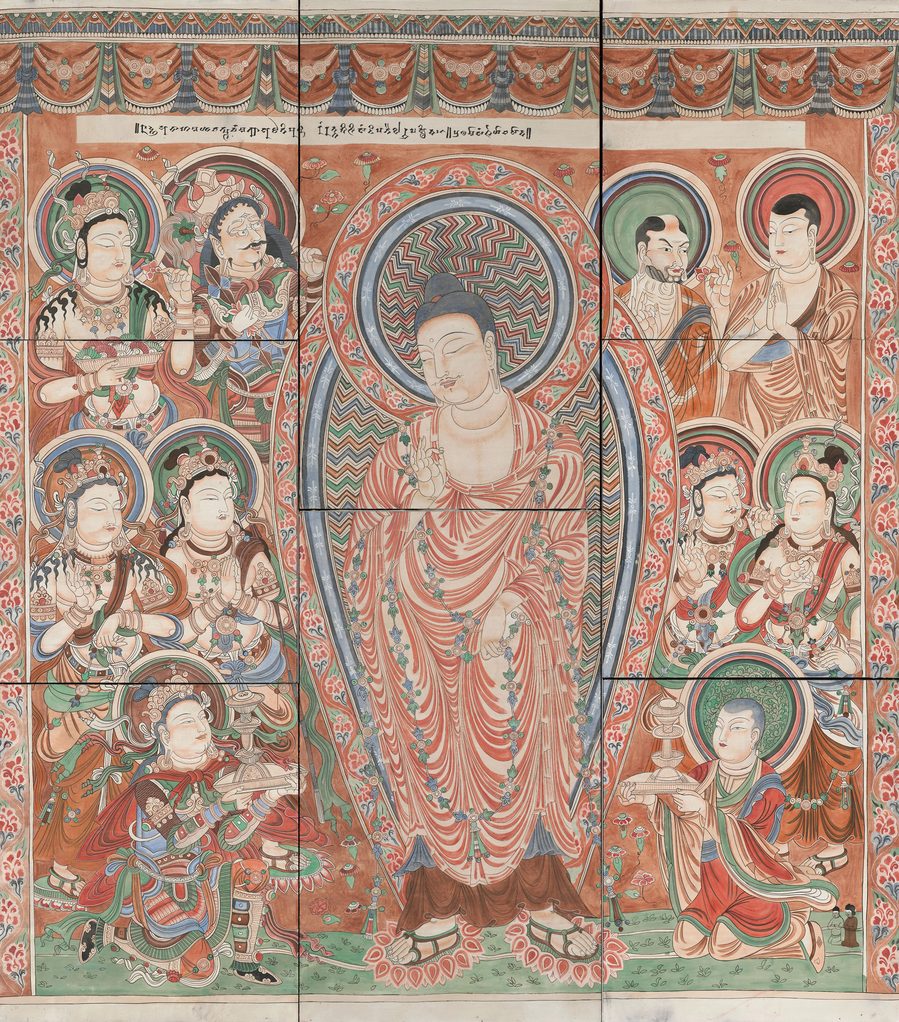
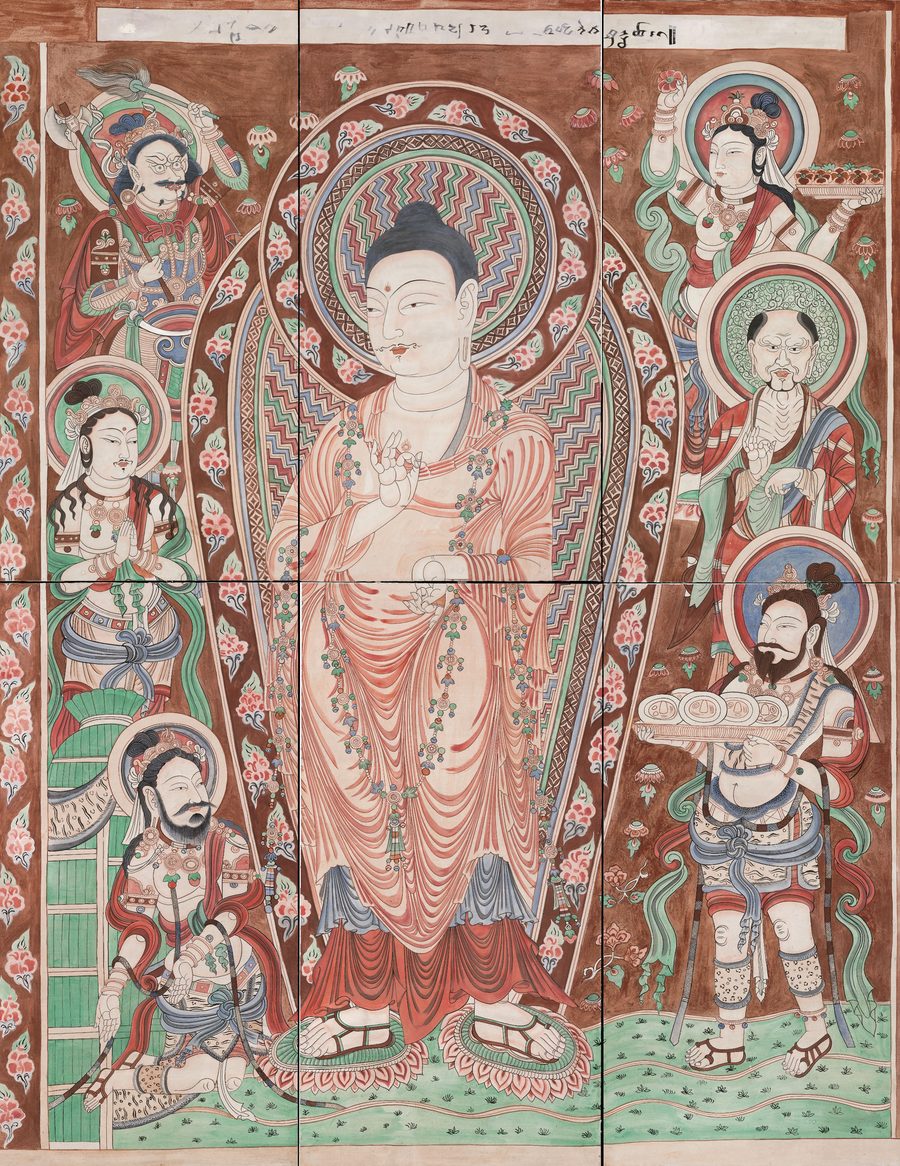
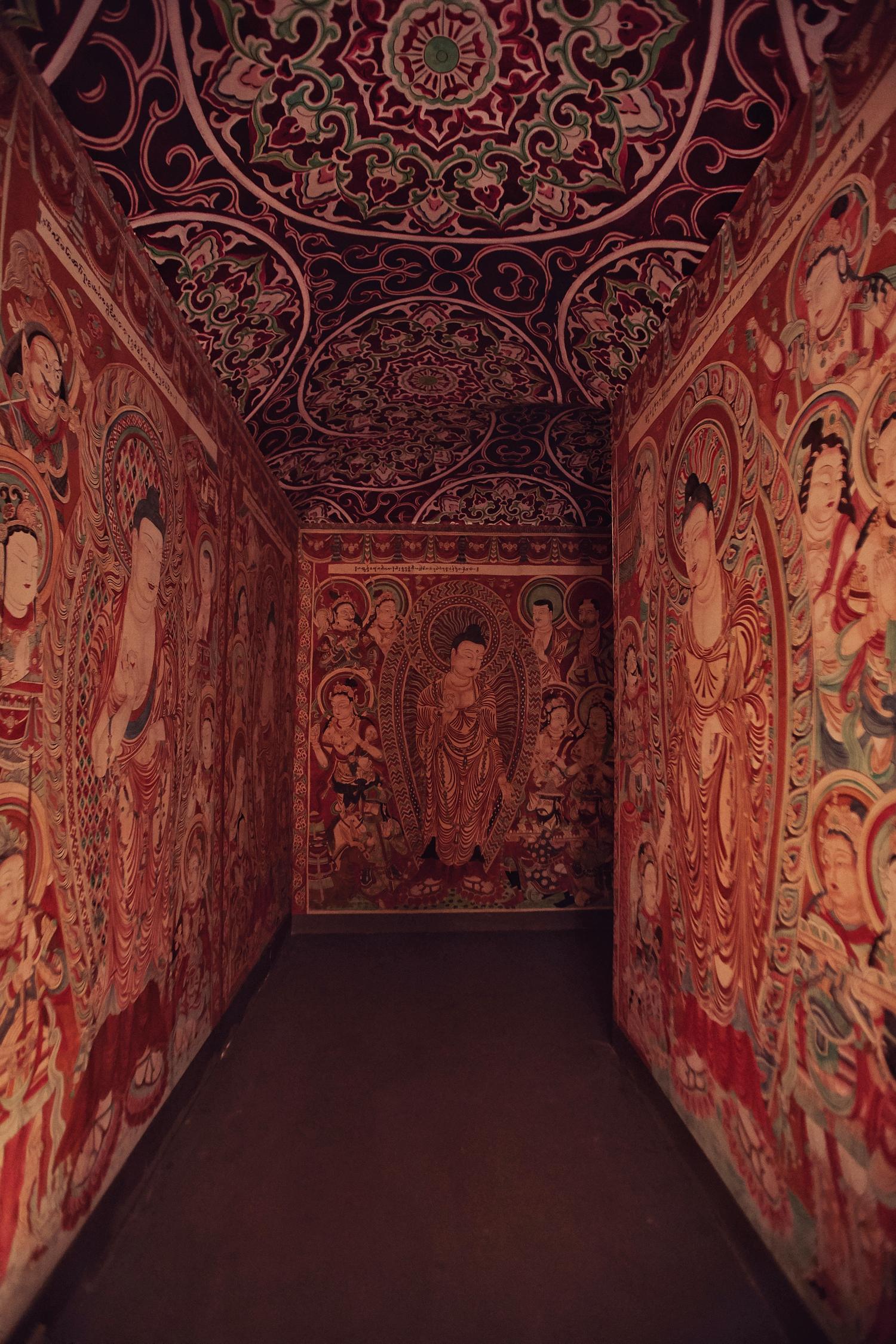
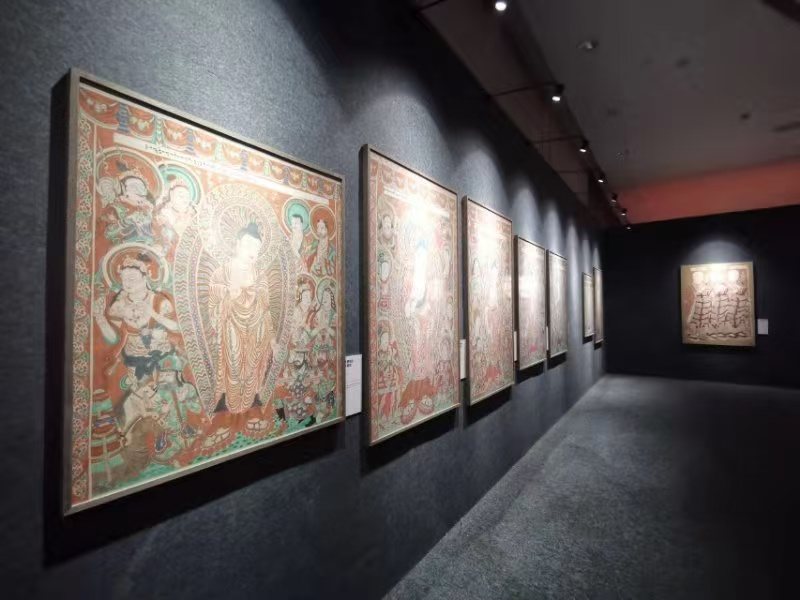
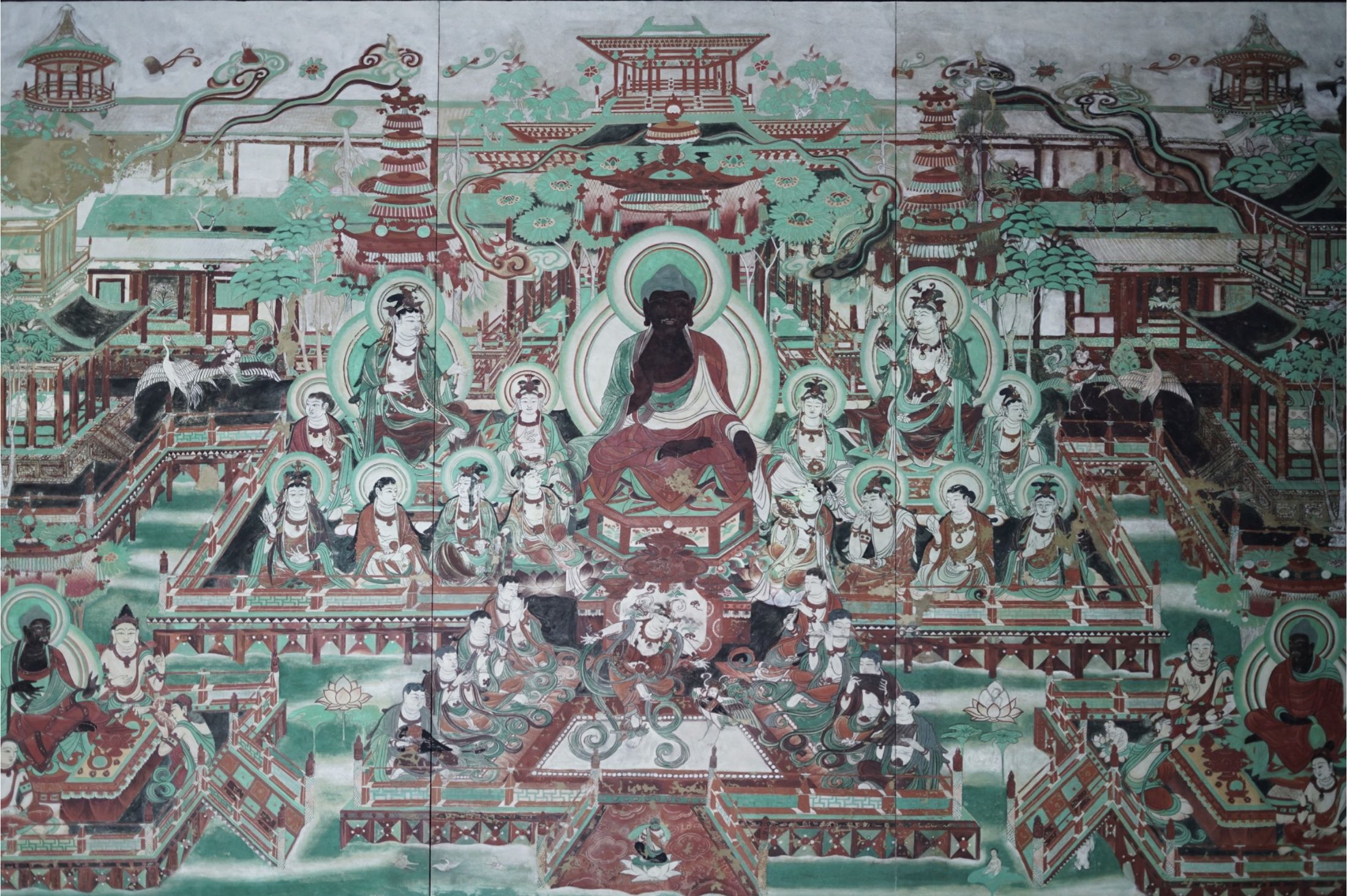
Illustration of the Amitabha Sutra · Full-scale reconstruction in gemstone and mineral pigments

Move your finger or cursor across the wall to illuminate it.

“Illustration of the Amitabha Sutra (Western Pure Land)” | Original: Cave 25 of Yulin Grottoes, Tang Dynasty | Reconstruction: Cheonbuldong Painting Academy, at full scale in gemstone and mineral pigments. Collection: TAIS Art Museum © CHEONBULDONG
2011

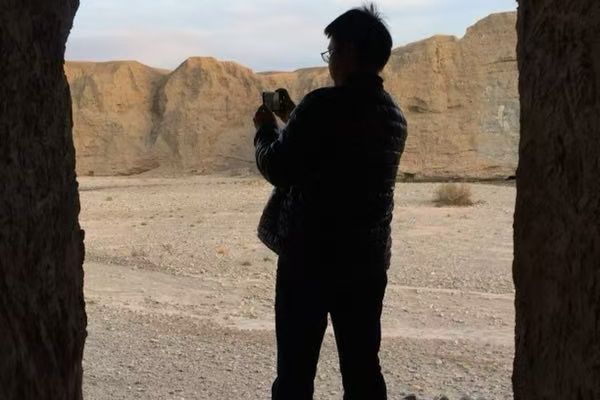
One of our partners visited Dunhuang for the first time.

Dunhuang field trip
Dunhuang field trip
Dunhuang field trip
Dunhuang field trip

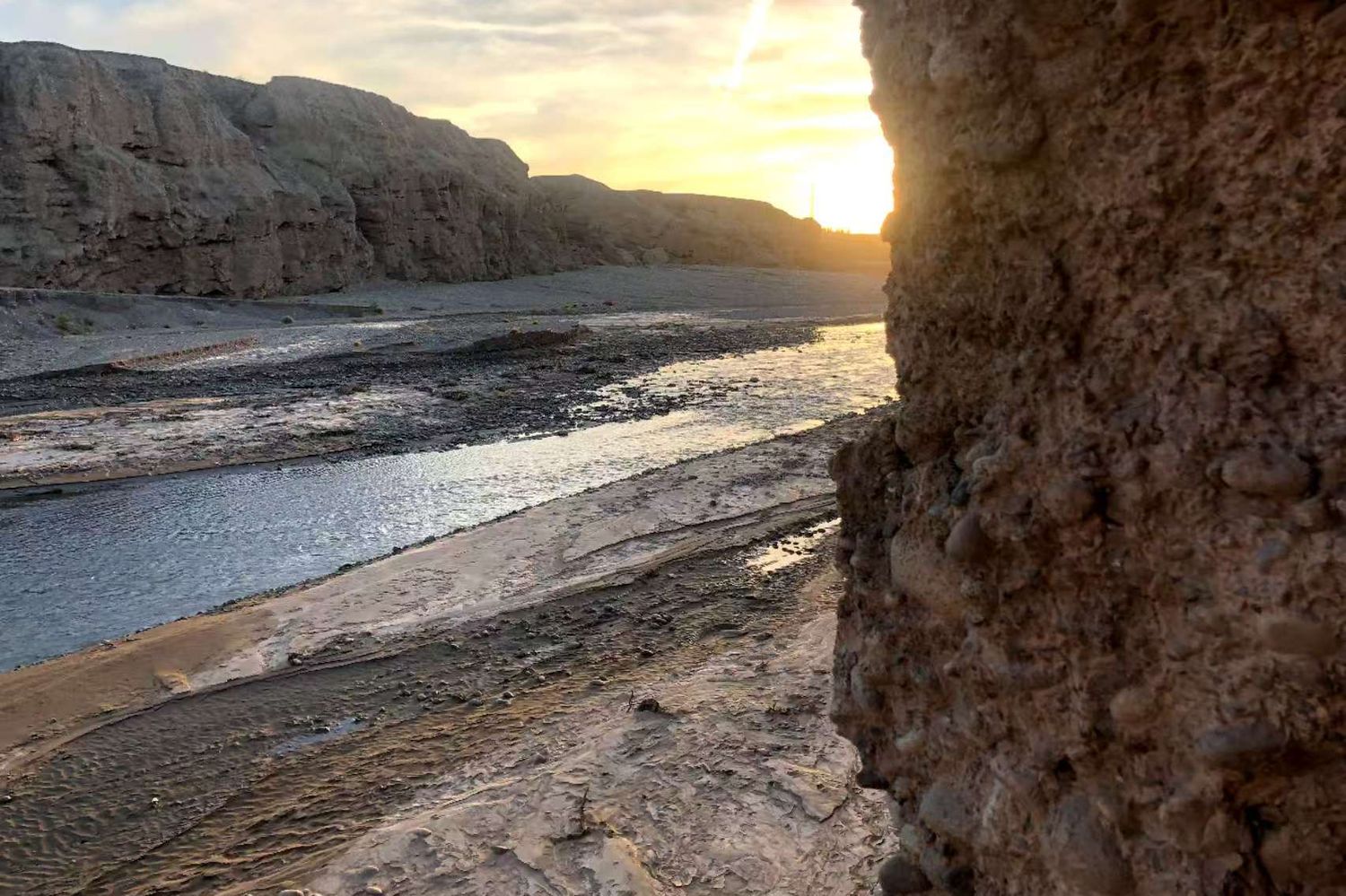
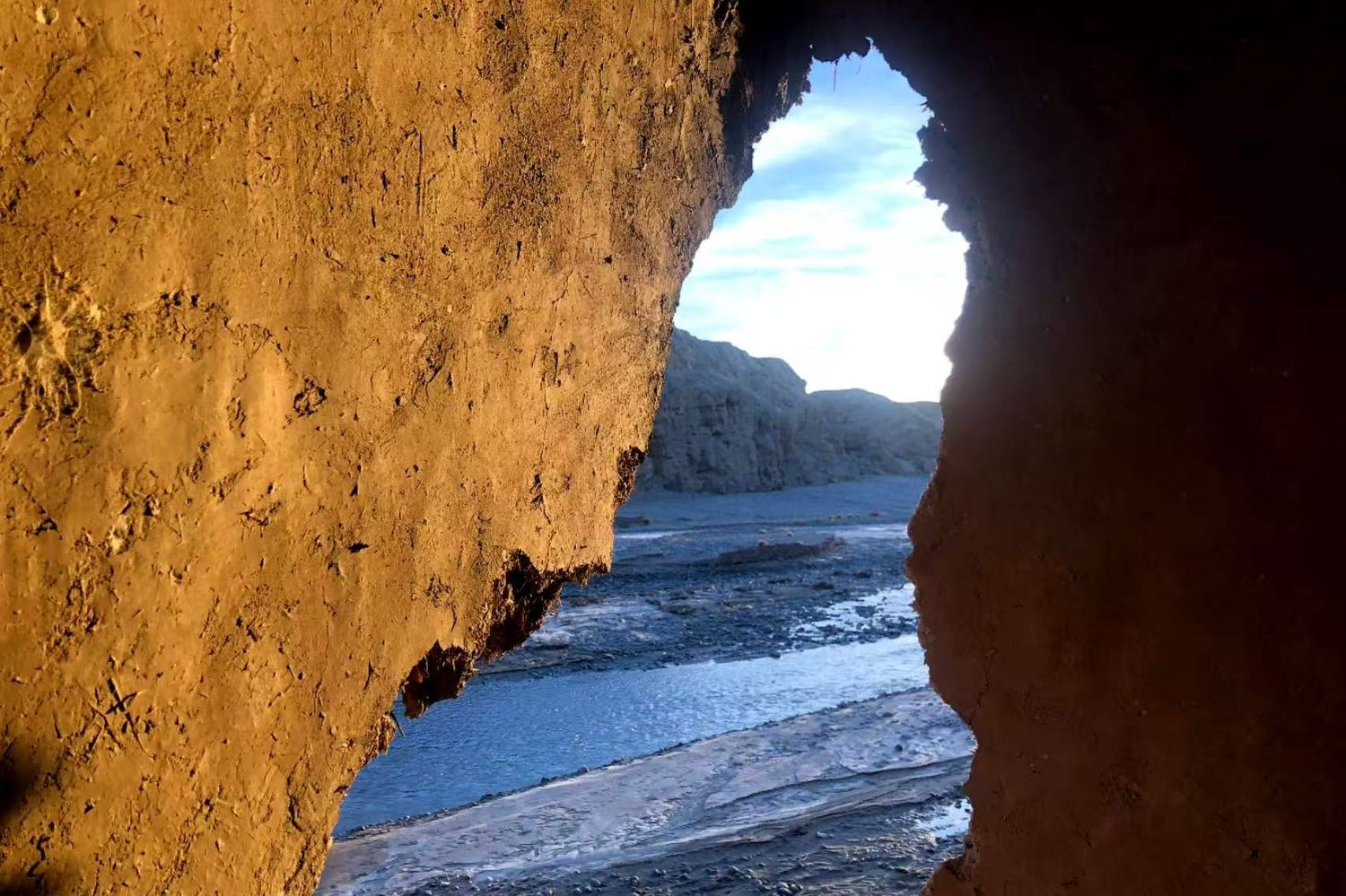
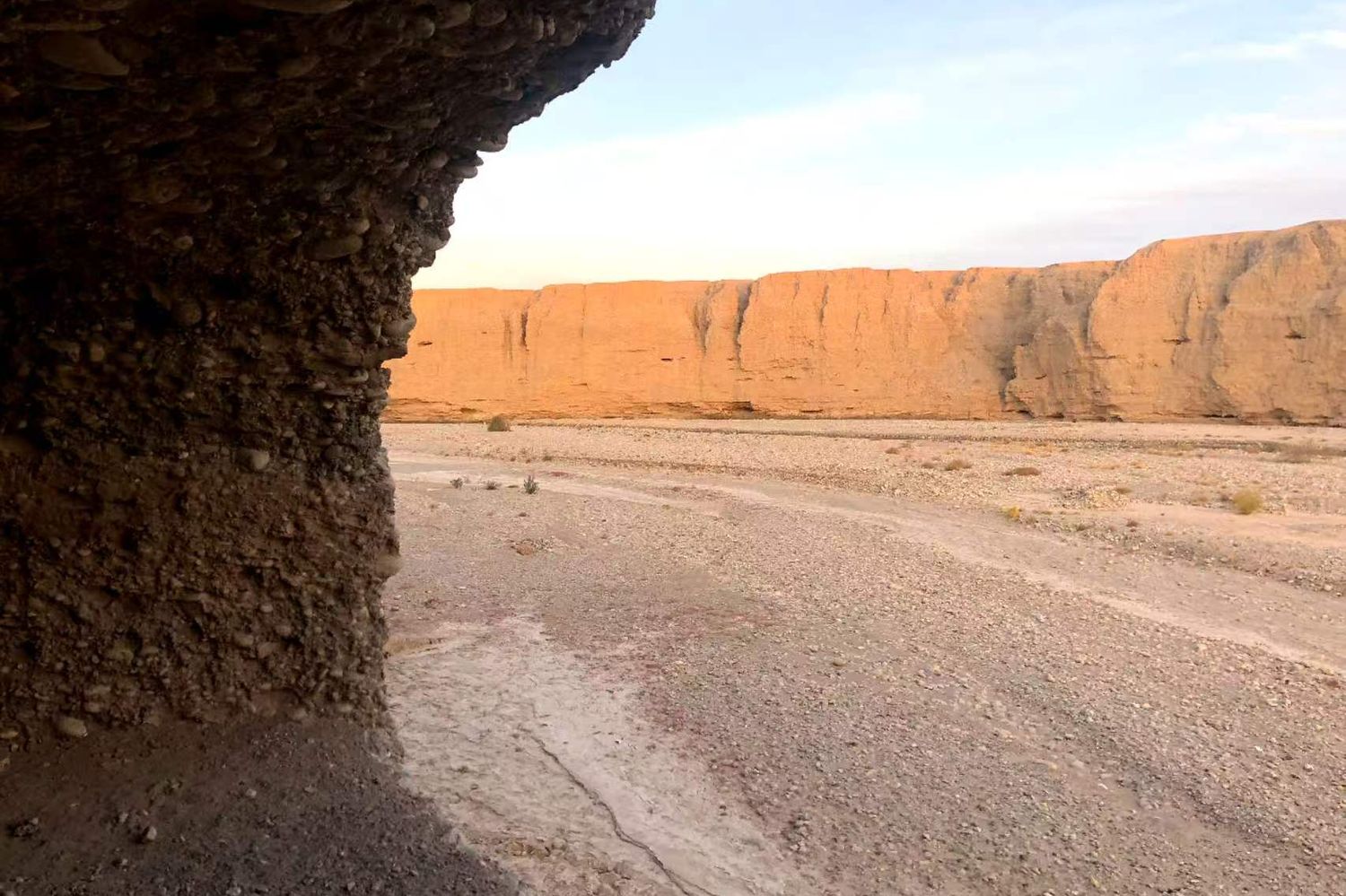
Taken during a field trip to Dunhuang

The cave visits took two days and covered hundreds of kilometres. In one of the specially managed caves, he encountered a term he had never heard before:sutra illustration.

A member of the heritage staff explained: many people in ancient times could not read, so monks told the stories of the Buddhist scriptures through paintings.

“For all my education and degrees, I stood there as uncomprehending as someone who could not read. The beauty of the murals, and the stories behind them, left me overwhelmed.”

—Yu Yizhou, “Why We Reconstruct Murals”, address at the opening of TAIS Art Museum.
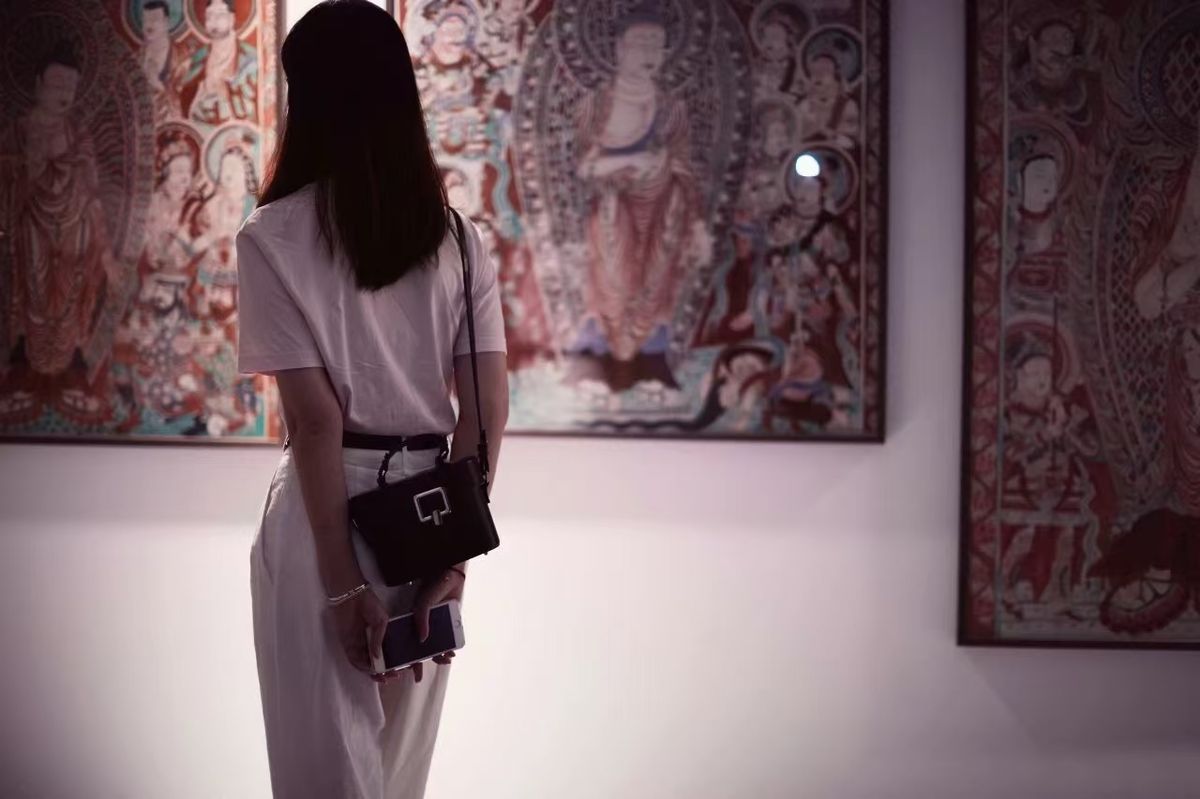
Viewing paintings with a lantern
Viewing paintings with a lantern © CHEONBULDONG

A seed had been planted.

2013

2013, inspired by the poem of grape wine in a luminous cup, the group travelled to the Hexi Corridor and planted vines in the Gobi Desert.

The vines helped stabilise the sand and gave local people a reliable income. Profits from Jade Wine funded scholarships for young researchers studying Silk Road murals.

—Adapted from Yu Yizhou, “Why We Reconstruct Murals”, address at the opening of TAIS Art Museum.

That year, they set out from the Hexi Corridor, passing through Dunhuang and the Jade Gate, crossing the desert to Gaochang and Yanqi, then following the Tianshan Mountains west.

—Gallery text, “Origin”, A Thousand Years of Splendor (TAIS Art Museum, 2020).
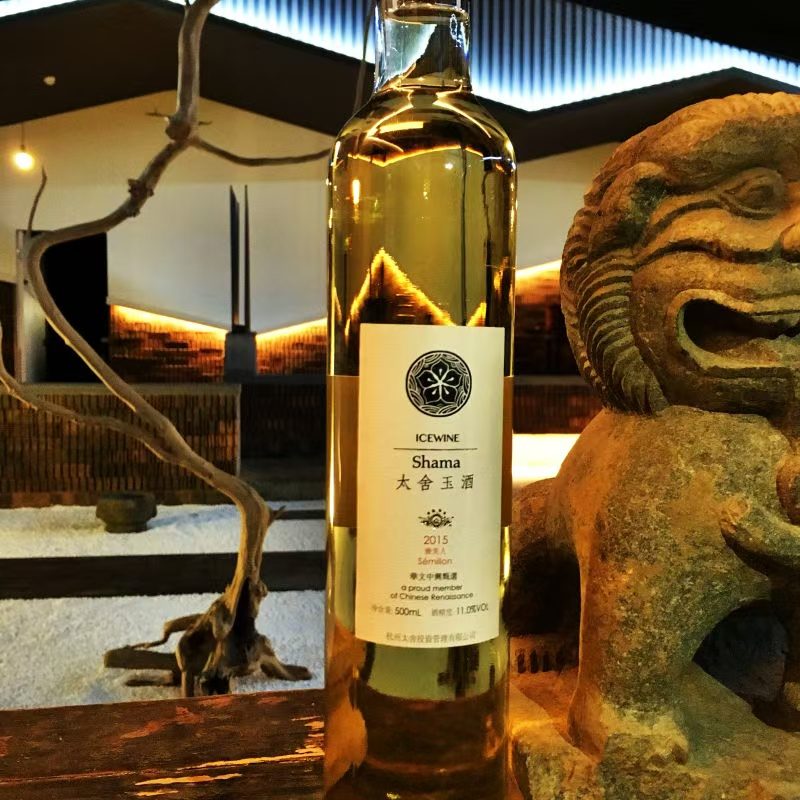
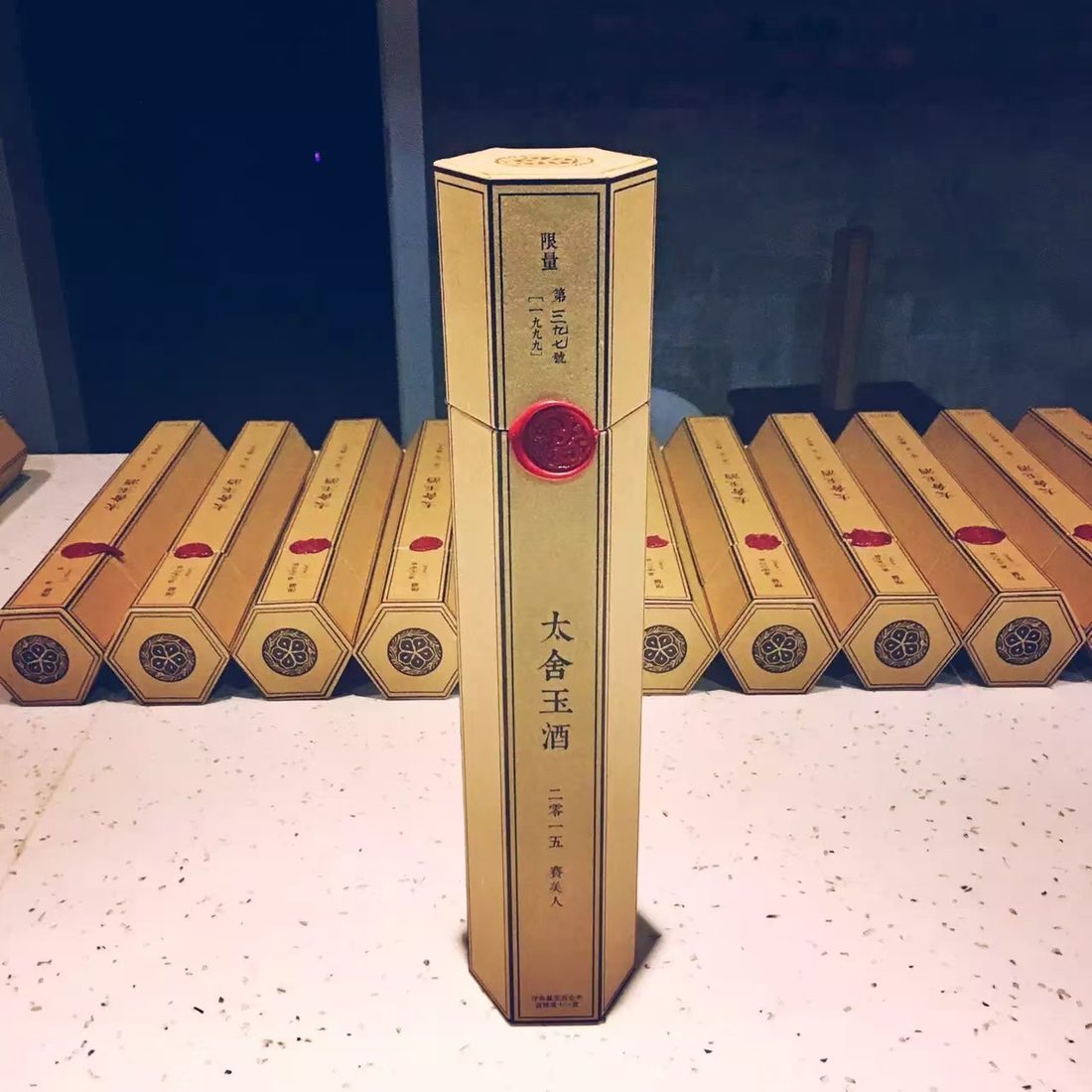
Jade Wine
Jade Wine
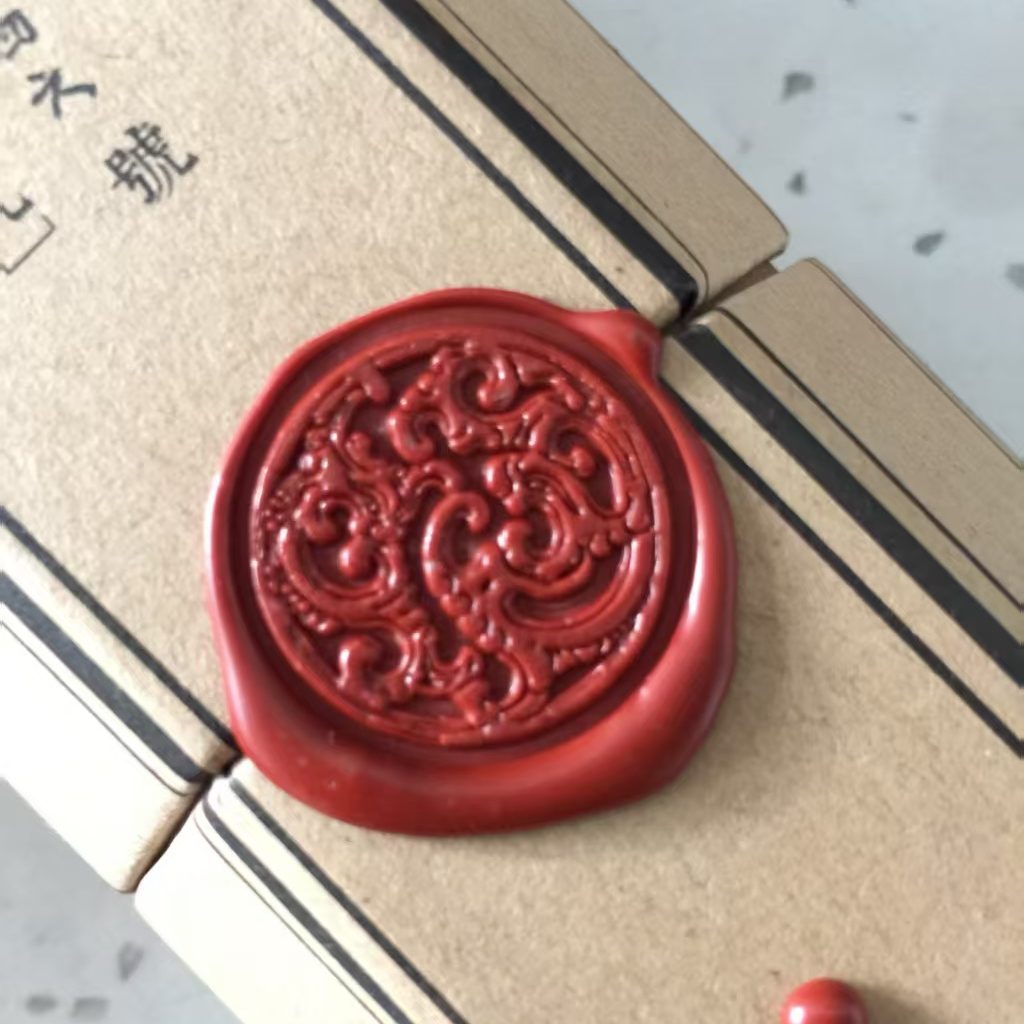
Jade Wine wax seal
Jade Wine · Wax seal
Jade wine packaging
Jade Wine · Packaging

The deeper they looked, the clearer three problems became:

Many of these extraordinary murals stood in remote stretches of the Gobi, or in museums far from their original homes.

As the overland Silk Road declined, the craft of painting with gemstone and mineral pigments had almost disappeared. Copies made with modern synthetic pigments never seemed quite right.

The original murals had been created by patrons and painters united in faith. They were never intended as investments.

—Adapted from Yu Yizhou, “Why We Reconstruct Murals”, address at the opening of TAIS Art Museum.

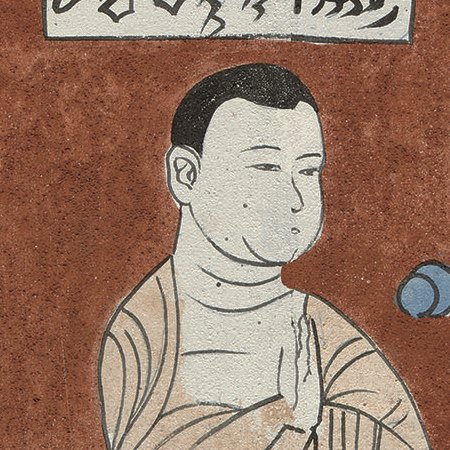
So they made a decision:Become patrons themselves, and revive this craft to the exacting standards of its ancient commissioners.

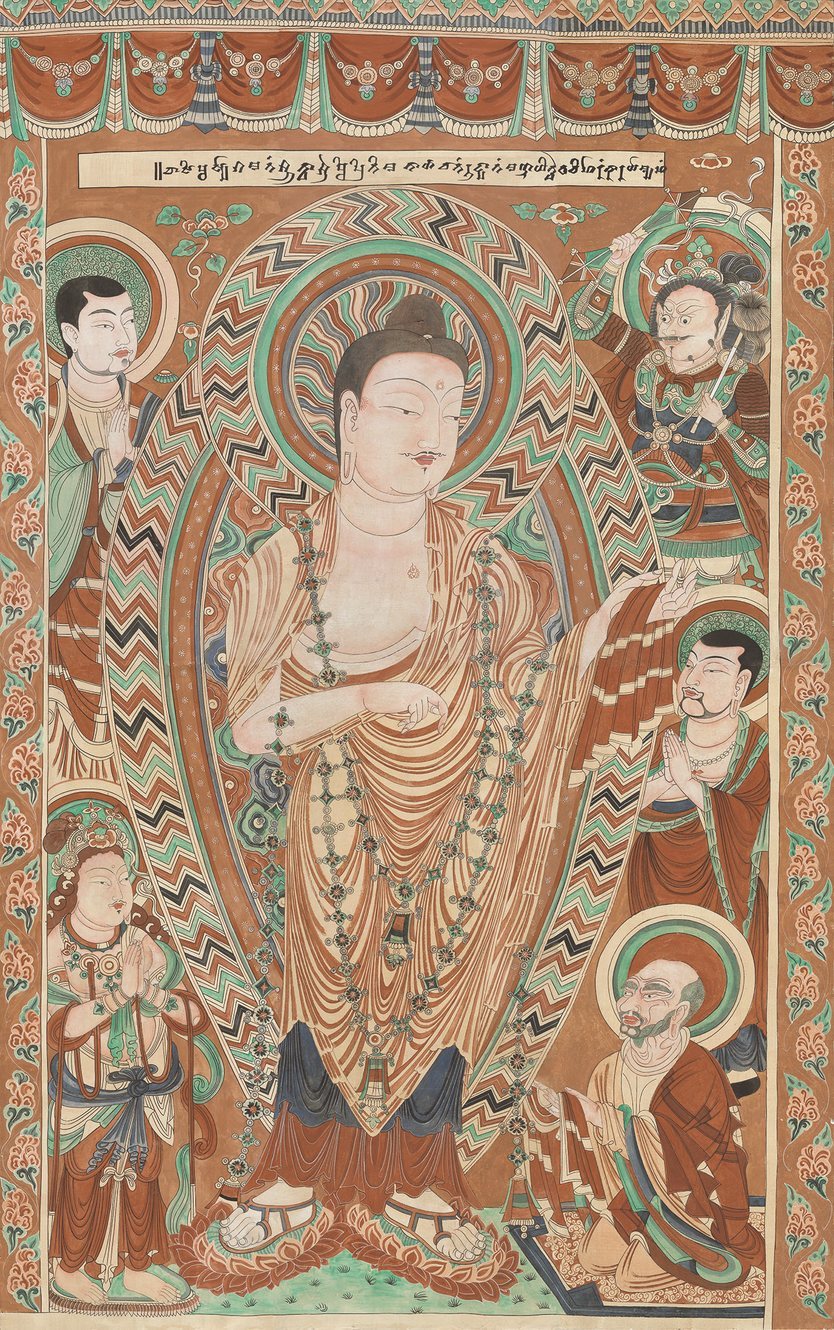
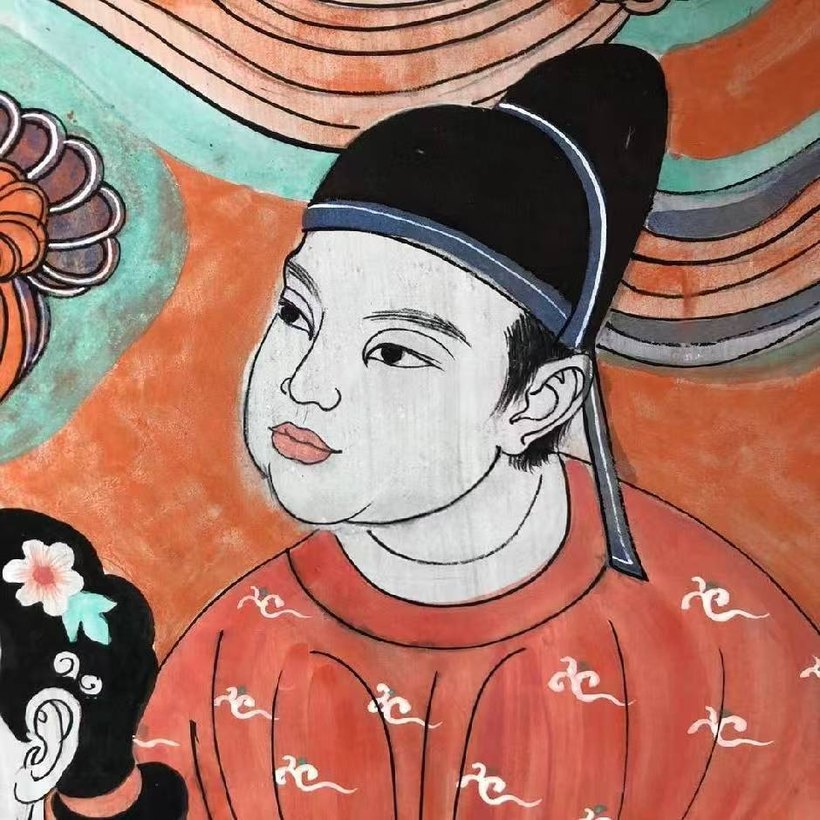
Portrait of a Patron · Reconstruction by Cheonbuldong Painting Academy
Portraits of a New Generation of Patrons · Detail | Reconstruction in gemstone and mineral pigments by Cheonbuldong Painting Academy. Collection: TAIS Art Museum © CHEONBULDONG

These early experiments came together at TAIS-HUB as the Silk Road programme of Chinese Renaissance.

—TAIS Art Museum Archive.
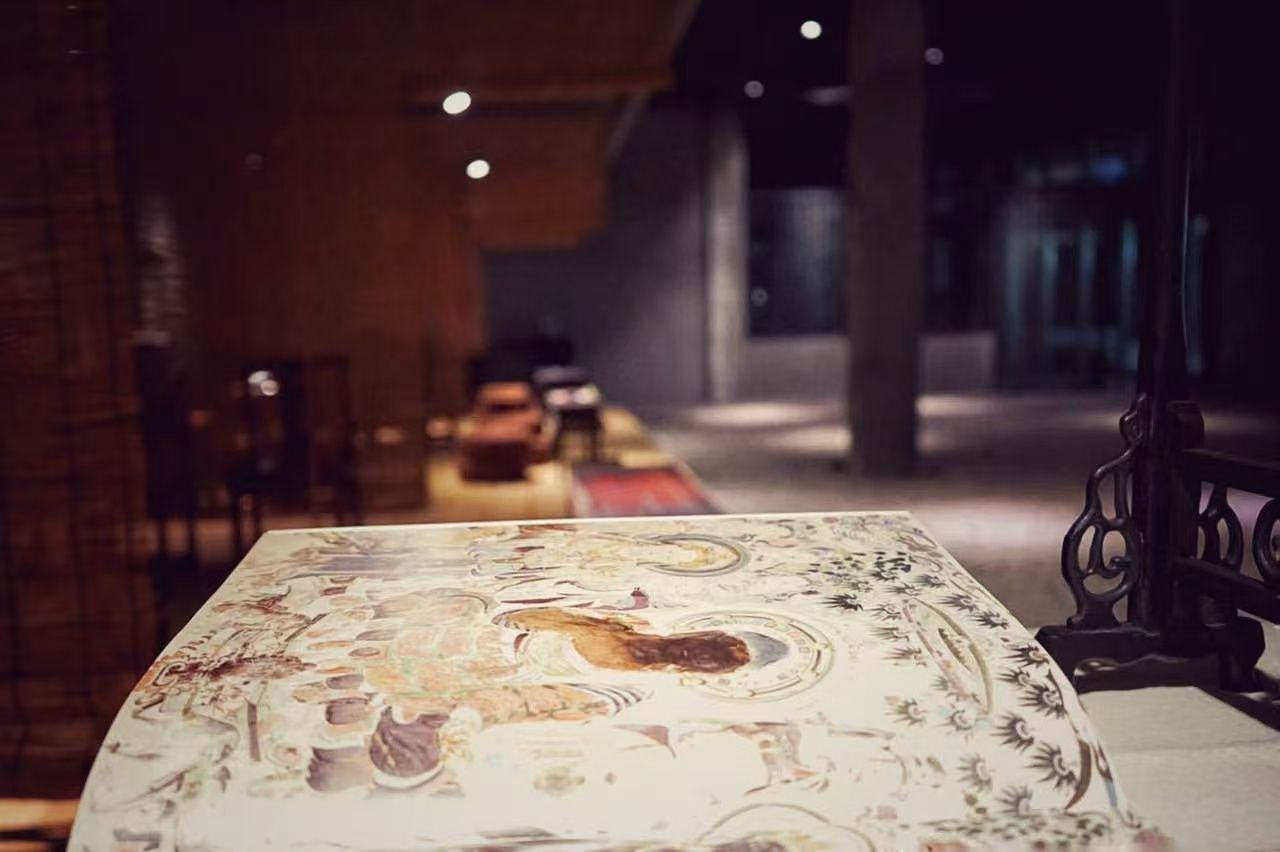
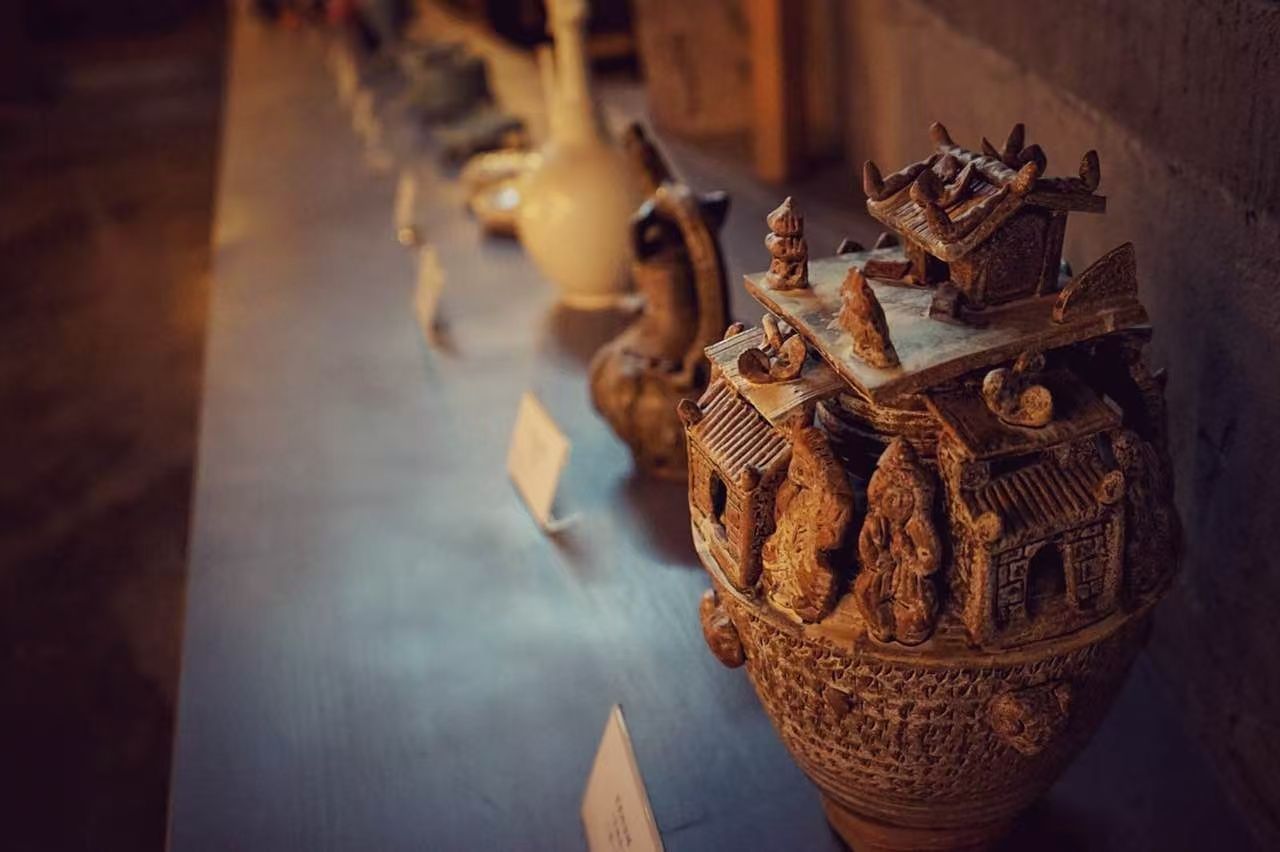
TAIS Art Museum · Gallery Interior
TAIS Art Museum · Gallery interior
TAIS Art Museum · Gallery Interior
TAIS Art Museum · Gallery interior
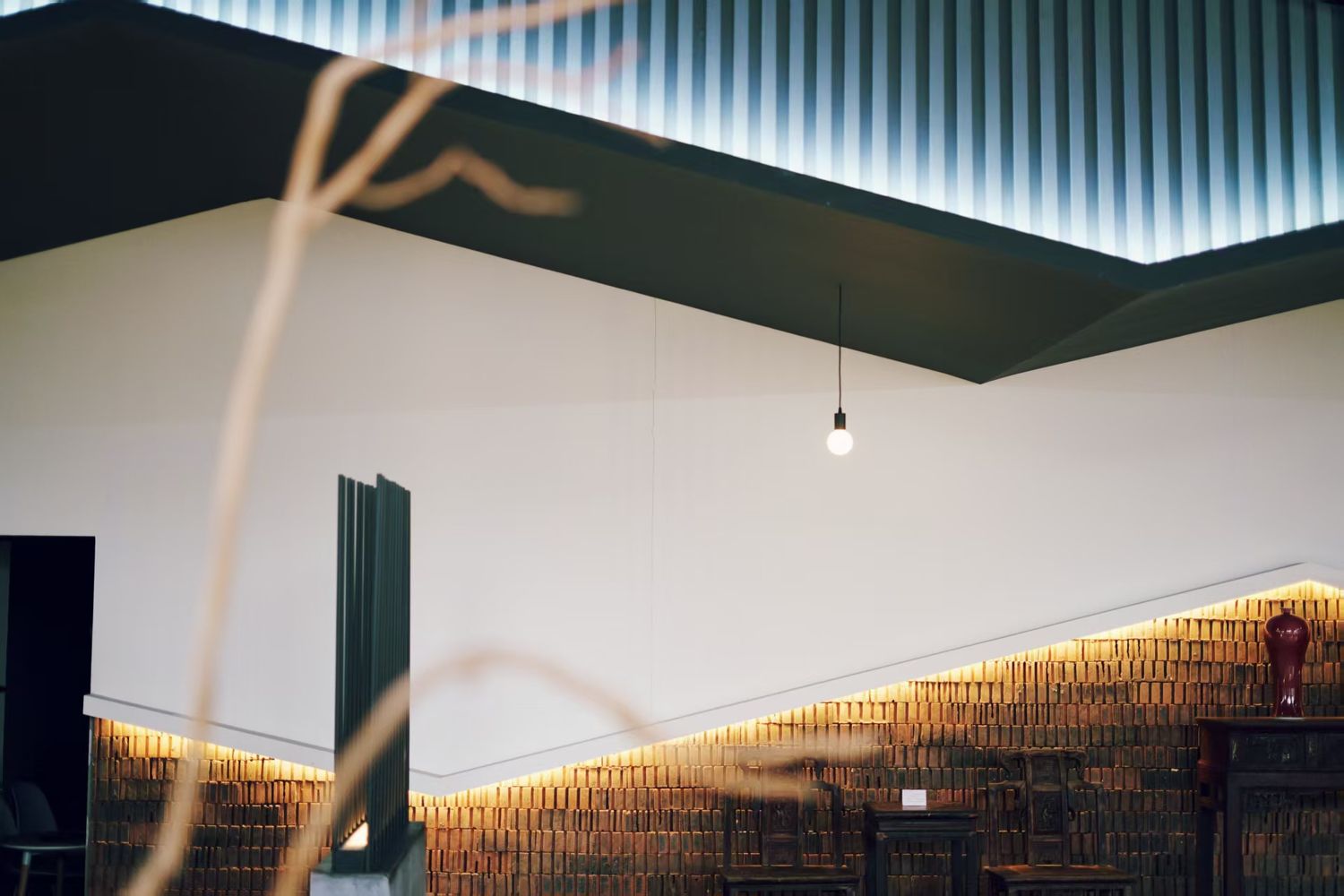
TAIS Art Museum · Gallery Interior
TAIS Art Museum · Gallery interior
2013-2015

The first step in reconstructing a mural was not to paint.
It was to recover the colours of a thousand years ago.

Act 2 · The Colours of Precious Stones

Colour was precious in the ancient world. Egyptian murals, painted Greek sculpture, the cave temples of the Silk Road and the blue-and-green landscapes of the Chinese court all drew on the same family of materials: pigments refined from gemstones and minerals.

Their colours are vivid yet subtle, and exceptionally enduring.

Lapis lazuli once cost more than gold. One branch of the Silk Road was known as the Lapis Lazuli Road.

—Gallery text, “The Colours of Precious Stones”, A Thousand Years of Splendor (TAIS Art Museum, 2020).
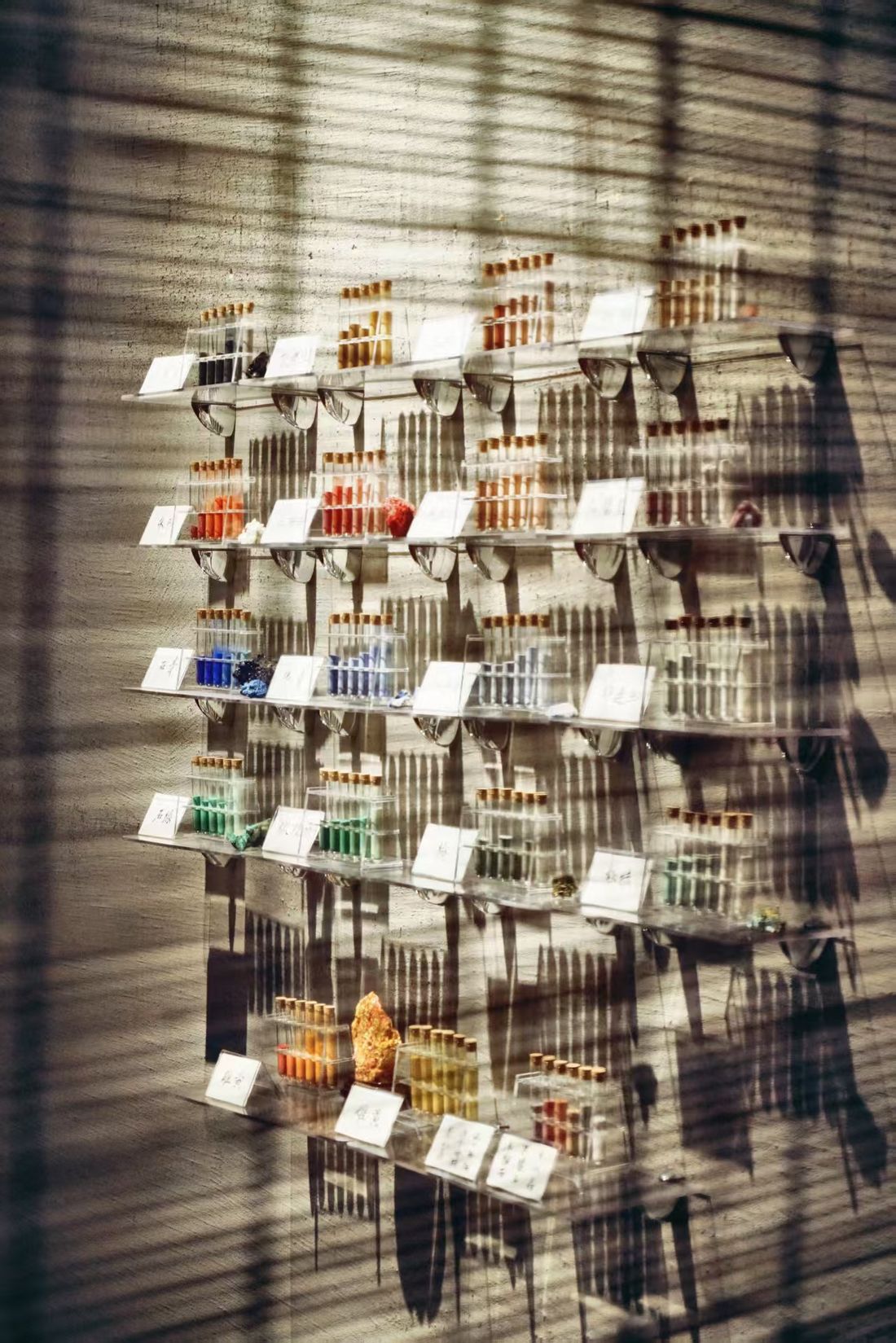
Pigment Wall at TAIS Art Museum
Pigment Wall | TAIS Art Museum

For each pigment, the grades run from coarse to fine, dark to light.

The colour changes through grinding alone: finer particles give a paler colour; coarser particles, a deeper one.

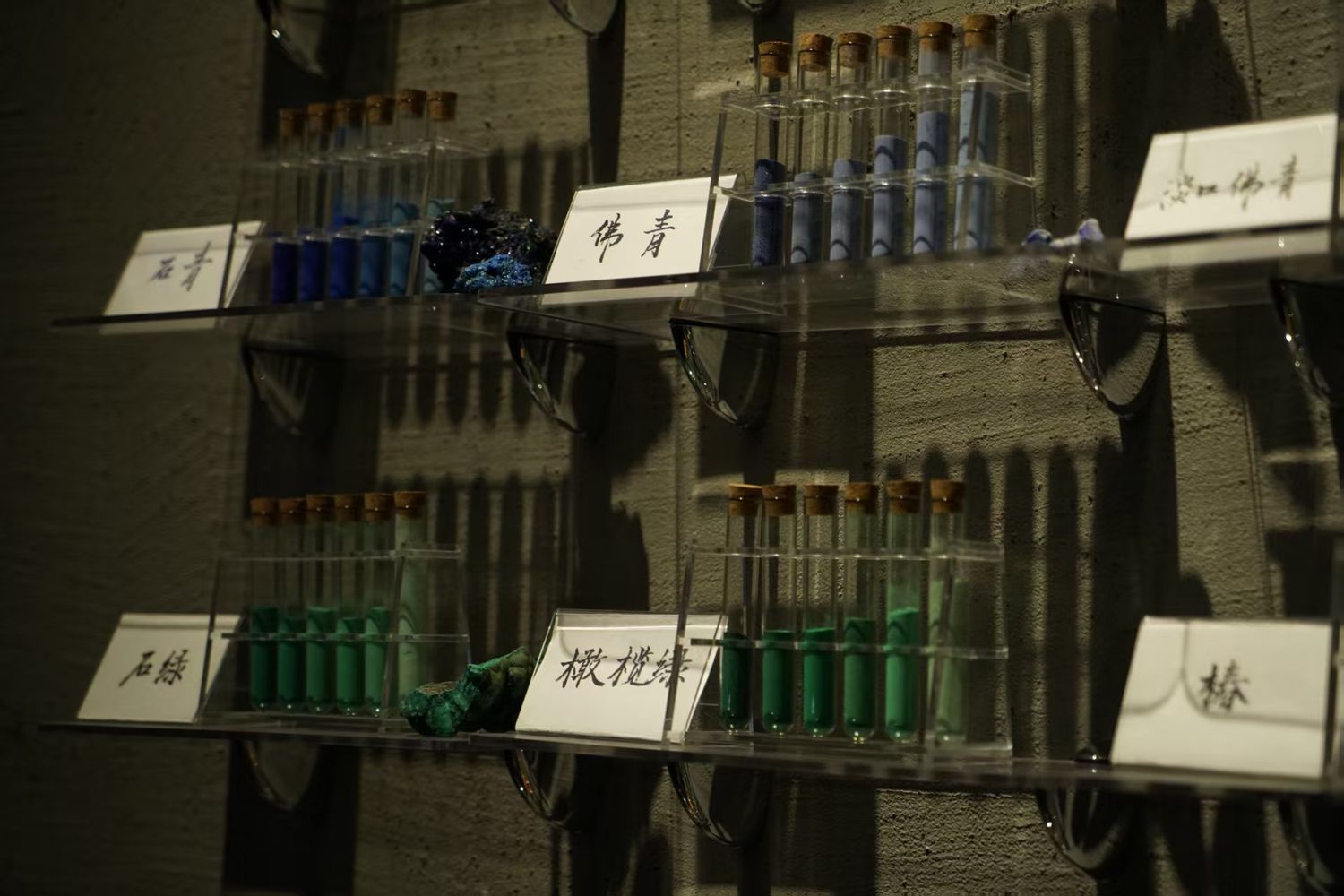
Azurite pigment comes in three grades, from coarse to fine: touqing, erqing and sanqing.

—Pigment Wall gallery text, A Thousand Years of Splendor (2020).
Test tube pigment wall, handwritten label
Pigment Wall · Test Tube Specimens | TAIS Art Museum
Coarse azurite
Hold to grind

Coarse → Medium → Fine azurite

Hold to grind the azurite from deep blue to pale. Each grade corresponds to a specimen in the pigment wall.

Red proved unexpectedly difficult.

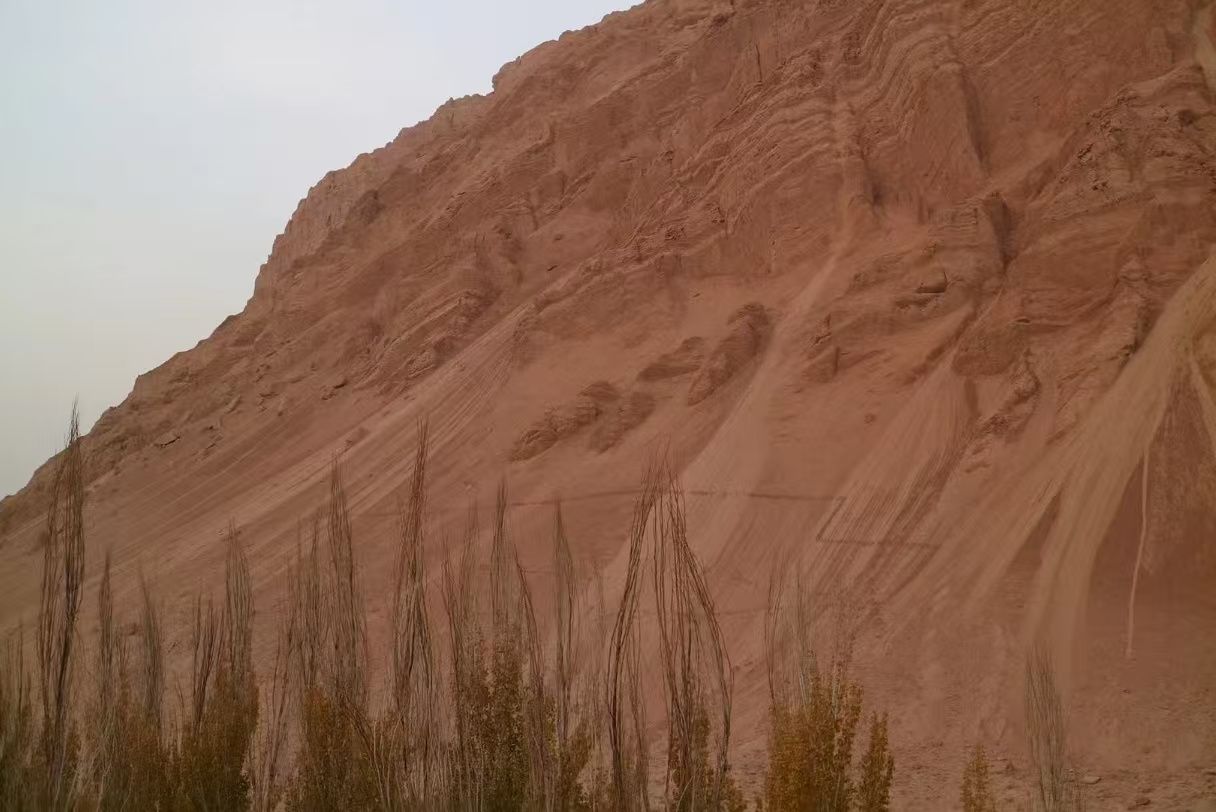
“Our partners in Xinjiang collected dozens of red rock and soil samples from the Flaming Mountains. We also compared red earth from India and Baghdad. In the end, we chose four types of earth and rock.”

The red soil of Turpan
The red soil of Turpan | Cheonbuldong project field research

Lapis lazuli proved the greatest challenge. More than 6,000 years on, Afghanistan remains the source of fine lapis lazuli.

“The ore we received at first yielded only a greyish blue. Much later, a gem importer supplied us with exceptional lapis lazuli. From it we made a clear, luminous blue with a hint of violet. It was the last colour we needed.”

—“Quest”, A Thousand Years of Splendor (TAIS Art Museum, 2020).
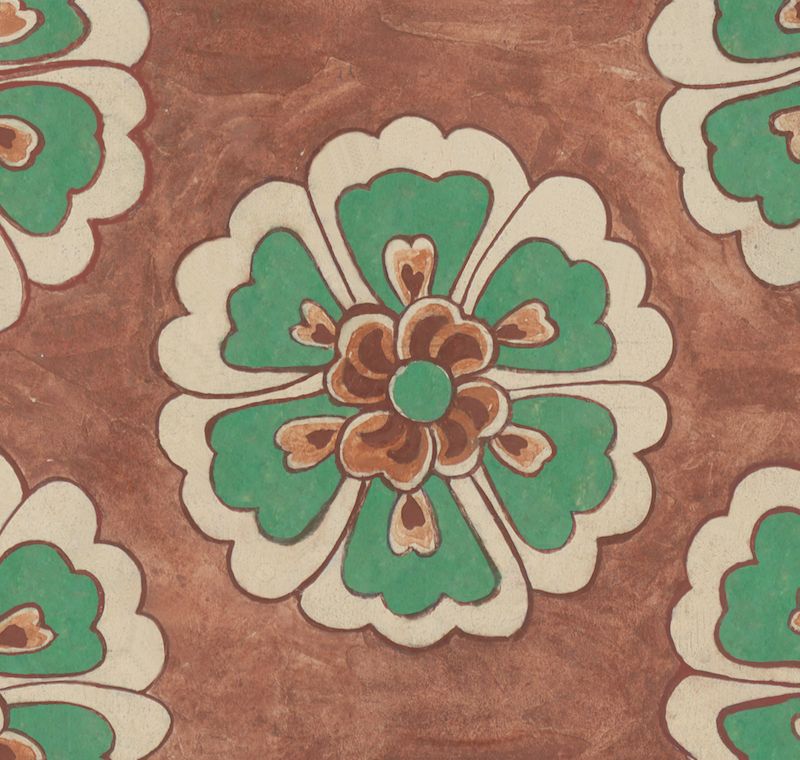
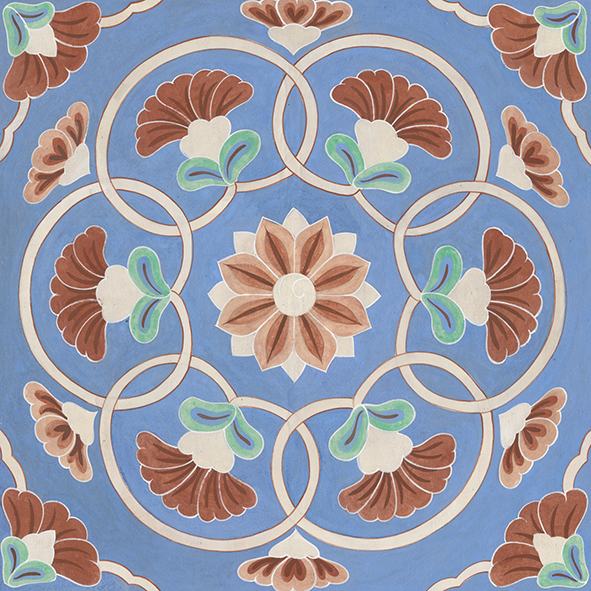
Gaochang Baoxiang Flower · Reconstruction in lapis lazuli pigment
"Gaochang Baoxiang Flower (Lapis Lazuli)" | Original: unearthed from Gaochang Ancient City, Turpan, 7th to 11th century AD,The original has been destroyed | Reconstruction: Full-scale reconstruction by Cheonbuldong Painting Academy, using multiple layers of fine lapis lazuli pigment, Collection: TAIS Art Museum © CHEONBULDONG

At first, the project initiator did the grinding himself. The task later passed to Tan Li, a rocket scientist and TAIS’s Chief Scientific Officer.

The hope was that he could design a machine to take over the work. Within two months, he had designed a centrifugal gravity ball mill.

Then he calculated the cost and found that at this scale, manual grinding was cheaper.

“His new rocket engine was nearly ready, yet the ball mill was still on the drawing board. Professor Tan remained the mineral-grinding team’s tireless foreman.”

—“Quest”, A Thousand Years of Splendor (TAIS Art Museum, 2020).
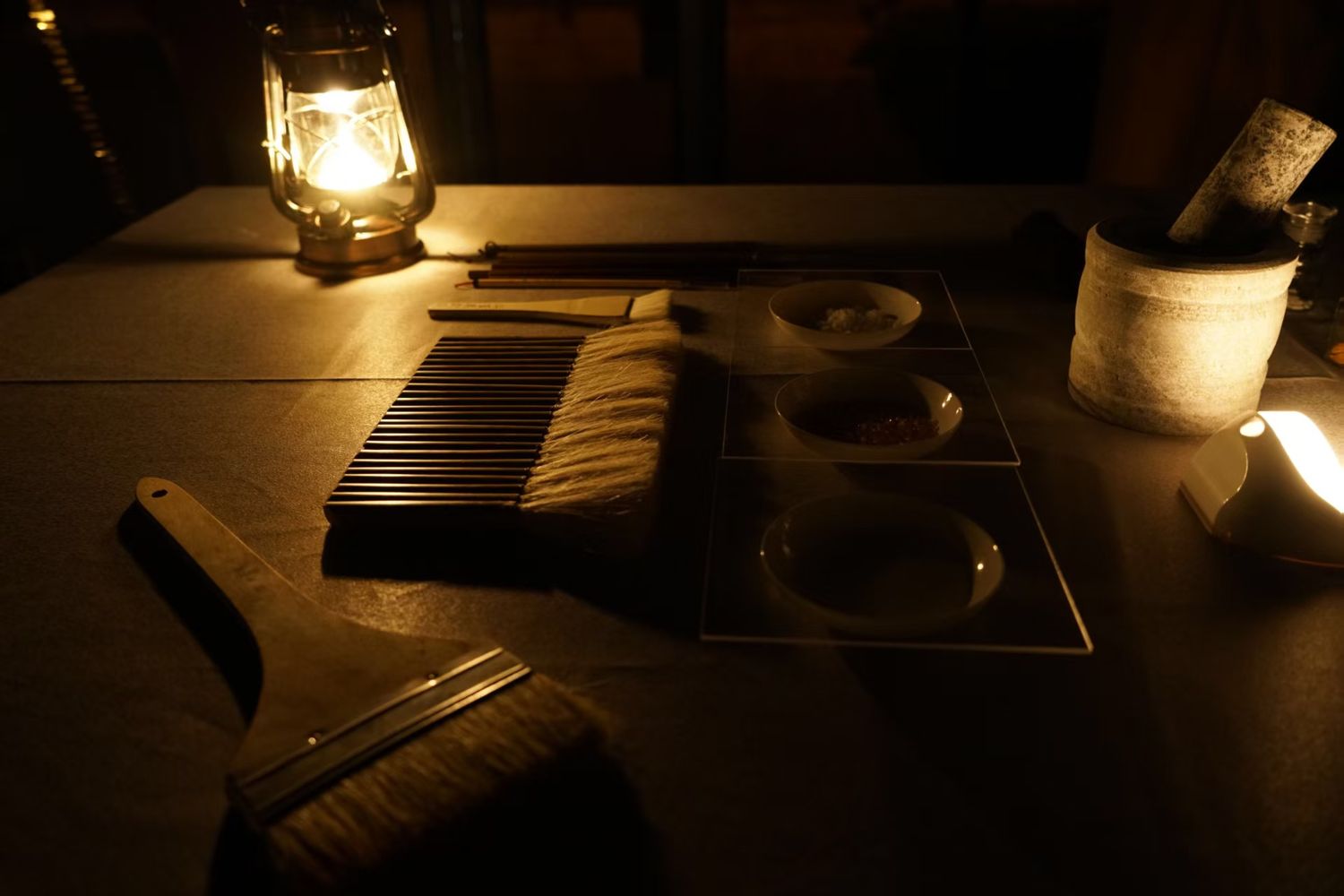
Grinding tools under the lamp
Grinding Tools | TAIS Art Museum

More than a decade ago, it was almost impossible to buy real mineral pigments on the market.

Step by step, we recovered the preparation methods andshared them freely.

Today, mineral pigments are no longer so difficult to obtain.

—TAIS Art Museum Archive.

The palette was ready.
Now it was time to learn to paint.

Inside the pigments
The display also explores cinnabar’s use in imperial annotations, the stories associated with realgar and orpiment, and the continuing use of malachite and lapis lazuli in fine jewellery.
—Adapted from The Colours of Precious Stones gallery text.
Act 3 · Learning from the Ancient Painters

Radiant Colours

Apprenticeship

Our first project, Radiant Colours, focused on reconstructing murals in the specially managed caves of Dunhuang and other well-preserved cave complexes.

It was an apprenticeship.

Our teachers were the painters who had worked more than a thousand years before.

Our textbooks were the paintings they had left on the walls.

Rather than begin with surviving gongbi painting techniques, we took a scientific approach, starting with the materials and the structure of the paintings themselves.

—TAIS Art Museum Archive.

Dunhuang holds one of the largest and best-preserved concentrations of ancient murals. Its Northern Wei paintings are bold and vivid, retaining techniques from Central Asia and India: flowing lines, intricate compositions and a striking sense of modernity.

These relatively intact paintings became our guides. Through sustained study and experiment, the Cheonbuldong painters learned the processes of mural-making and the behaviour of different mineral pigments.

—Gallery text, “Dunhuang of the Northern Wei Dynasty”, A Thousand Years of Splendor (TAIS Art Museum, 2020).
Xinjiang
Kizil Thousand Buddha Caves
Nationally protected heritage site since 1961
Xinjiang
Bezeklik Thousand Buddha Caves
Nationally protected heritage site since 1982
Gansu
Dunhuang Mogao Grottoes
Nationally protected since 1961 · UNESCO World Heritage Site
Gansu
Anxi Yulin Grottoes
Nationally protected heritage site since 1961
Gansu
Tianshui Maijishan Grottoes
Nationally protected heritage site
Gansu
Anxi East-West Thousand Buddha Caves
Nationally protected heritage site since 1996

Learning from the Caves · Murals along the Silk Road

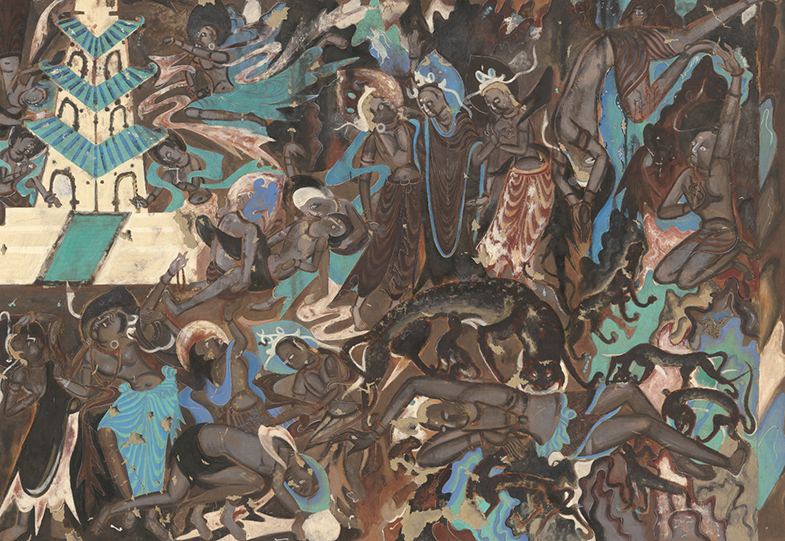
Prince Sattva Feeding the Tigress · Interactive study of painting layers
“Prince Sattva Sacrifices Himself to Feed the Tigress” | Original: South wall of Cave 254 of Dunhuang Mogao Grottoes, Northern Wei Dynasty (386-534) | Reconstruction: Cheonbuldong Painting Academy, at full scale in gemstone and mineral pigments. Collection: TAIS Art Museum © CHEONBULDONG

Looking at a painting was once understood as a spiritual practice: to understand the image could be to awaken.

This mural tells Prince Sattva’s story in seven episodes, from his resolve to save the starving tigress to his sacrifice, his family’s grief and the building of a commemorative stupa. Drapery, gazes and gestures guide the eye from one scene to the next.

The painting also records a meeting of traditions: Central Asian techniques of modelling form in light and shade, and the brushwork of the Chinese heartland.

—Gallery text, A Thousand Years of Splendor (2020), with additional material from the TAIS Art Museum archive.

Illuminate the layers in turn: line drawing, Central Asian hatching, Chinese shading, then highlights and relief. Together, they bring the painting to life.

“They had been promising young artists. Once they entered the academy, it was as though they had stepped away from the world, into a discipline that continued year after year.”

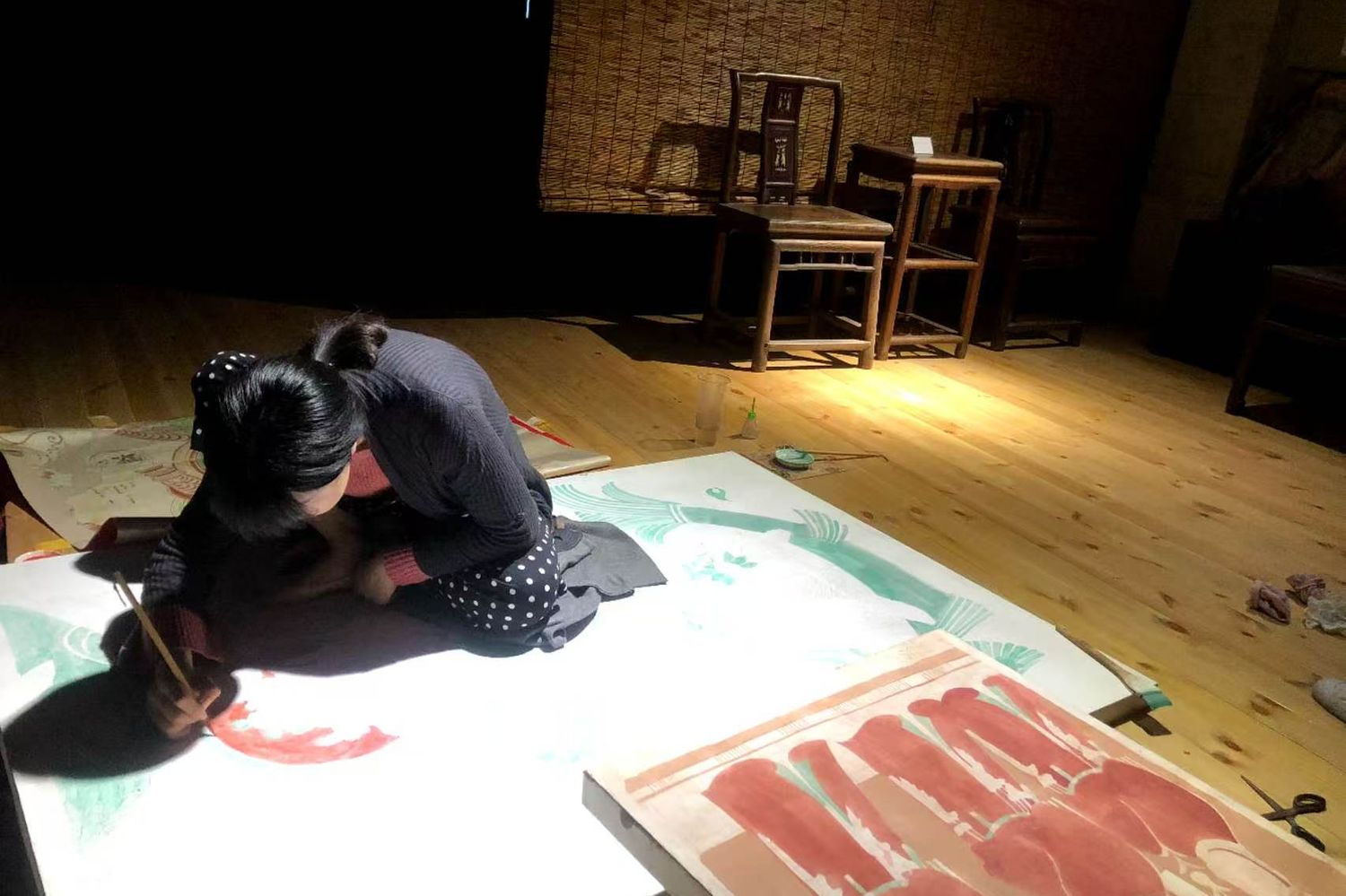
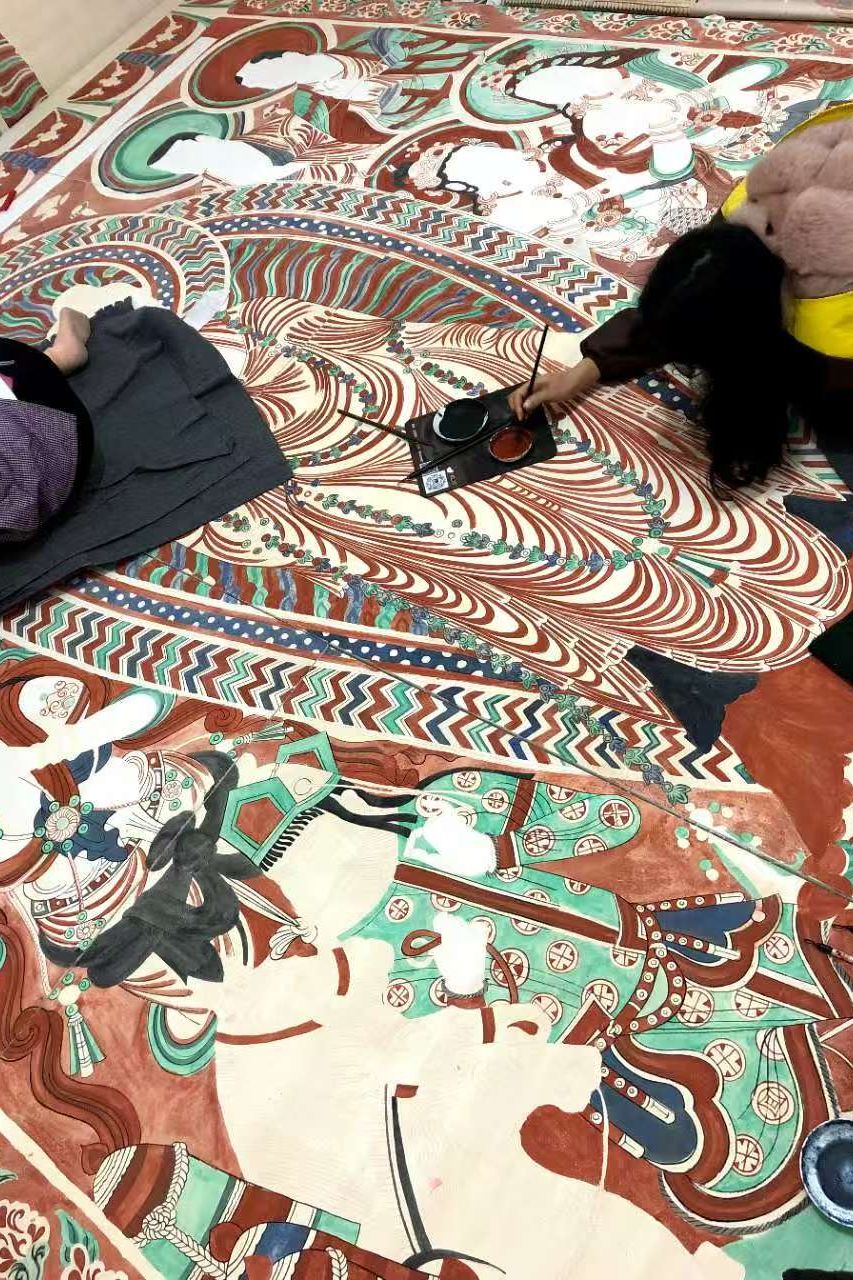
Hangzhou’s winters are bitterly cold. Some paintings were too large to mount, so the artists worked lying on the concrete floor. To avoid heating the enclosed workspace while working with potentially hazardous pigments, they relied on heavy coats and padded trousers, sometimes for almost ten hours at a time.

“Eventually I asked: doesn’t staying still for so many hours exhaust you? They said it was difficult at first, but after a while they hardly noticed.”

—“Quest”, A Thousand Years of Splendor (TAIS Art Museum, 2020).
Cheonbuldong Painting Academy at Work
Cheonbuldong Painting Academy at Work · Working at floor level
Cheonbuldong Painting Academy at Work
Cheonbuldong Painting Academy at Work · Large-format painting
Cheonbuldong Painting Academy at Work
Cheonbuldong Painting Academy at Work · Mounting the painting

From Kucha to Dunhuang, from Yulin to the Eastern Thousand Buddha Caves.
Copying one painting after another, testing each pigment in turn.

The skills and experience were growing.

Some murals can no longer wait.

Act 4 · On the Brink · The Second Step

We had learned the craft.
But some walls could not wait for us to take our time.

Thousands of small cave temples lie along the Silk Road. Many are remote, neglected and difficult to protect. Some stand in earthquake zones, vulnerable to collapse.

—On the Brink project introduction, TAIS Art Museum (2019–2020).

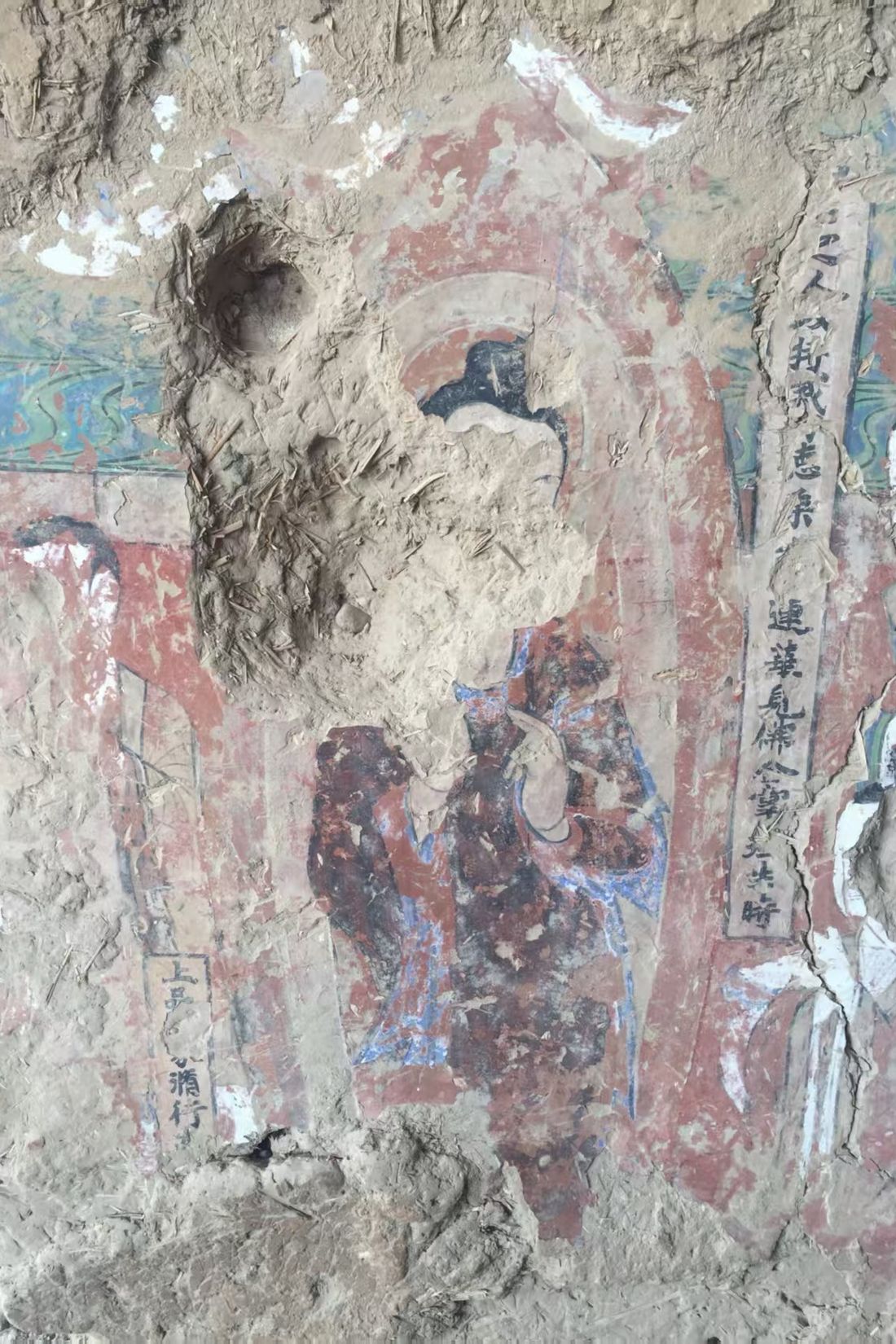
At the Tongzi Temple Grottoes, for example, five layers of murals, dating from the Northern Liang to the Qing dynasty, survive one above another. Severe damage and inadequate protection leave them at risk of collapse.

—Same source.
Damaged murals exposed on the cliff
Field Research · Exposed and Damaged Murals
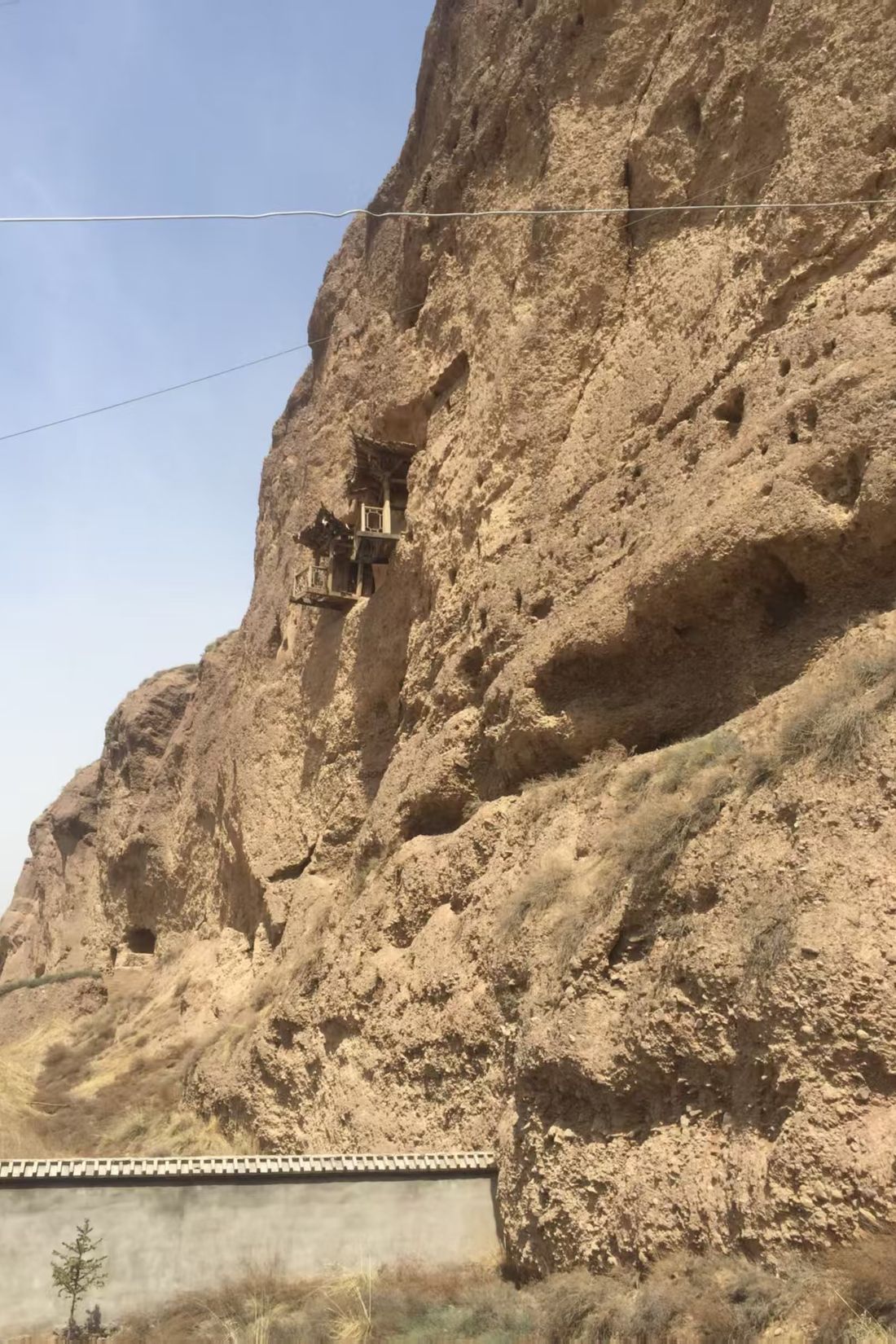
Field trip to the cliff plank road
Field trip · Cliffside walkway
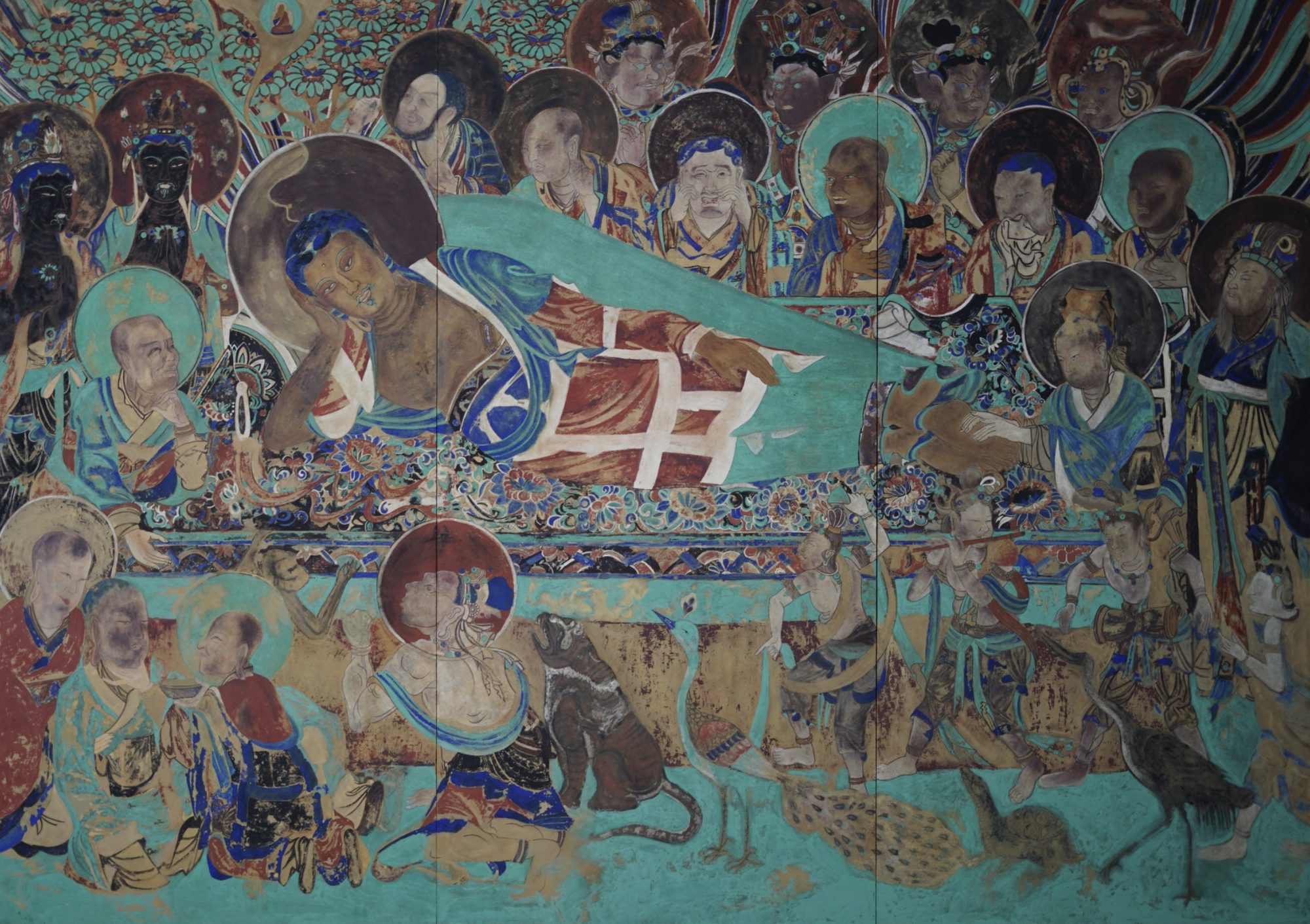
Nirvana transformation, full-scale reconstruction by Cheonbuldong Painting Academy in gemstone and mineral pigments
“Depiction of Nirvana” | Original: Eastern Thousand Buddha Caves | Reconstruction: Cheonbuldong Painting Academy, at full scale in gemstone and mineral pigments. Collection: TAIS Art Museum © CHEONBULDONG

Beneath layers of murals, a face from the Northern Wei.
It has waited within the wall for fifteen hundred years. It should not disappear in our time.

Explore, document, reconstruct. One cave at a time.

Farther away, other murals had lost

even the walls that once held them.

Act 5 · A Longing to Return · City of the Gods

The third step would be the hardest:
to reconstruct murals dispersed abroad or destroyed by war,
drawing on everything we had learned.

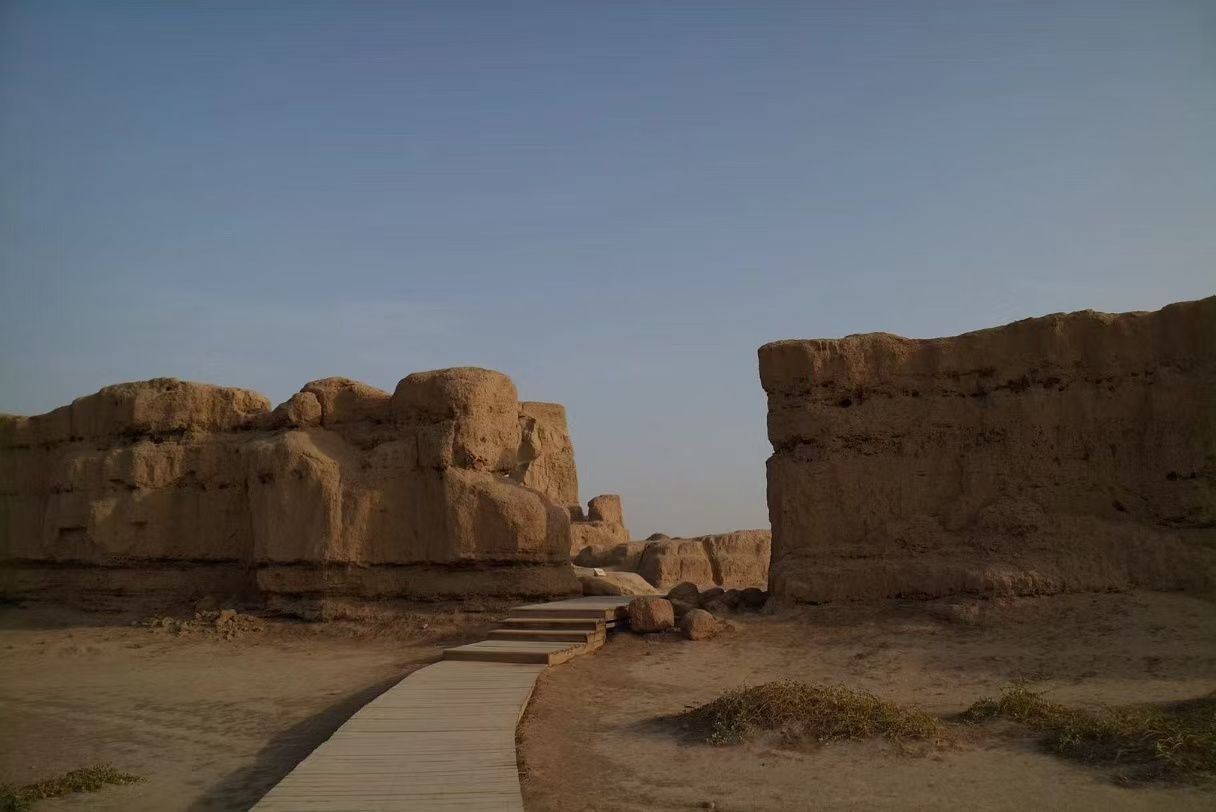
Beyond the Jade Gate and across the desert lay Gaochang, a major oasis city in what is now Turpan.

It stood at the foot of the Flaming Mountains, the real landscape behind Journey to the West. Its name evokes “high, open ground and a flourishing people”.

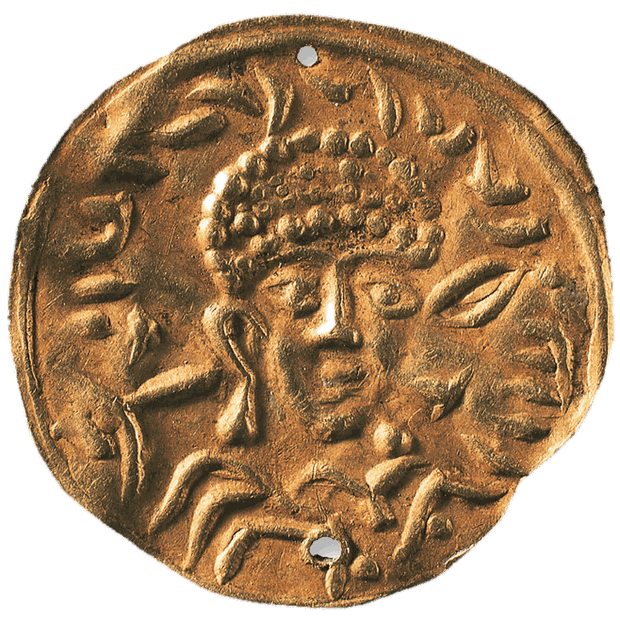
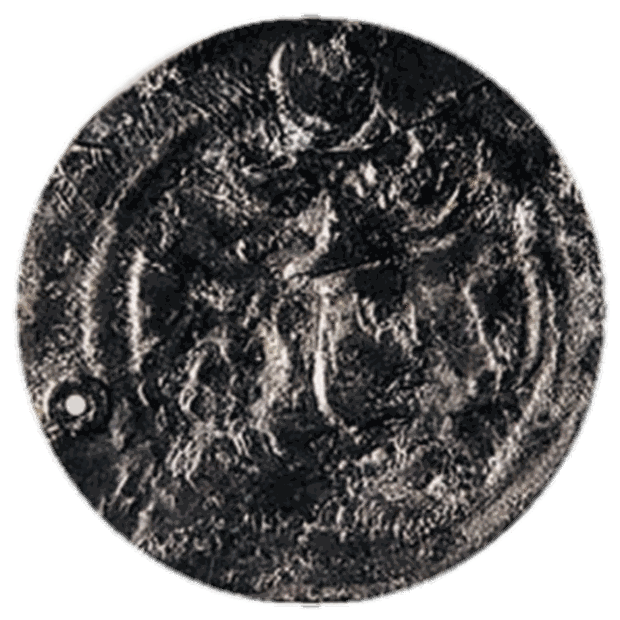
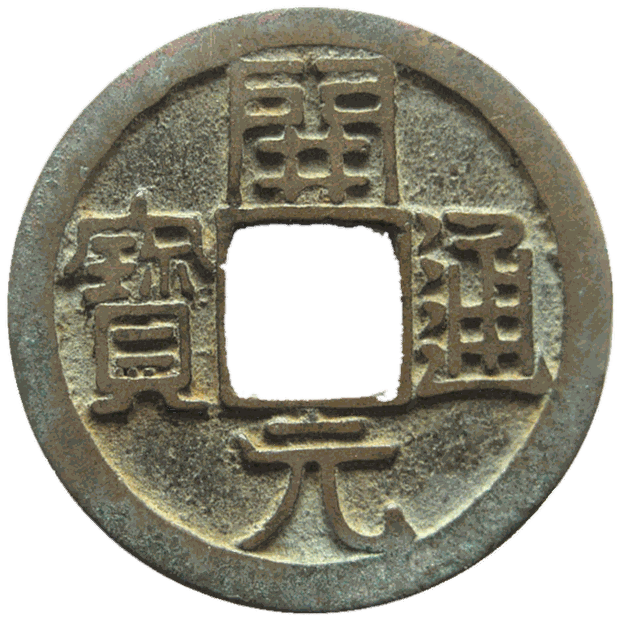
A vital stop on the northern Silk Road, Gaochang grew rich on trade and customs duties. Roman gold, Persian silver and Tang copper circulated here. It was also a centre of Manichaeism, the faith that inspired the Ming Cult in Jin Yong’s novels.

Merchants, monks, cultures and beliefs met here from east and west. It was truly acity of gods.

—“Mysterious Gaochang” gallery text (2020), and “Origin” in A Thousand Years of Splendor.
Gaochang Ancient City Ruins
Gaochang Ancient City | Photographed during field trip to Turpan
Ancient Rome
Gold coins
Persia
Silver coins
Tang China
Copper coins

Click to flip · Three currencies, one city of gods

Gaochang project video | TAIS Art Museum

The Great Tang Records on the Western Regions recounts Xuanzang’s journey beyond the frontier without permission. After repeated brushes with death, he reached Gaochang barely alive. King Qu Wentai, a devout Buddhist, wanted him to remain as a royal teacher and offered to share his kingdom. Determined to continue west, Xuanzang refused food. On the third day, the king relented.

Before Xuanzang left, the two became sworn brothers. Qu Wentai committed his kingdom’s resources to the journey: attendants, horses, gifts for rulers along the route, and a personal letter to the Western Turkic khagan. His support helped make the pilgrimage possible.

—“Origin”, A Thousand Years of Splendor (TAIS Art Museum, 2020).
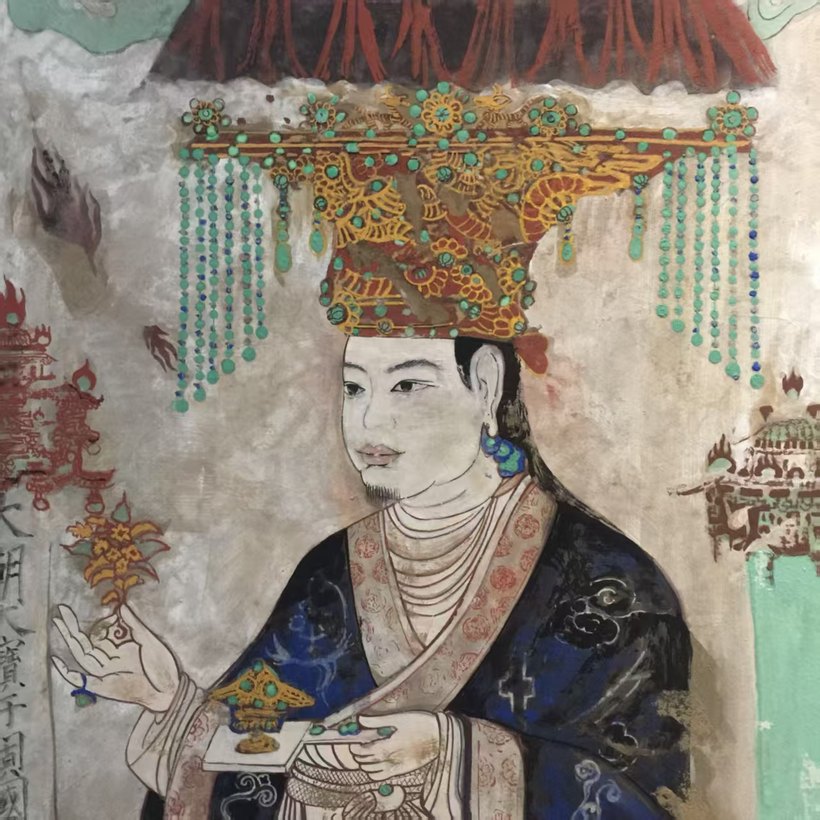
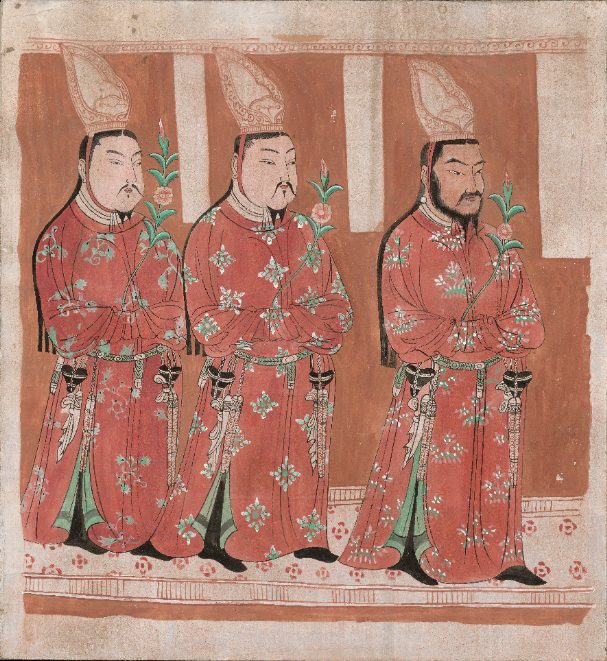
Uyghur Royal Male Donor · Reconstruction by Cheonbuldong Painting Academy
“Uyghur Royal Male Donor” | Reconstruction: Cheonbuldong Painting Academy, at full scale in gemstone and mineral pigments. Collection: TAIS Art Museum © CHEONBULDONG
The original was last exhibited at the Metropolitan Museum of Art in New York in 1982
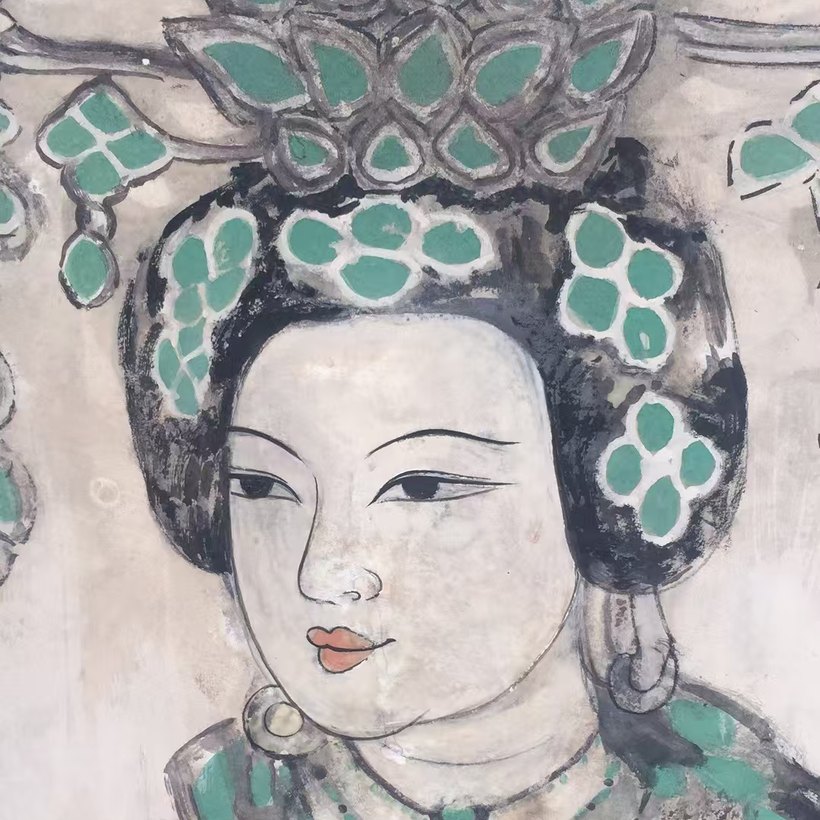
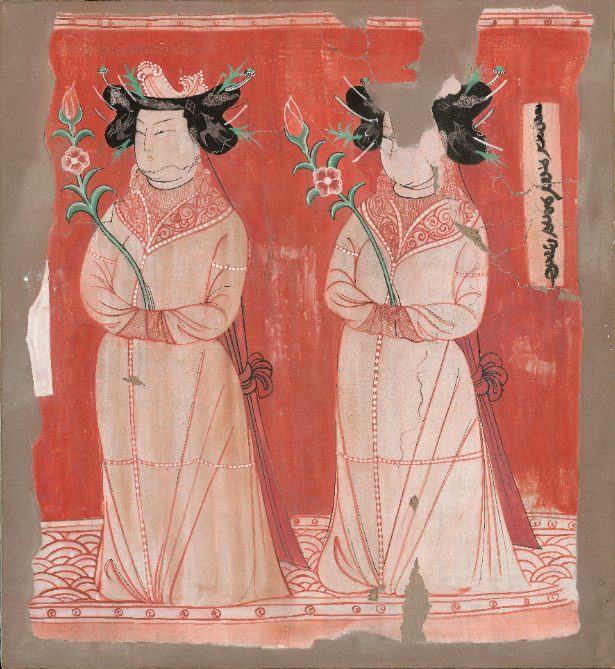
Uyghur Royal Female Donor · Reconstruction by Cheonbuldong Painting Academy
“Uyghur Royal Female Donor” | Reconstruction: Cheonbuldong Painting Academy, at full scale in gemstone and mineral pigments. Collection: TAIS Art Museum © CHEONBULDONG
The original was last exhibited at the Metropolitan Museum of Art in New York in 1982

A thousand years later, our team stood among Gaochang’s ruins. A partner who had devoted years to the site reflected:

“Think of the hope and blessing held in the name Gaochang. A thousand years ago, these ruins were a capital modelled on Chang’an, where different faiths and cultures lived side by side. What a magnificent place it must have been. Perhaps all we can do now is piece it together, fragment by scattered fragment.”

—A Xinjiang project partner, quoted in “Origin”, A Thousand Years of Splendor.

Among the scattered fragments, we began to look for an answer to the future.

—“Origin”, A Thousand Years of Splendor.

But - what about its murals?

Act 6 · Catastrophe · 1898-1945

What became of the murals in this city of gods?
To answer this question, we have to go back more than a hundred years ago.

1898

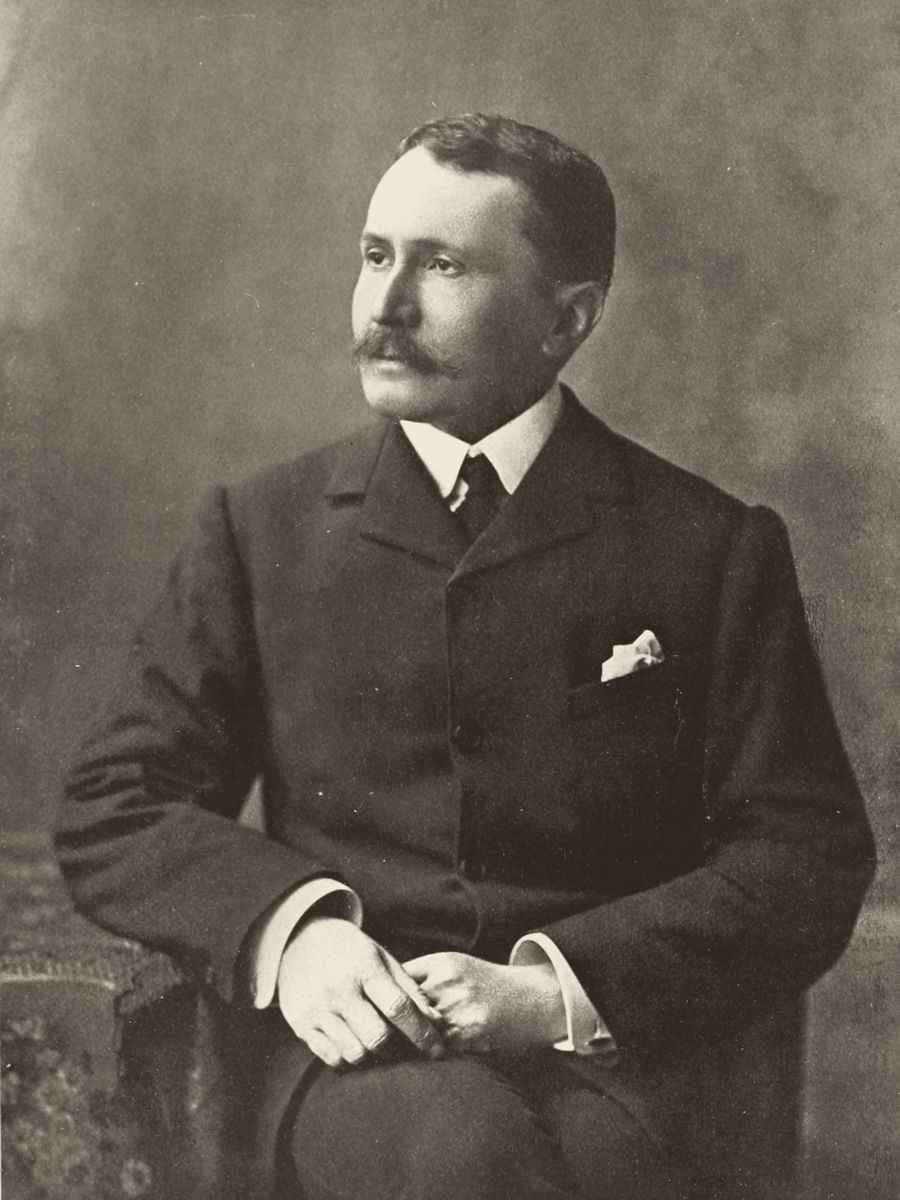
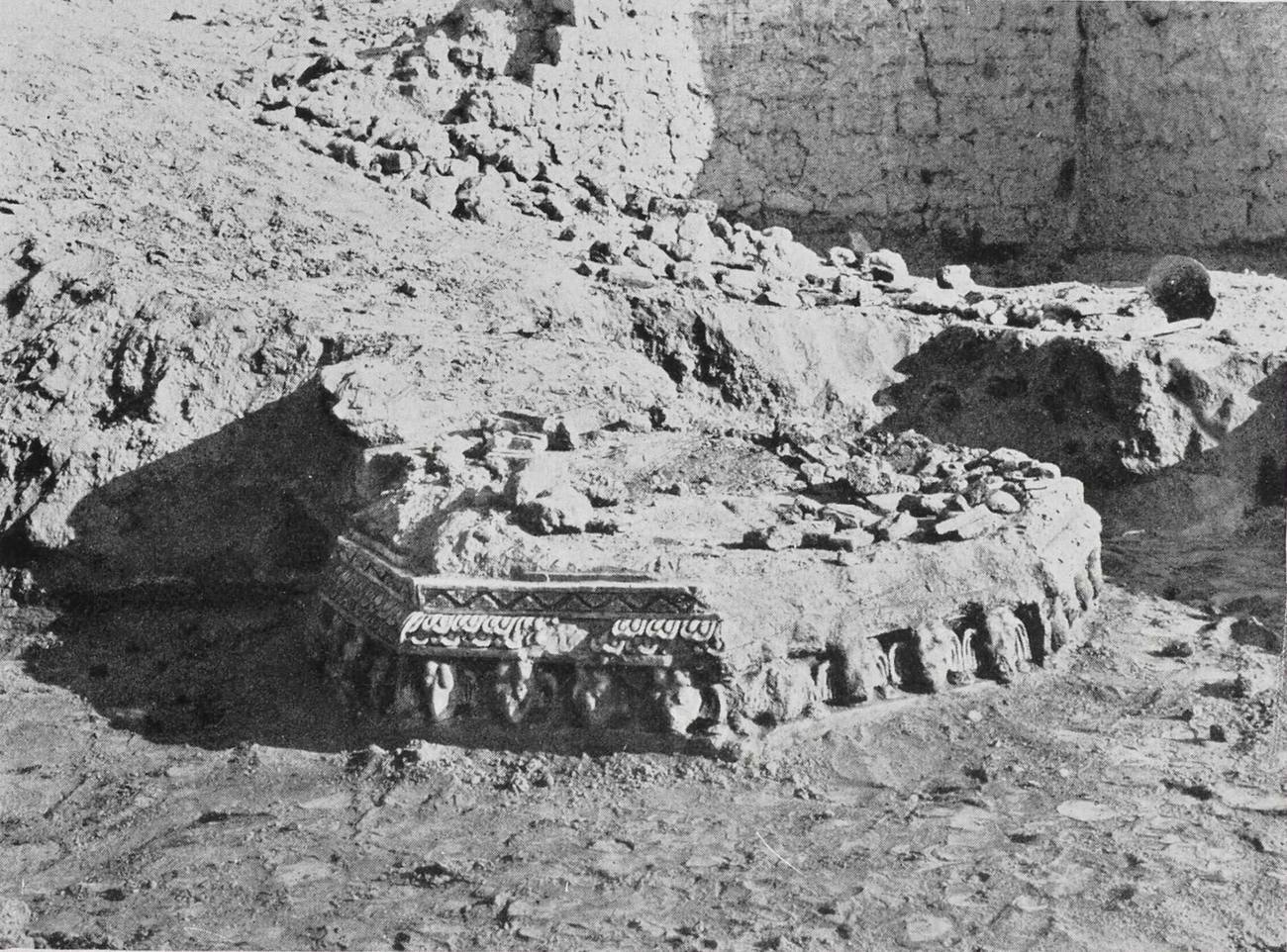
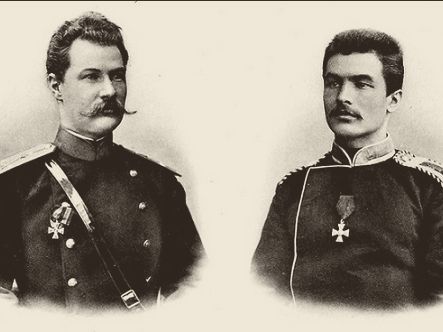
Around 1898, a Russian botanist searching for specimens near Turpan came across the ruins. He told his friend Klementz. In the account preserved in our project archive, this marked the beginning of Gaochang’s ordeal: large quantities of objects were removed from its temples and ancient city.Klementz was also among the first to cut murals from the walls.

—“The Catastrophe”, A Thousand Years of Splendor (TAIS Art Museum, 2020; source for this account of the expeditions).
Old photos of the excavation site of the ancient city in the early 20th century
Excavating the Ancient City | Early 20th-century archival photograph

News spread. Backed by the arms manufacturer Krupp, German expeditions travelled to the region four times between 1902 and 1914. They cut the finest murals from the walls of Bezeklik, divided them into sections and packed them in hundreds of crates. The journey to Berlin took more than a year.

The murals were reassembled in Berlin and became a worldwide sensation.

Japanese expeditions led by Ōtani Kōzui followed in 1902–1914. Russian teams removed further murals to St Petersburg in 1908–1910, and Aurel Stein surveyed the remaining sites in 1913–1915.

"Judging from what happened later, this was both a blessing and a tragedy."

Expeditions from Five Countries · Removal and Dispersal

Klementz and KozlovKlementz and Kozlov
Tsarist Russia

Klementz and Oldenburg

Around 1898 · 1908—1910

In the months that followed, objects were taken from Gaochang’s temples and ruins, including murals cut from the walls. The project’s account describes Klementz profiting from their sale while leaving little documentation.

Between 1908 and 1910, a Russian expedition led by Oldenburg removed further murals to the Russian Academy of Sciences in St Petersburg. Around 1930, some were transferred to the State Hermitage Museum.
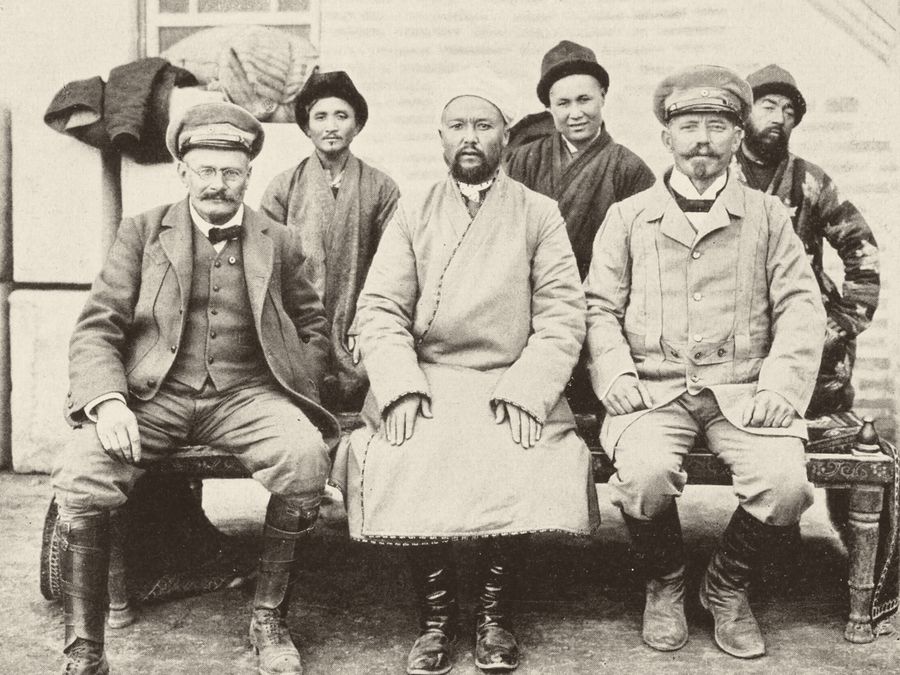
The German ExpeditionGerman Expedition
German Empire

Grünwedel and Le Coq

1902–1914 · Four expeditions

With the support of the arms tycoon Krupp, they went to the Western Regions four times between 1902 and 1914.

Under Le Coq’s direction, the finest and most complete murals were sawn into sections, packed into hundreds of crates and sent to Berlin. Transport took more than a year.

These expeditions were recorded in extraordinary detail, using the best photography available at the time.

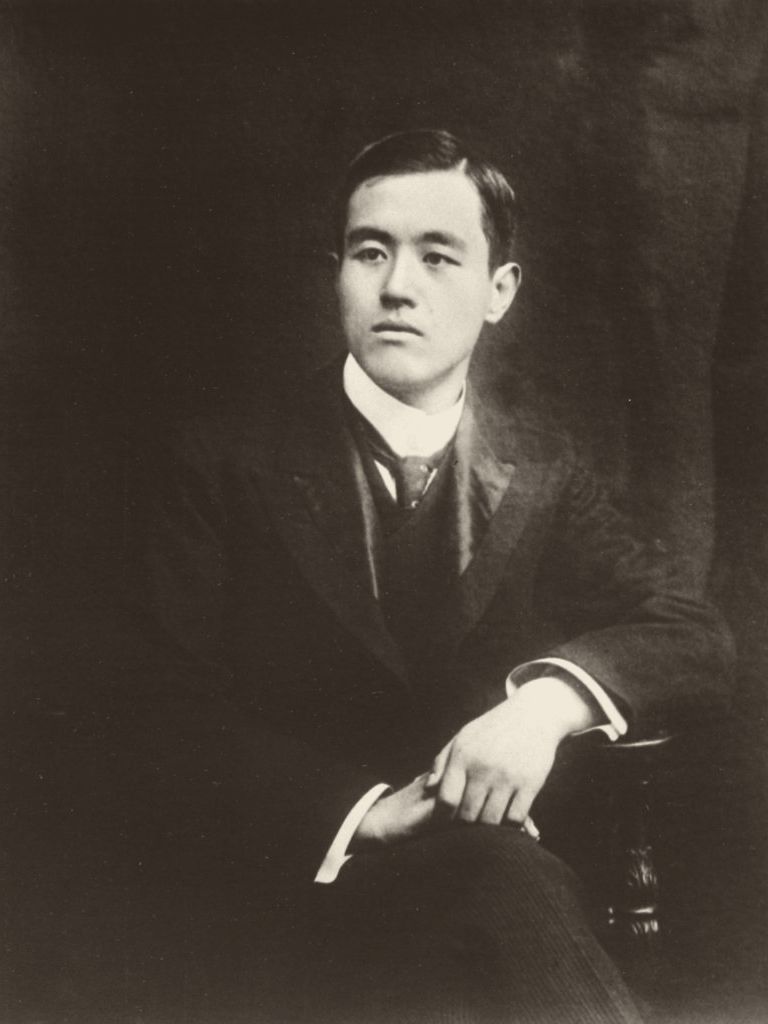
Ōtani KōzuiŌtani Kōzui
Japan

Ōtani Kōzui

1902–1914 · Three expeditions

Ōtani Kōzui organised three expeditions to the region between 1902 and 1914, presenting them as efforts to find and preserve Buddhist treasures.

They removed sections left behind by Le Coq. Rough cutting caused serious damage; documentation was largely limited to photographs and brief notes.

Some of these scattered cultural relics stayed in Korea, a Japanese colony at the time, and some were brought back to Japan and stored in Tokyo and Kyoto.

Aurel SteinStein
U.K.

Stein

1913—1915

Aurel Stein, already well known for his Central Asian explorations, arrived with the support of the British and Indian governments.

He made one of the last systematic surveys of these sites. Objects were first taken to India; a smaller portion later went to Britain.

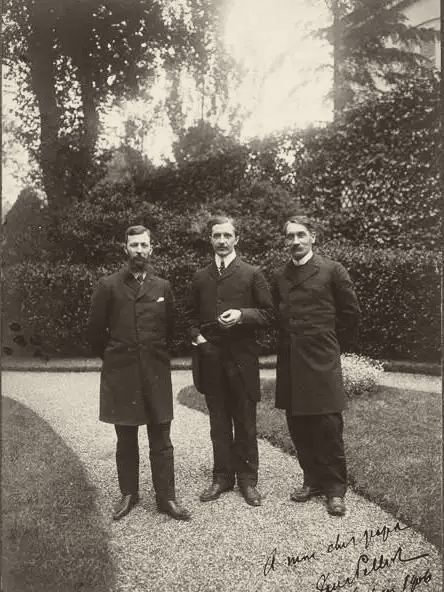
Paul Pelliot and the French ExpeditionFrench Expedition
France

Pelliot

same period

Other finds were sold to expeditions active across the region, including that of Paul Pelliot, whose work at Dunhuang had already yielded major discoveries.

By the end of these expeditions, almost all of Gaochang’s finest murals had been removed from their original settings.

The objects helped build the reputations of the explorers who brought them west. Many became celebrated scholars and received recognition from geographical societies.

Excavation and Transport

Old photos of the excavation site of the ancient city in the early 20th century
Excavating the Ancient City | Early 20th-century archival photograph
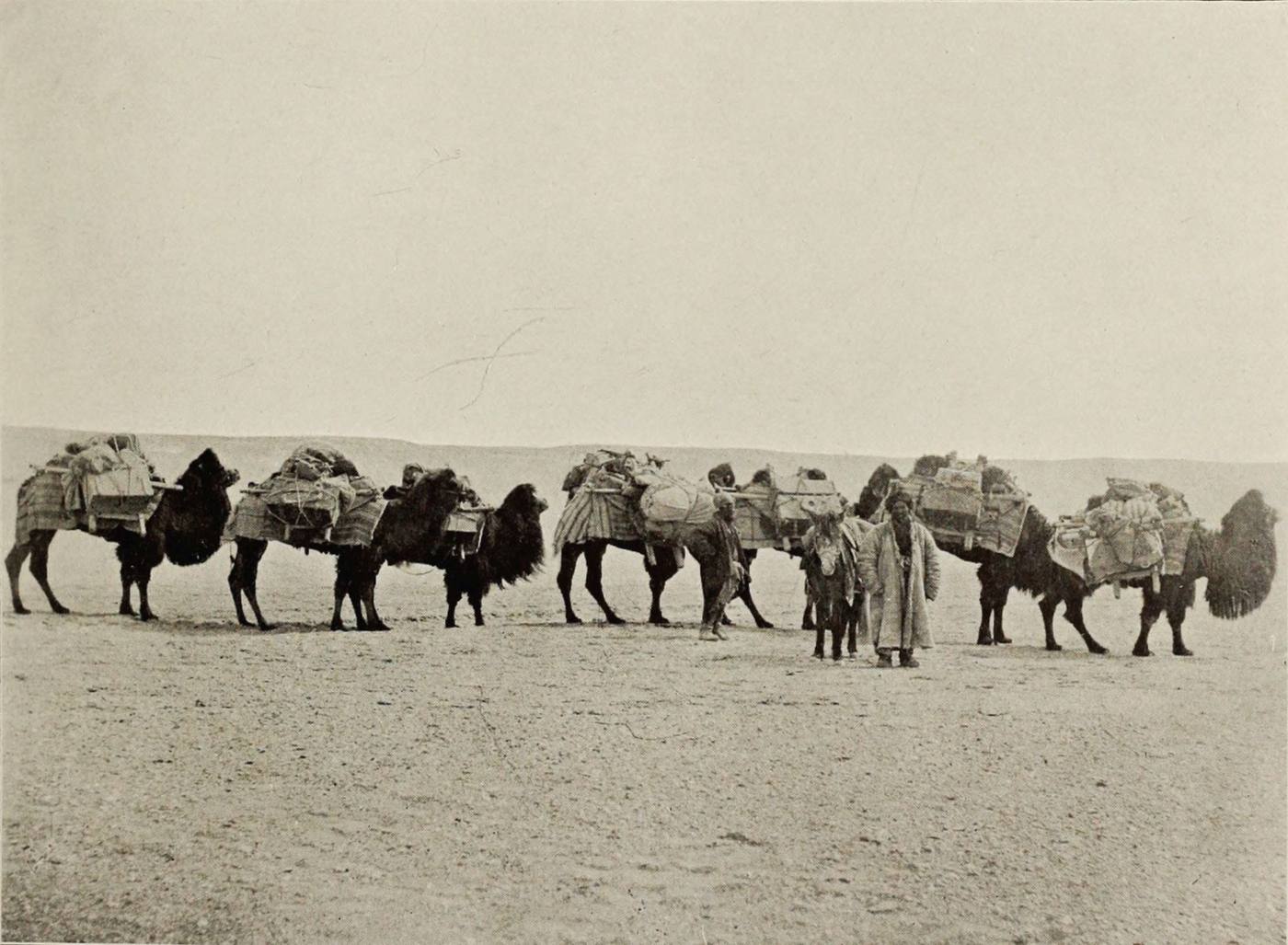
Old photos of camel teams transporting cultural relics
Camel Caravan Carrying Objects | Early 20th-century archival photograph
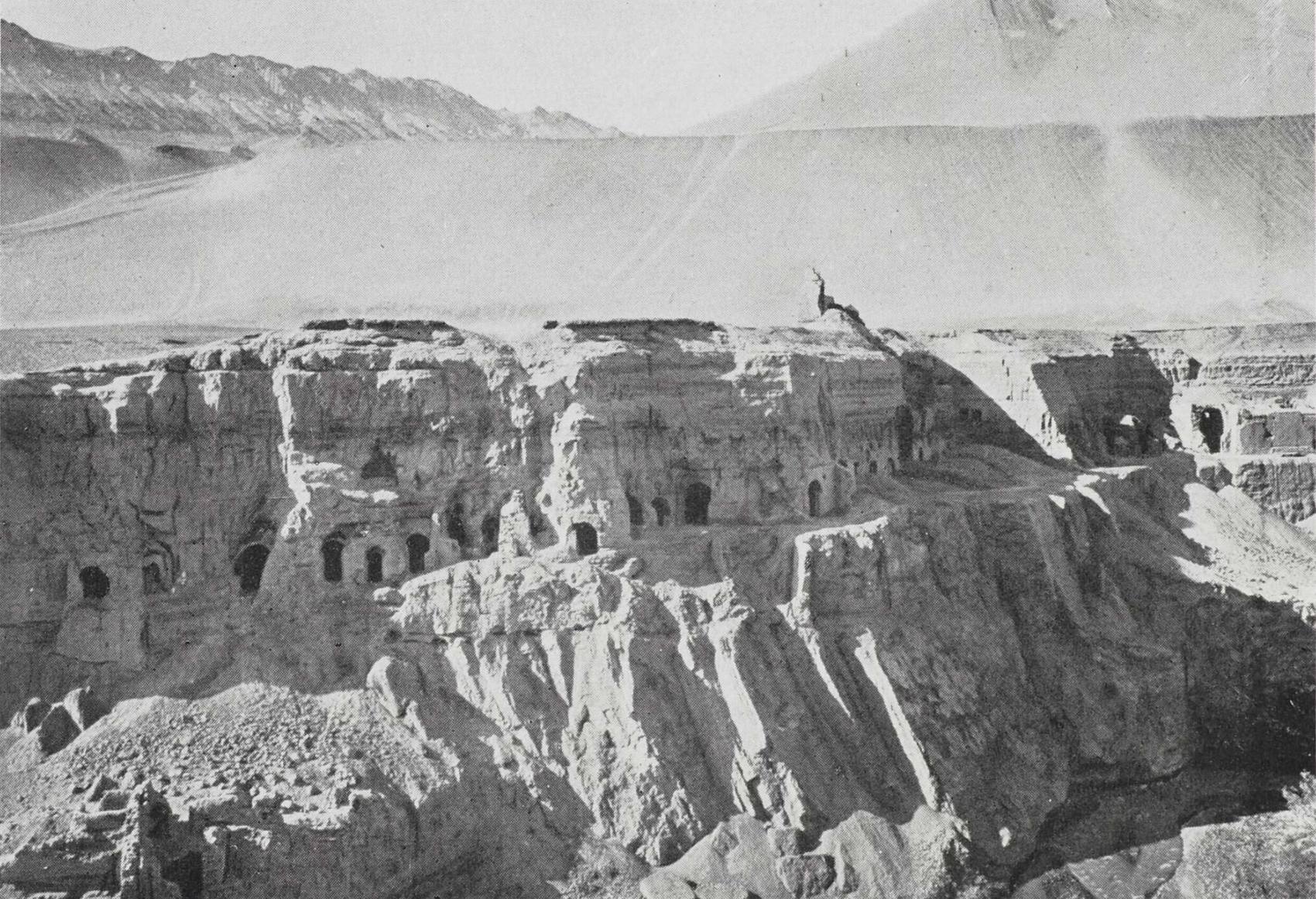
Bezeklik Caves Valley
Bezeklik Grottoes | Early 20th-century archival photograph
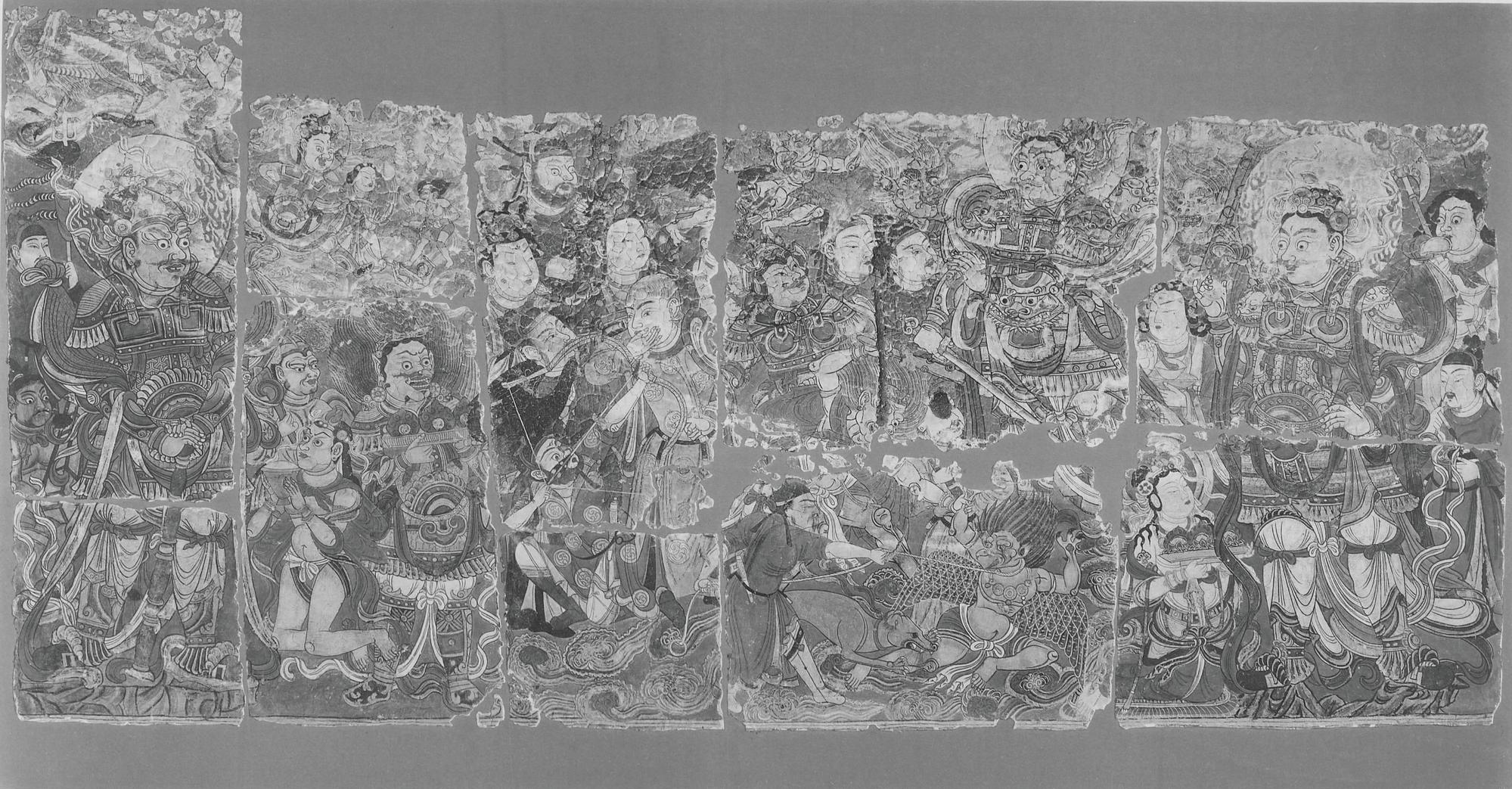
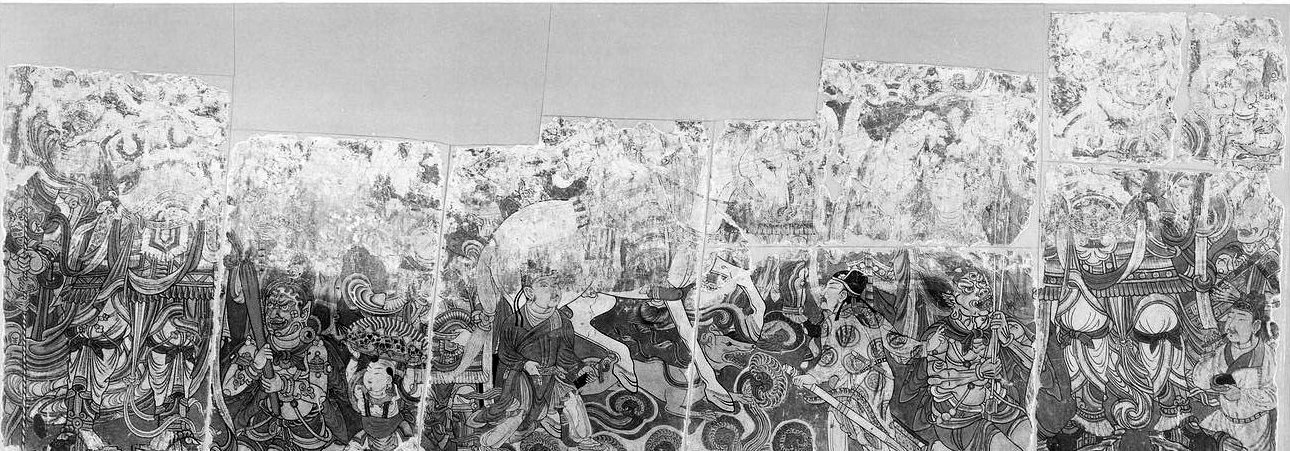
Procession of Vaiśravaṇa · Archival photograph
“Procession of Vaiśravaṇa” · Archival Photograph | Early 20th-century archival photograph · Facsimile of the original collotype plate | The original was destroyed. This black-and-white photograph preserves its appearance.

1945

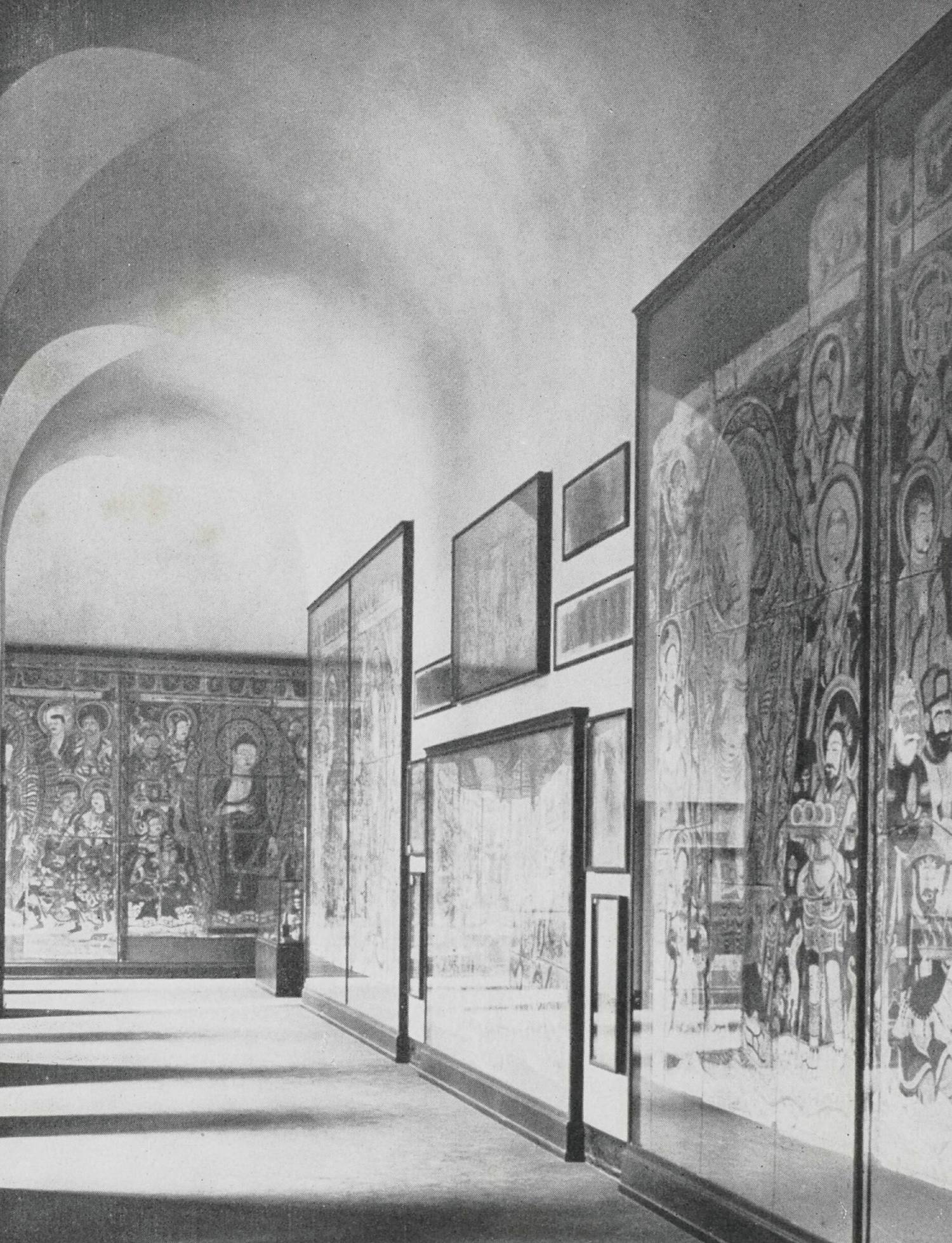
Many of the largest murals taken by Le Coq were mounted in cement in a Berlin museum gallery.

When the wartime air raids began, they were too large to move in time. Staff could only stack sandbags against their protective glass.

A bomb struck the gallery. The paintings shattered with the walls, glass and sandbags. The originals were lost.

Documents remained in wooden crates bearing an arms manufacturer’s name. According to the project’s account, soldiers mistook them for munitions and destroyed them. Only when a crate broke open did they discover what was inside. By then, much had already been lost.
Old photo of Berlin Museum exhibition hall, murals embedded on the wall
Berlin Museum | Photos from the early 20th century · Facsimile of the original collotype plate - the mural was once cemented into the wall of the exhibition hall
0
countries
0
museums

The exhibition’s 2020 archive records surviving fragments in 33 museums in 14 countries.
Most remain in museum storage; only a small number are on display.

—Gallery text, “Fragment Cave”, A Thousand Years of Splendor (2020).

Overseas Museums · Field Research

Field records from visits to two of those countries follow.

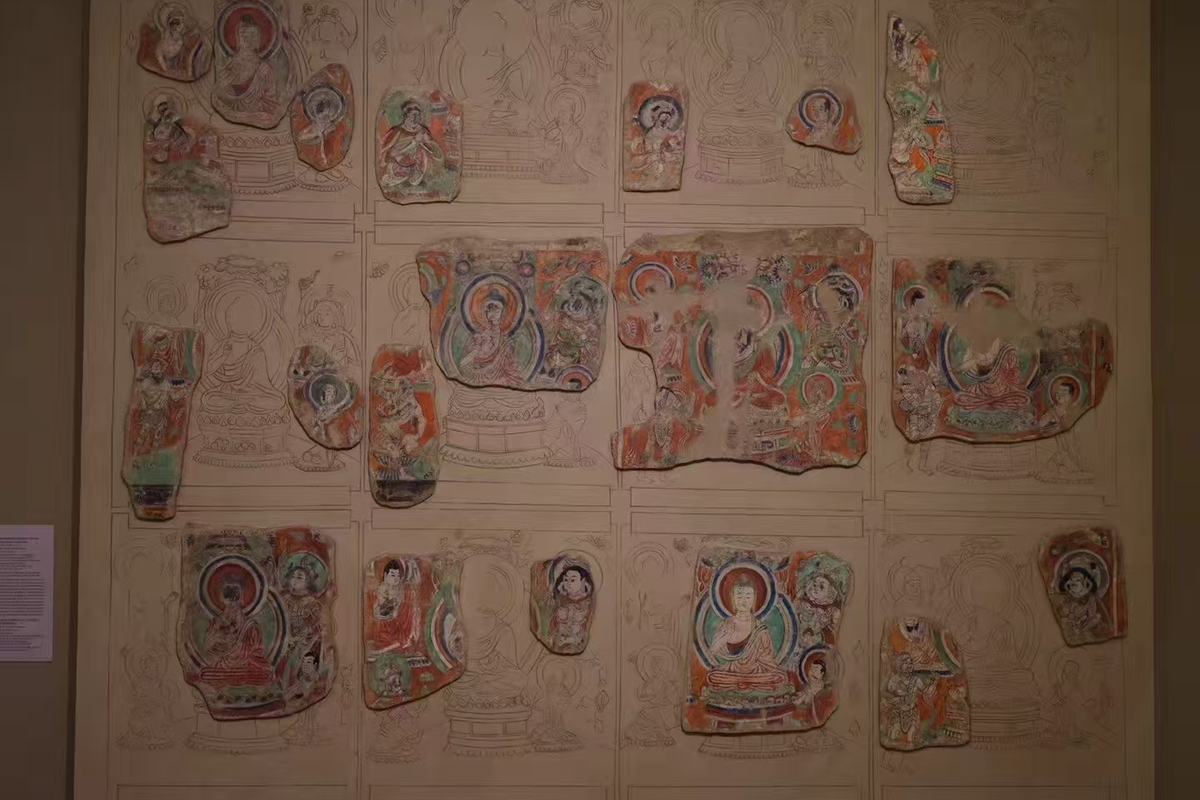
A group of mural fragments in a museum display case
Russia · Group of fragments in display cabinets
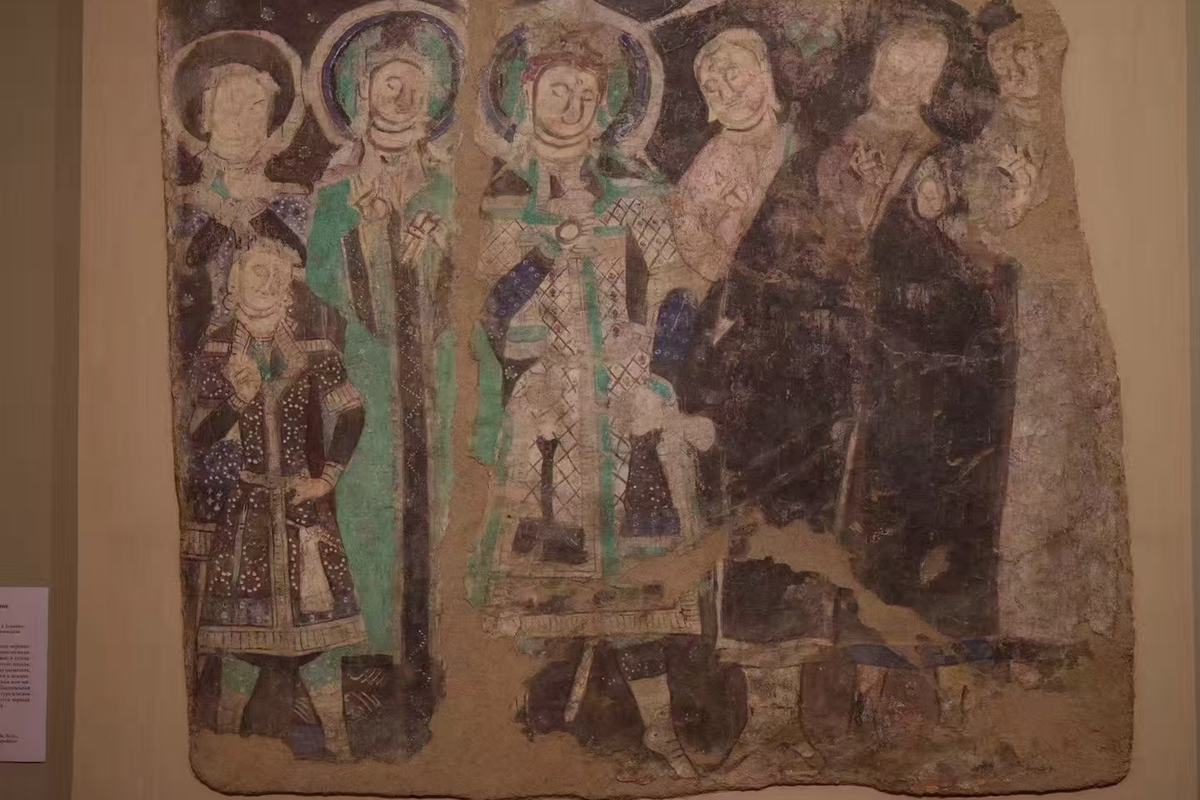
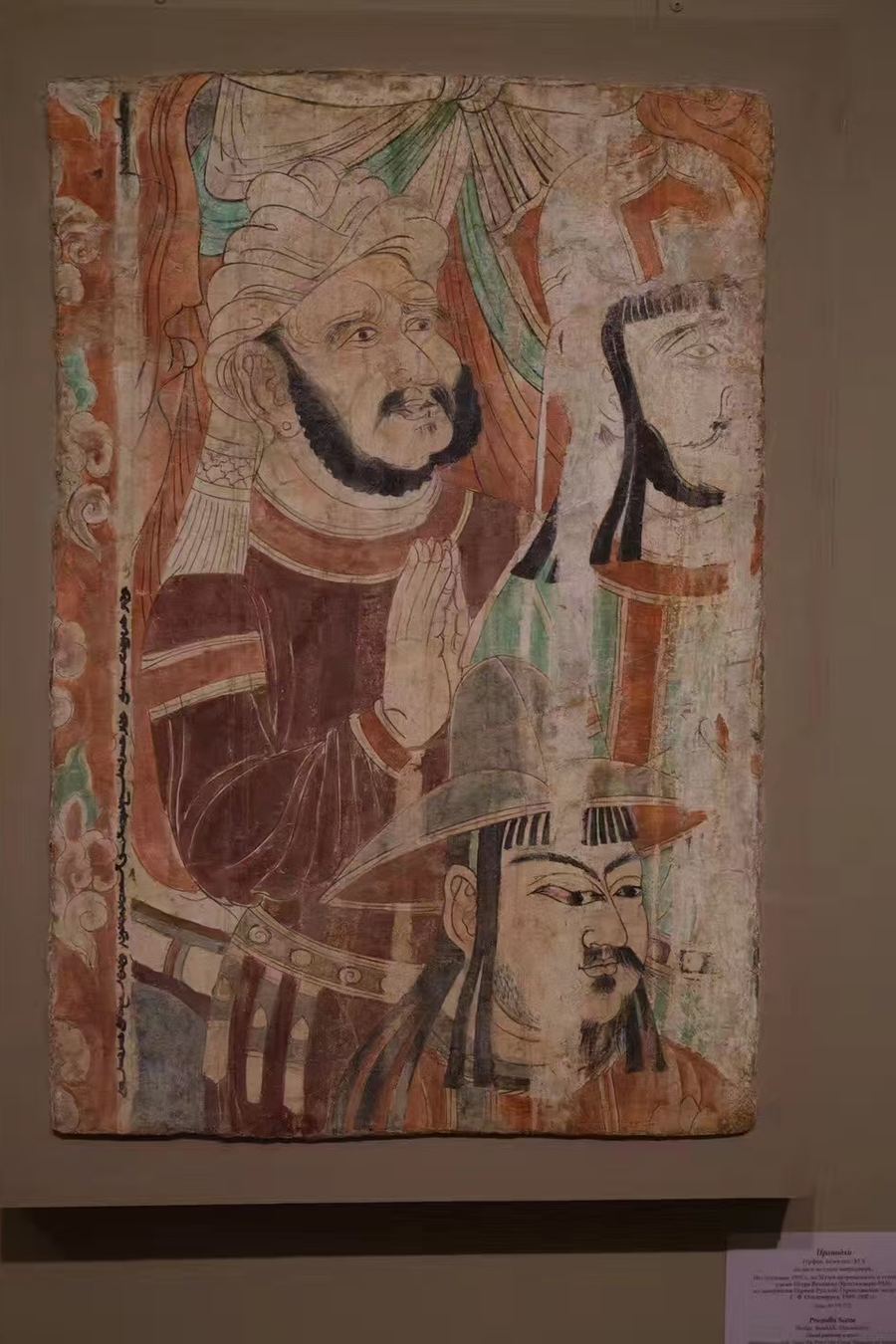
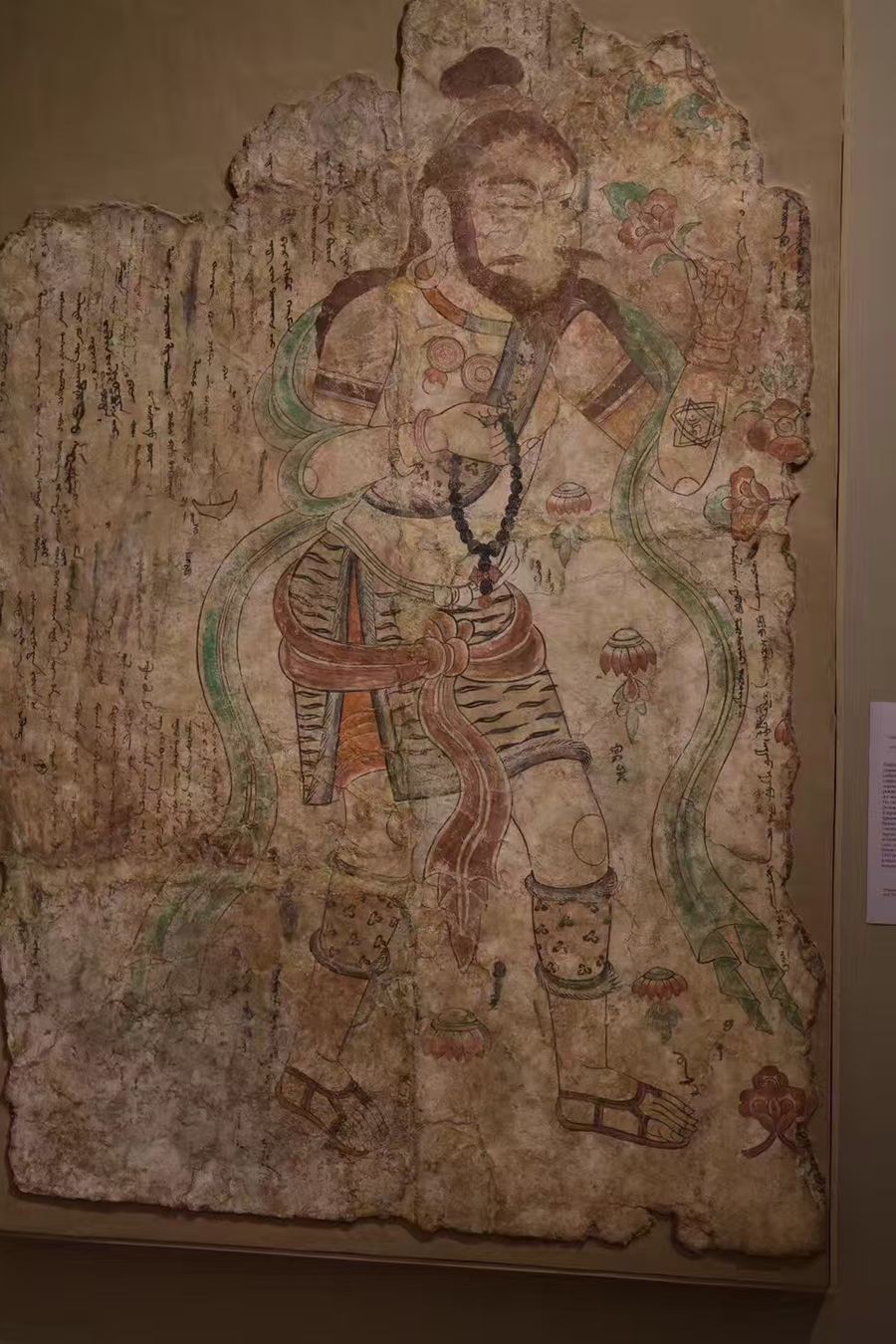
Fragments of donor portraits on display in the museum
Russia · Offering portrait fragments
Fragments of murals on display in the museum
Russia ·Fragments of murals
Fragments of the statue on display in the museum
Russia · Fragments of standing statues
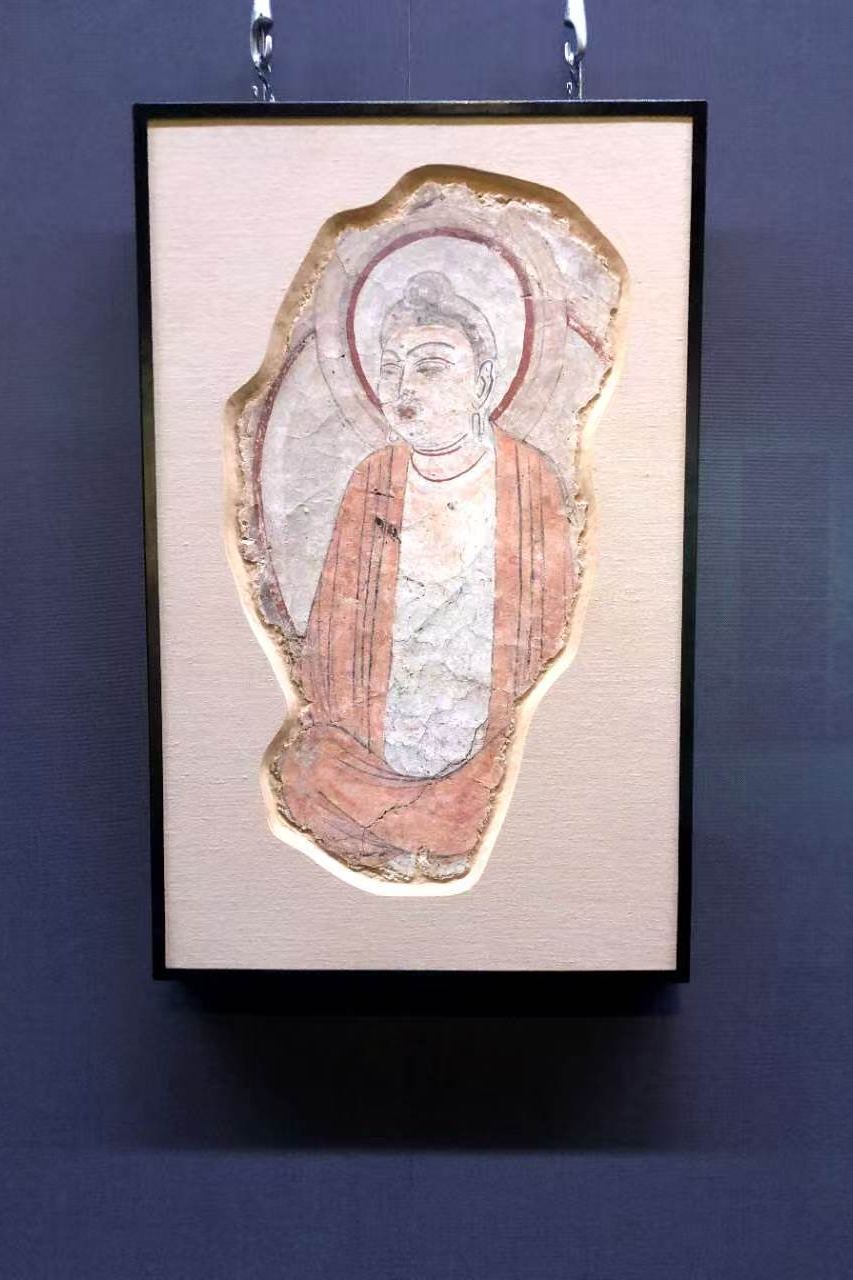
Framed fragments of murals
Tokyo, Japan · Ueno · Framed fragments for display
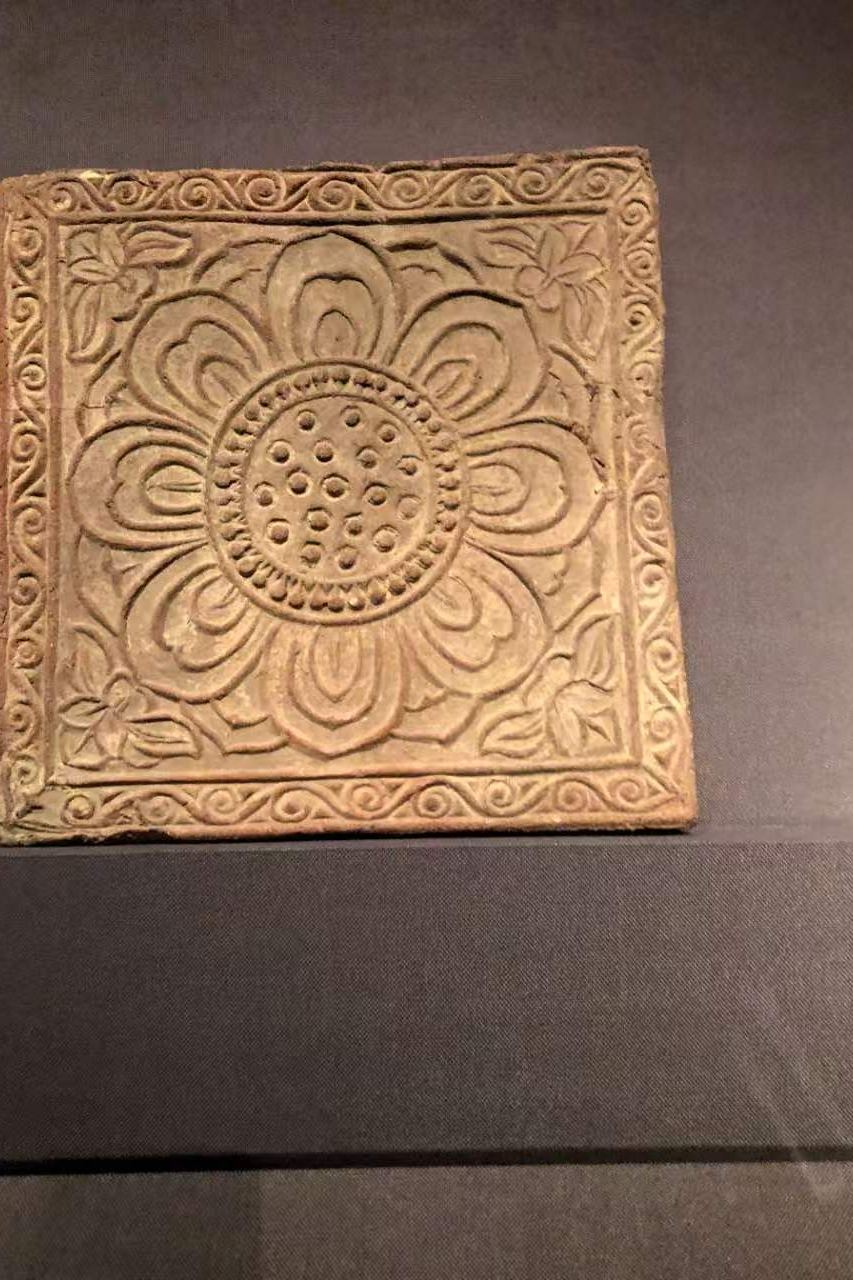
tiles on display
Tokyo, Japan · Ueno · Tiles
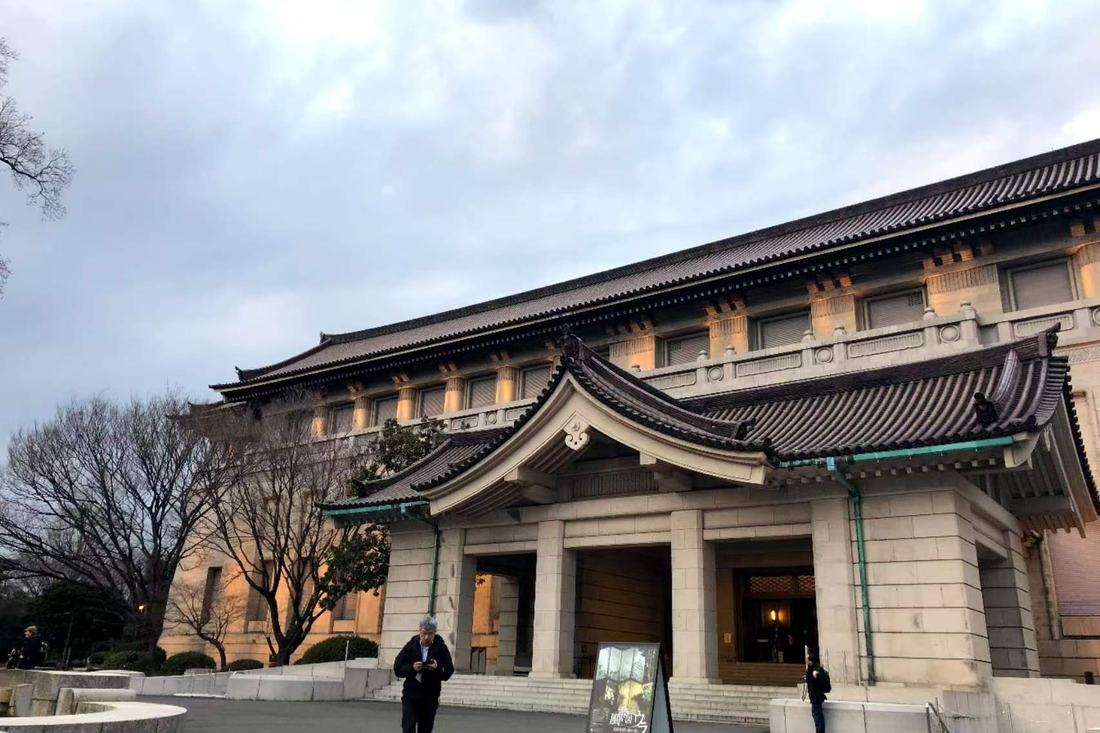
Tokyo National Museum · Main Building
Tokyo, Japan · Ueno ·Museum main building

All photographs were taken during field research for the Cheonbuldong project.

BezeklikIn the Flaming Mountains Gaochang Royal Temple Grottoes Flourished between the 4th and 12th centuries CE
13th–19th centuries · Abandoned and buried
Russian Empire · Kozlov1898Gaochang ruins discovered
Russian Empire · Klementz1898Objects removed and resold
German Empire Grünwedel and Le CoqFour expeditions to the Western Regions from 1902 to 1914 Murals cut into sections and shipped to Berlin
Russian Empire · Oldenburg1908-1910Murals cut into sections and shipped to St Petersburg
Imperial Japan Ōtani Kōzui ExpeditionThree expeditions to the Western Regions from 1902 to 1914Murals cut into sections and shipped to Korea
British Empire · Stein1913-1915Murals cut into sections and shipped to India
Stored at the Asian Art Museum, Berlin1912
Sent to the Russian Academy of Sciences, St Petersburg
War in East Asia1931–1945
Second World War1939-1945
Berlin air raids destroy the gallery1945
Whereabouts unknown
All monumental murals destroyed by war
Berlin State Museums, GermanyPart transferred
Research institutions across EuropeSome dispersed
Russian museums and research institutionsSome transferred to the former Soviet Union
Some objects untraced
State Hermitage Museum, RussiaSome transferred here around 1930
Some objects untraced
National Museum of KoreaPart transferred
Tokyo National Museum, JapanPart transferred
Ryukoku University, Kyoto, JapanPart transferred
Some objects destroyed by war
National Museum of IndiaPart transferred
British MuseumPart transferred
1890
The Dispersal of the Murals · A Century in Fragments
The 2020 exhibition archive records surviving fragments in 33 museums across 14 countries.
Most are held in museum storage; only a small number are on display.
—Routes and destinations follow the project’s Dispersal Map; removal history follows “Catastrophe” in A Thousand Years of Splendor; collection figures follow the 2020 Fragment Cave gallery text.

“This is how Gaochang, after a thousand years beneath the sand, emerged into the world’s attention, only to disappear from view again.”

—“The Catastrophe”, A Thousand Years of Splendor.

We decided to paint them back into being.

Act 7 · Quest and Rebirth

“Once we understood what had happened, we fell silent. We never openly discussed it, but a shared resolve seemed to form between us.”

Reconstructing the Gaochang murals became the museum’s top priority.

—“Quest” and “Nirvana”, A Thousand Years of Splendor.

Knowing who had removed the murals, we turned to their records. The team acquired much of the surviving primary material dating from 1880 onwards, through the Toyo Bunko in Japan, European museum archives and American research institutions. The most important sources were out of print: tens of millions of words in German, much of it archaic or specialist.

Some translation agencies declined the work. Others quoted sums far beyond our means.

So we worked “as we had when learning English at school, dipping into articles with a small dictionary”. We looked for five things: findspot, dimensions, subject, date and what had happened to the object.

“By the end of it, we had somehow still learned very little German.”

We traced connections between images scattered around the world and assembled fragments like a jigsaw. Century-old photographs no larger than an A4 sheet had to guide paintings three or four metres across. Mineral optics and tonal values helped us work backwards from black and white towards colour.

“Those few words barely begin to describe a long, painful process of discovery, failure and trying again.”

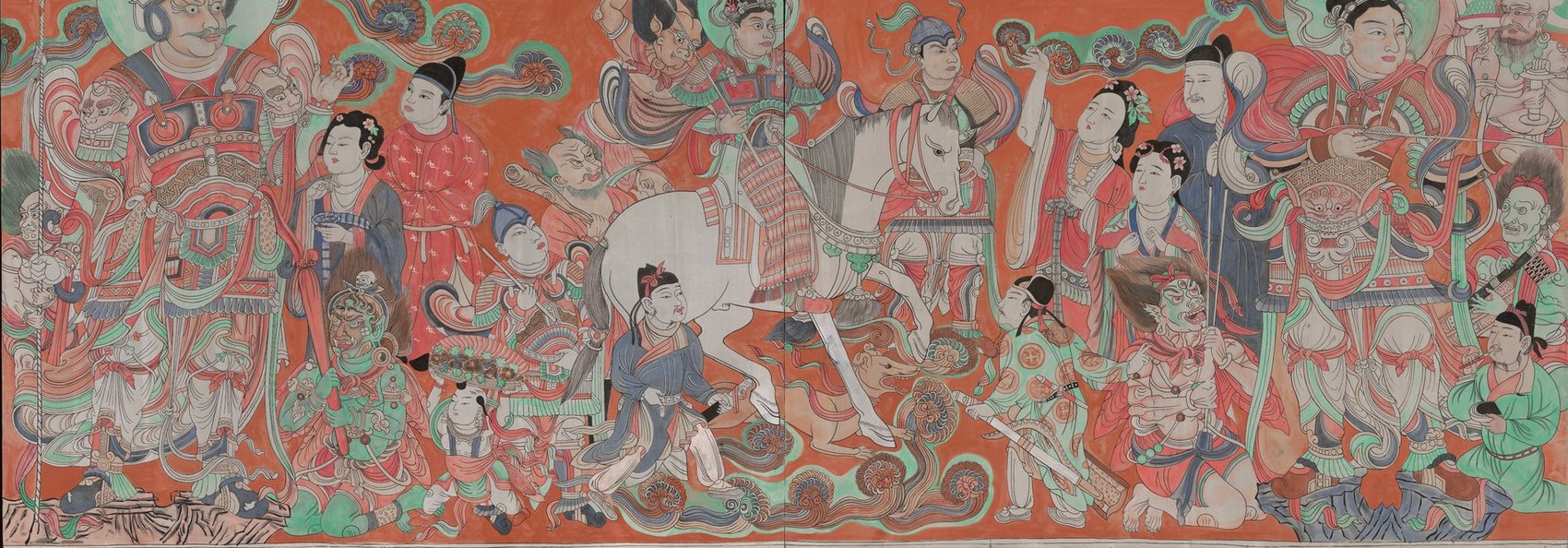
Procession of Vaiśravaṇa · Reconstruction by TAIS Art Museum
Procession of Vaiśravaṇa · Facsimile of the original book plate
Facsimile of the original collotype plate Reconstruction in natural mineral pigments Hold and drag
“Procession of Vaiśravaṇa” | Original: South wall of the main chamber of Cave 20 of Bezeklik Grottoes | Left: Photo from the early 20th century · Facsimile of the original collotype plate | Right: Reconstructed by TAIS Art Museum, painted with natural mineral pigments · "Eight Classes of Buddhist Guardian Beings and Processions of Heavenly Kings" series © CHEONBULDONG

Drag left or right to compare the archival photograph with the reconstruction in mineral pigments.

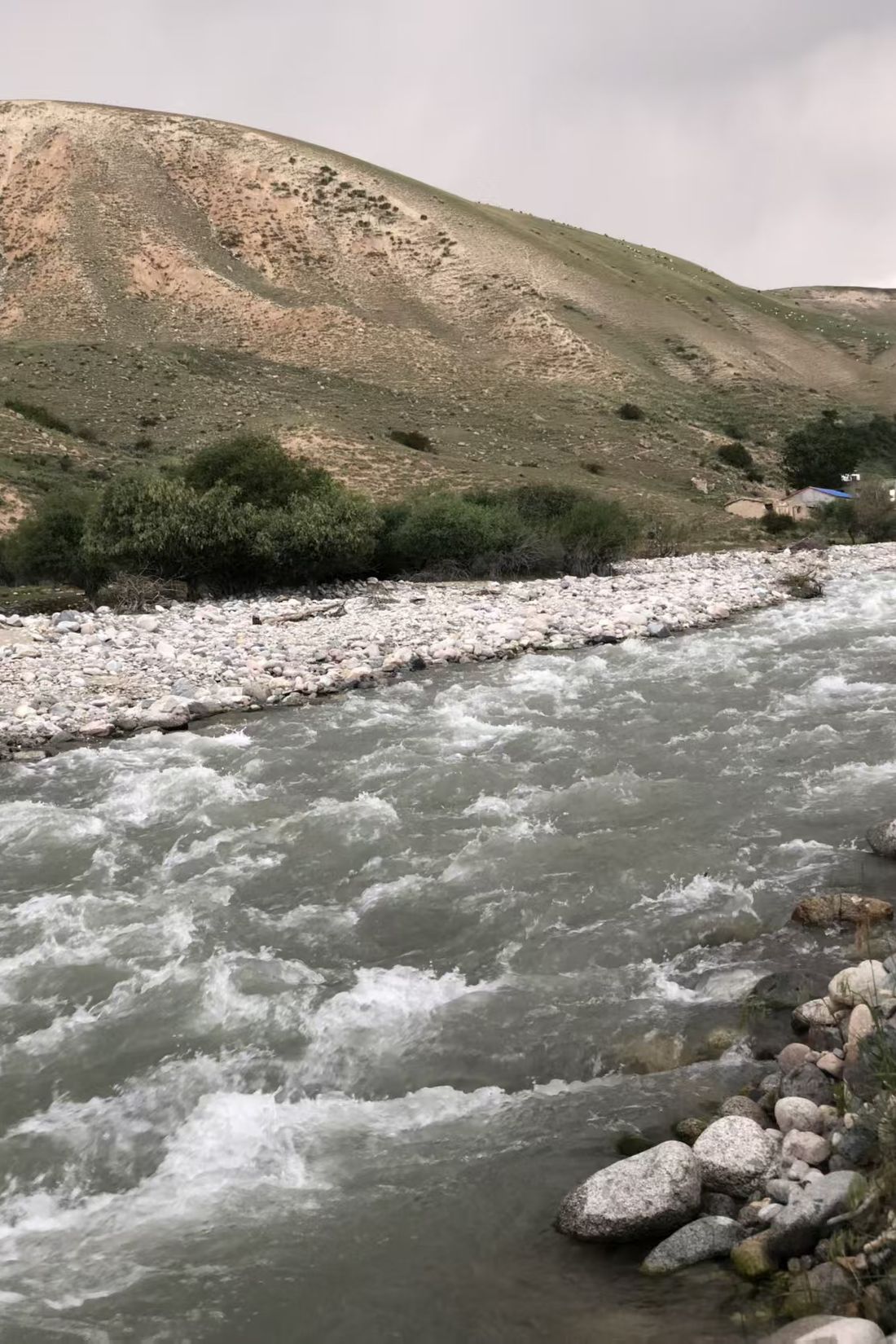
That year, after crossing Bingdaban in the Tianshan Mountains, we reached Nalati, the “grassland in the sky”.

Local people say that "Nalati" means "sun" in Mongolian.

“See it through. Finish what we started, for everyone who has given so much.”

—“Nirvana”, A Thousand Years of Splendor.
Tianshan Valley and River
Taken during a field trip to Xinjiang
May 2019

The first phase of the cave corridor reconstruction was complete.
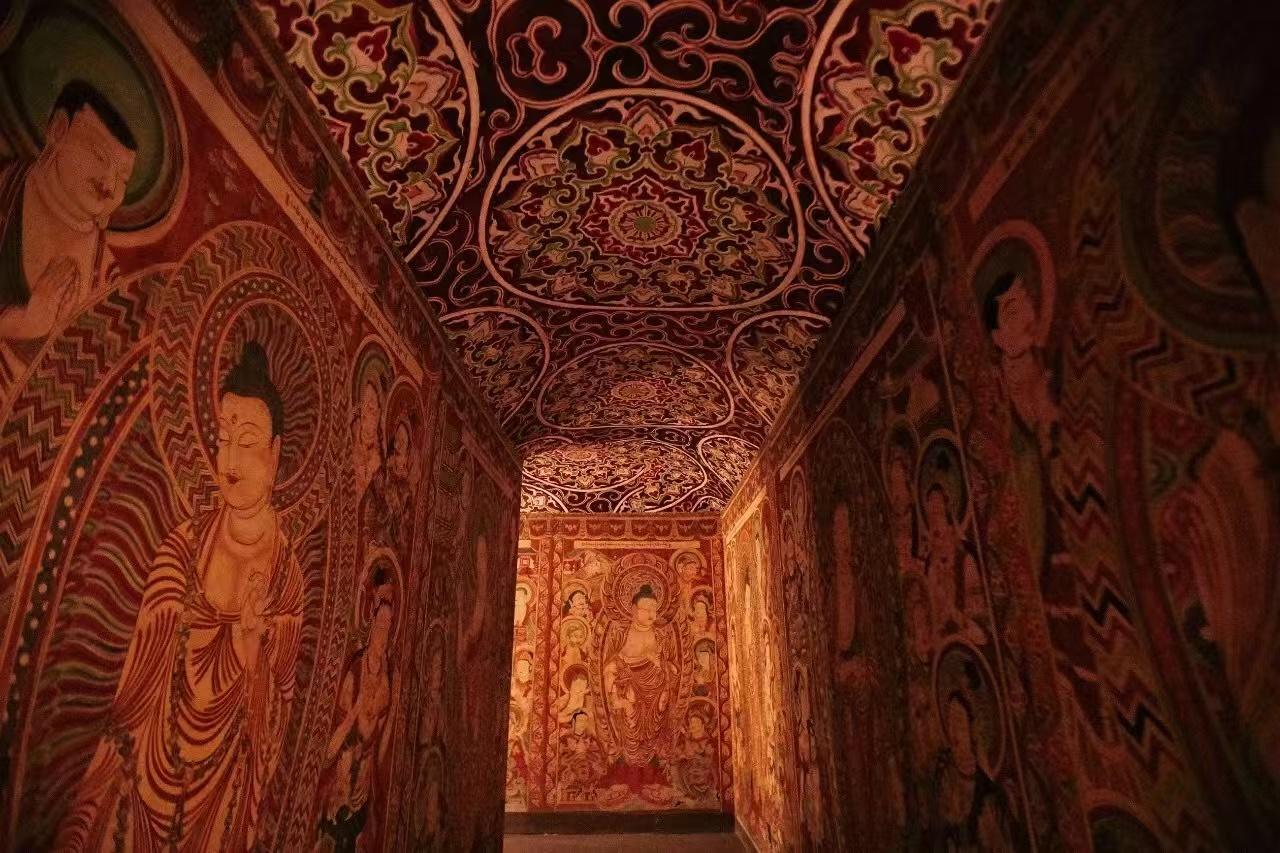
Eight monumental Pranidhi paintings reappeared, as close as possible to how they looked when first painted a thousand years ago.

—“Nirvana”, A Thousand Years of Splendor.
Act 8 · Splendour Reborn

Forty-eight sections were scanned, labelled and assembled in a corridor five metres high and twenty-one metres long.

“Only when we saw them together in the corridor did any of us truly see what the paintings were meant to be.”

“For the murals, these twenty-odd metres held more than a century of displacement. For us, they held the brightest years of our youth. We walked back and forth, lingering, unwilling to leave.”

—“Nirvana”, A Thousand Years of Splendor.
Reconstructed Mural Corridor · Installation View
Restoration of corridor · Exhibition site| TAIS Art Museum © CHEONBULDONG
Restoration corridor video | TAIS Art Museum

Fifteen Corridor Panels · Plan and Locations

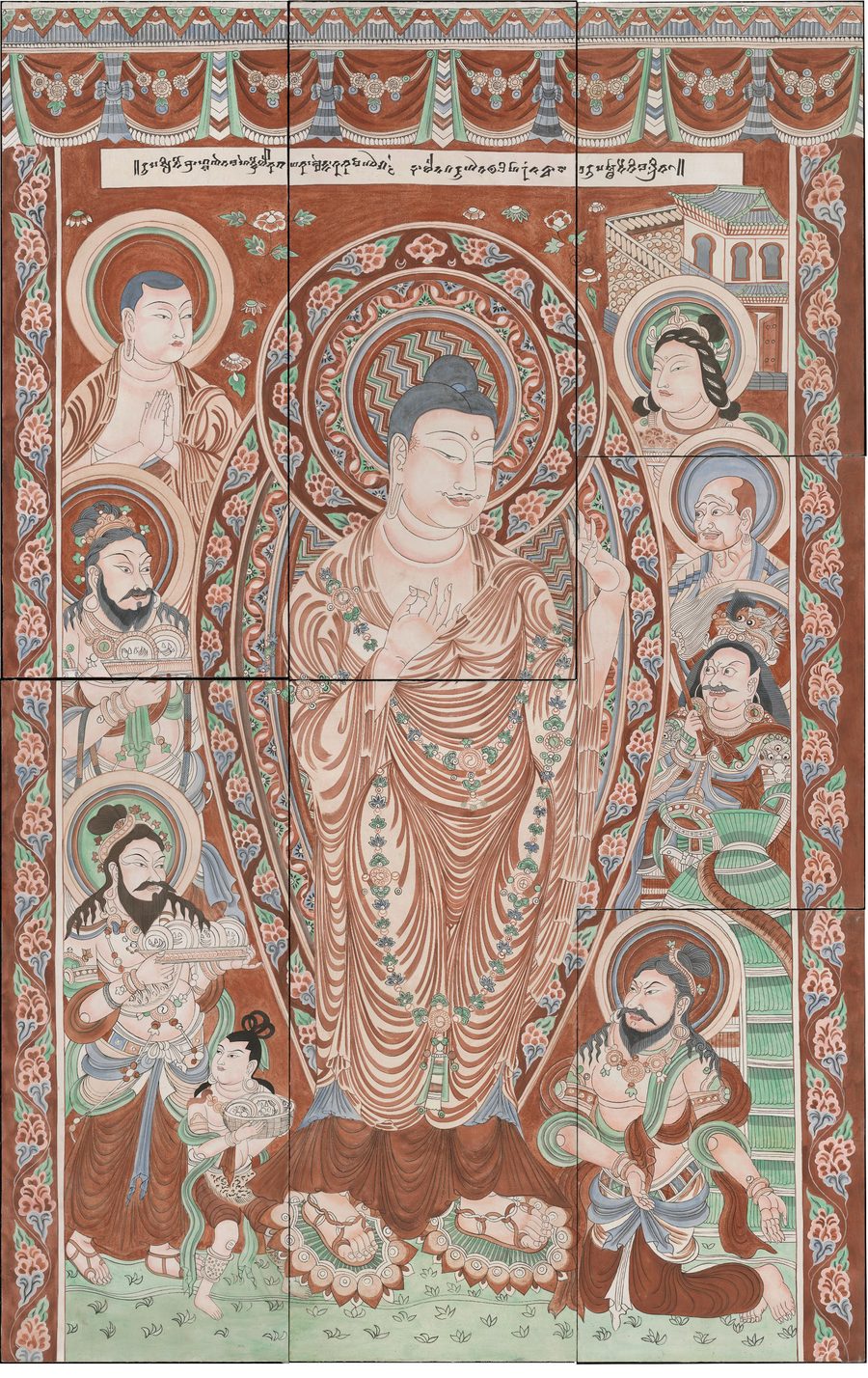
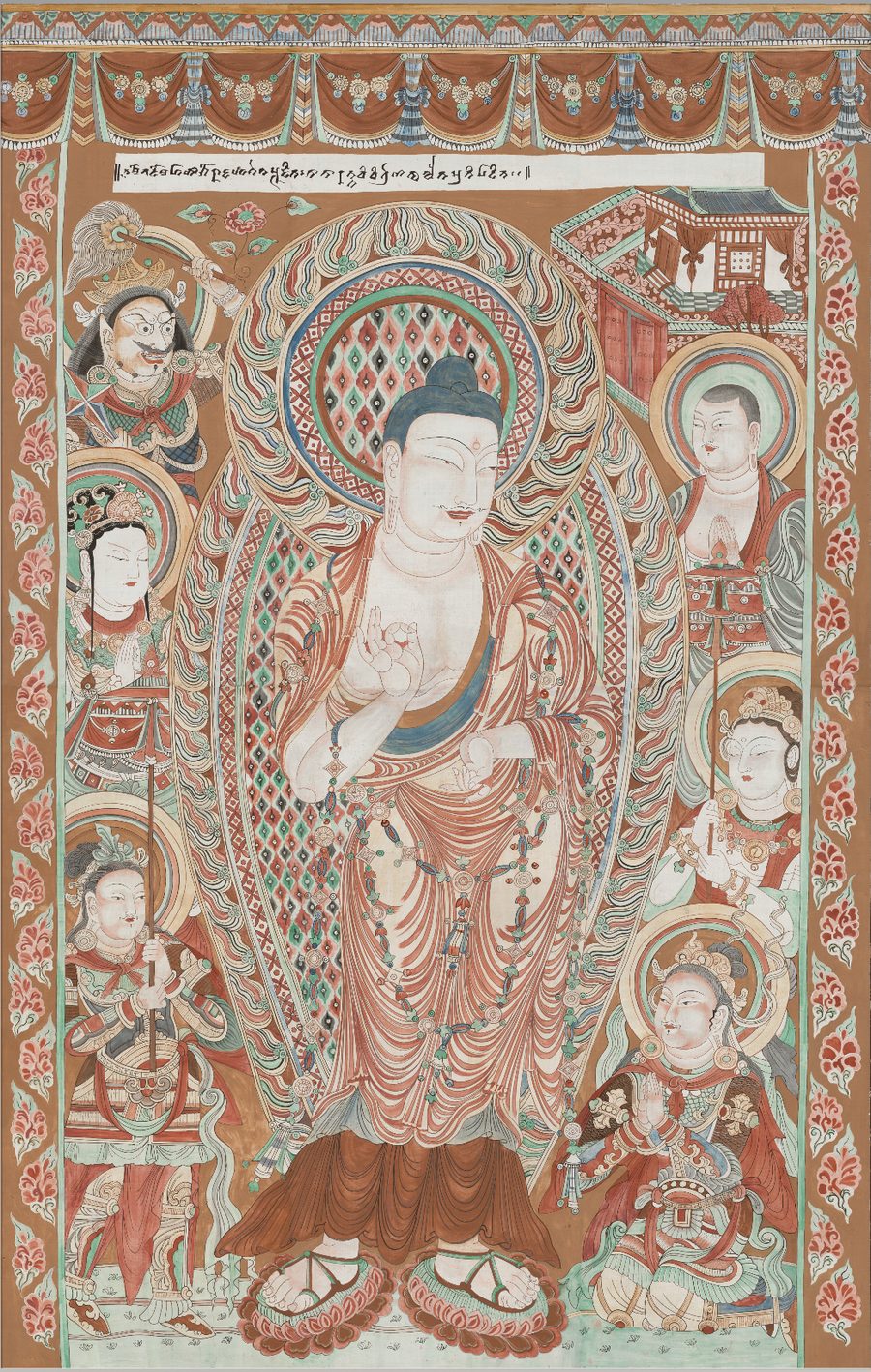
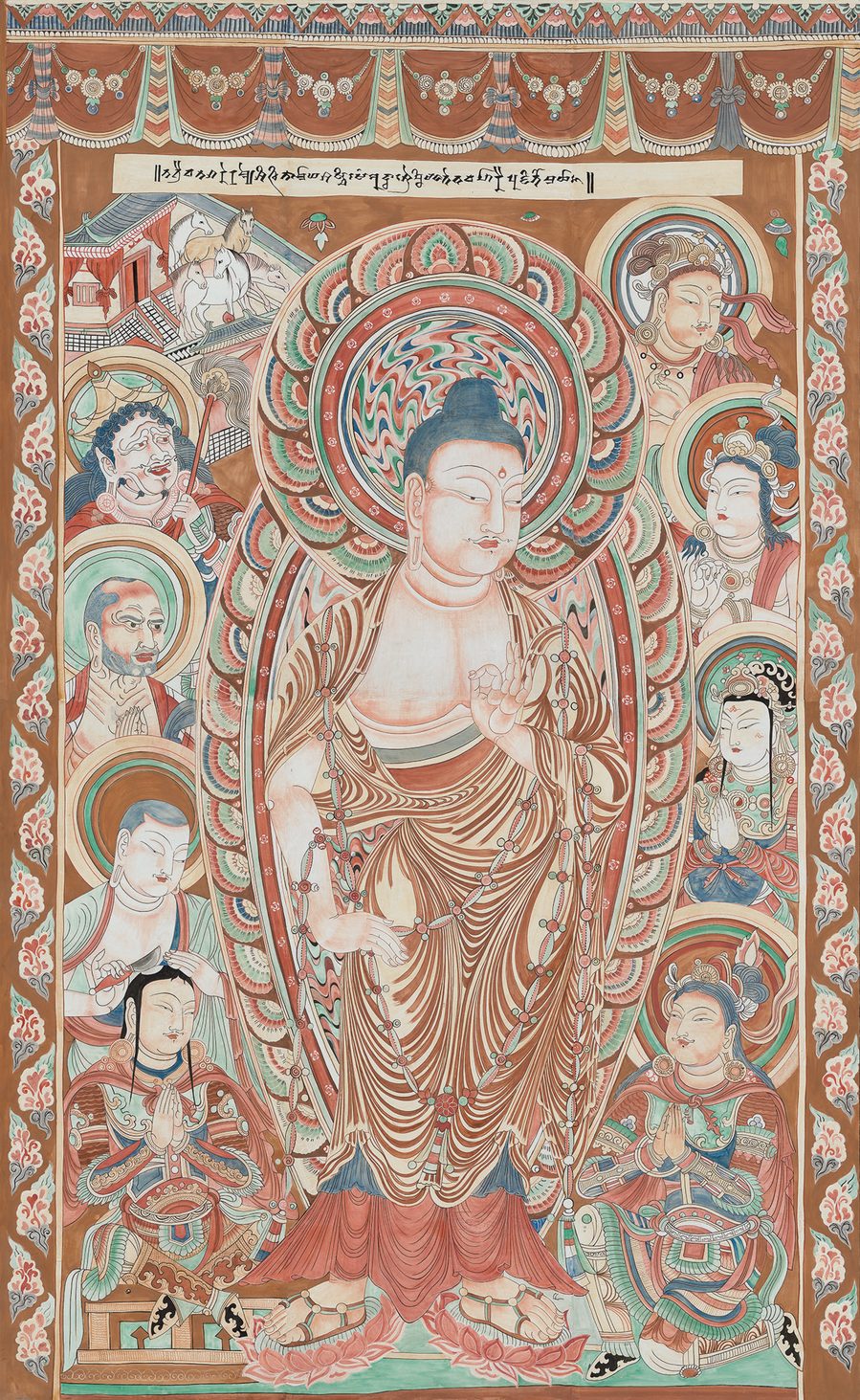
Three corridors surround the main chamber: three panels on each longer outer wall and two on each shorter inner wall, fifteen in all.

From the launch in 2019 to 2023, we reconstructed thirteen murals.

Entrance Entrance South Corridor·Exterior Wall Back corridor·Exterior wall North Corridor · Exterior Wall 1 2 3 4 5 6 7 8 9 10 11 12 13 14 15
Main chamberSelect a panel number to view it here

Numbering begins with the front panel of the left (south) corridor, following the outer walls before the inner walls. Digital material for Panel 8 is not yet included. Panels 12 and 13 were already untraced when Le Coq arrived. The other originals were removed and later destroyed.

Pranidhi Scene, Panel 1 · Reconstructed by TAIS Art Museum
Panel 1
Pranidhi Scene, Panel 2 · Reconstructed by TAIS Art Museum
Panel 2
Pranidhi Scene, Panel 3 · Reconstructed by TAIS Art Museum
Panel 3
Pranidhi Scene, Panel 4 · Reconstructed by TAIS Art Museum
Panel 4
Pranidhi Scene, Panel 5 · Reconstructed by TAIS Art Museum
Panel 5
Pranidhi Scene, Panel 6 · Reconstructed by TAIS Art Museum
Panel 6
Pranidhi Scene, Panel 7 · Reconstructed by TAIS Art Museum
Panel 7
Pranidhi Scene, Panel 9 · Reconstructed by TAIS Art Museum
Panel 9
Pranidhi Scene, Panel 10 · Reconstructed by TAIS Art Museum
Panel 10
Pranidhi Scene, Panel 11 · Reconstructed by TAIS Art Museum
Panel 11
Pranidhi Scene, Panel 14 · Reconstructed by TAIS Art Museum
Panel 14
Pranidhi Scene, Panel 15 · Reconstructed by TAIS Art Museum
Panel 15

—Corridor layout, panel positions and numbering checked against TAIS Art Museum’s reconstruction archive.

国作登字-2021-F-00036213Copyright registration at the National Copyright Administration

Traces and Rebirth

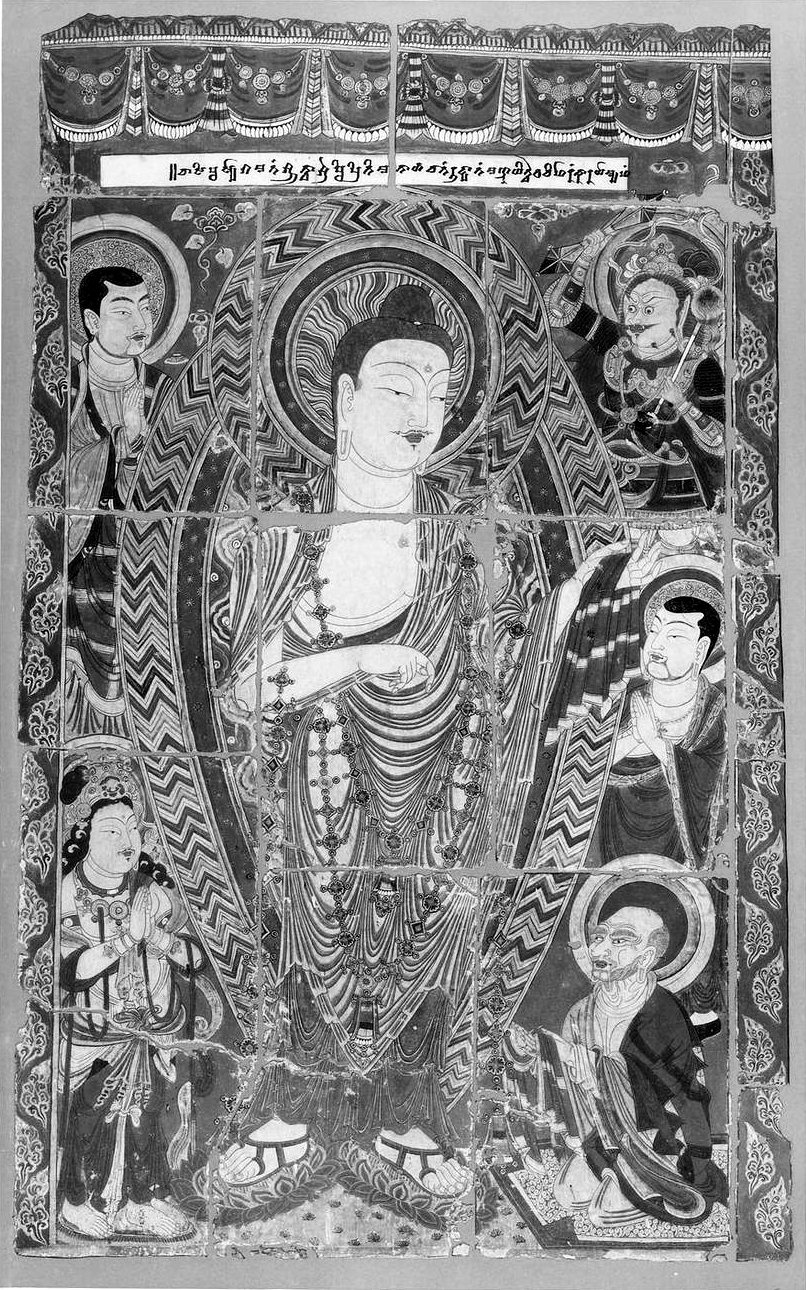
The same painting across a century: an early black-and-white photograph and a reconstruction in natural mineral pigments.

Pranidhi painting · TAIS Art Museum Restoration
Pranidhi painting · Photo from the early 20th century
Facsimile of the original collotype plate Reconstruction in natural mineral pigments Hold and drag
Bezeklik Caves Valley, early 20th century
Bezeklik Grottoes | Early 20th-century archival photograph

Pranidhi paintings show the future Buddha making offerings to Buddhas of the distant past: a life and a story in each monumental composition. Their Sanskrit inscriptions can still be connected with Buddhist narratives. They are among the great achievements of Silk Road cave art.

The paintings bring together faces and dress from across the Silk Road: bodhisattvas recalling the Chinese heartland, Sogdian merchants, and patrons with links to the Xiongnu, Korea and Persia.

—Gallery text, “Bezeklik Corridor”, A Thousand Years of Splendor (2020).

Original location: Cave 20 of Bezeklik Grottoes.

8May 2019 · Phase I→ 12½/ Fifteen panels in the full corridor · Two and a half were already lost before Le Coq arrived→ 13Monumental paintings
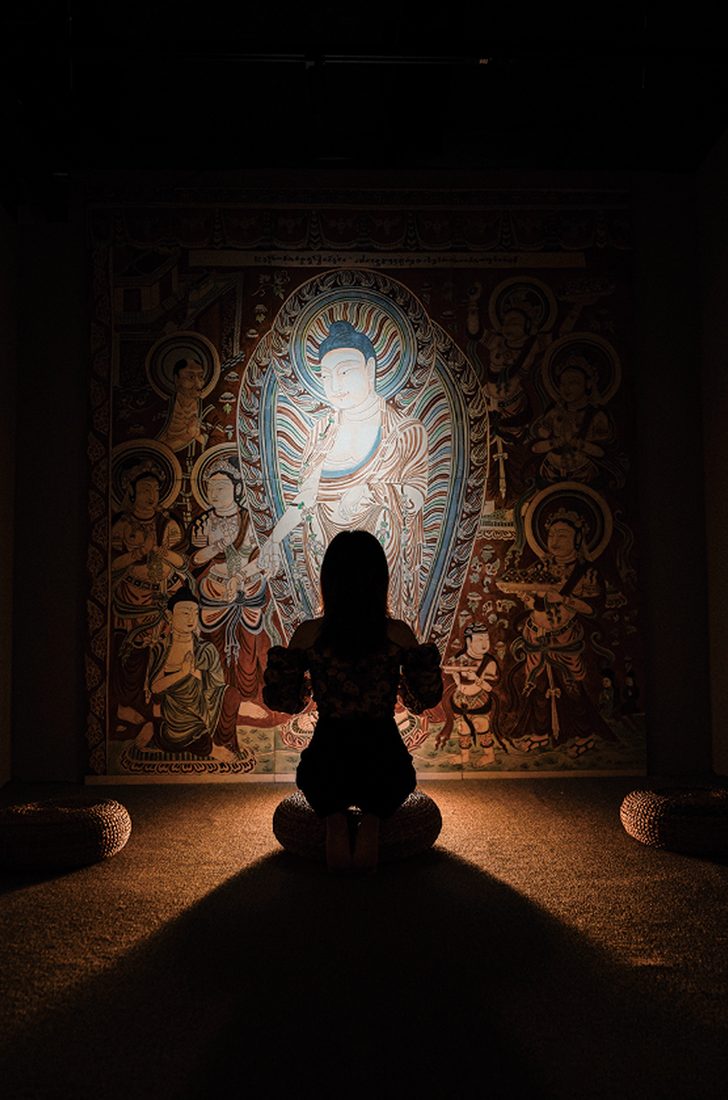
A visitor seated before a Pranidhi painting in the meditation room
Pranidhi Painting · Meditation Room| “Pranidhi Scene” (325 × 300 cm) · Original: Bezeklik Cave 20 · Full-scale reconstruction by Cheonbuldong Painting Academy in gemstone and mineral pigments. Collection: TAIS Art Museum © CHEONBULDONG
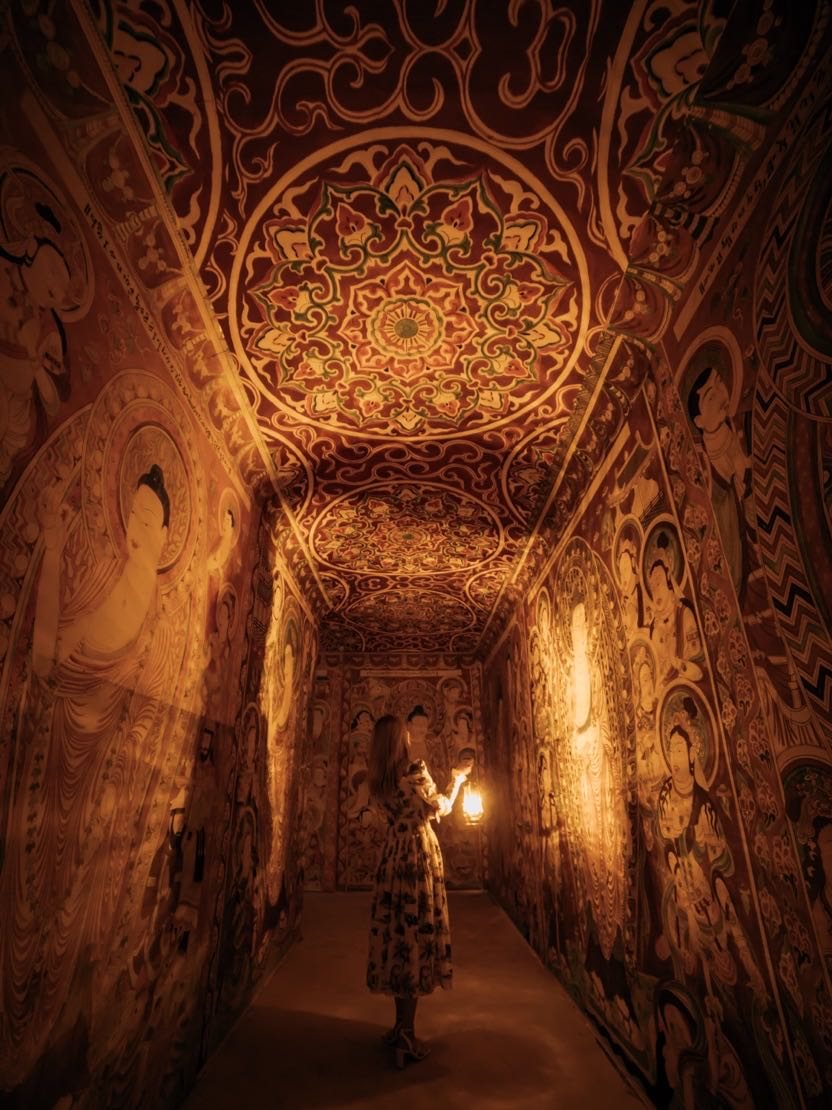
Looking down the reconstructed cave corridor with its Pranidhi paintings
Reconstructed cave corridor with Pranidhi paintings| TAIS Art Museum © CHEONBULDONG
Entering the Reconstructed Corridor by Lantern Light
Restoration of the Grotto Tunnel · Lantern| TAIS Art Museum © CHEONBULDONG

When the exhibition opened, we became volunteer guides, sharing the stories with visitors.

“As we spoke, our eyes filled with tears.”

—“Nirvana”, A Thousand Years of Splendor.

The murals were back. Now it was time for more people to encounter them.

Act 9 · Three Thousand Years of a Flower · Sharing the Work

The murals were back. But they still belonged to walls and galleries.
Could this beauty come home with us?

It began with a flower.

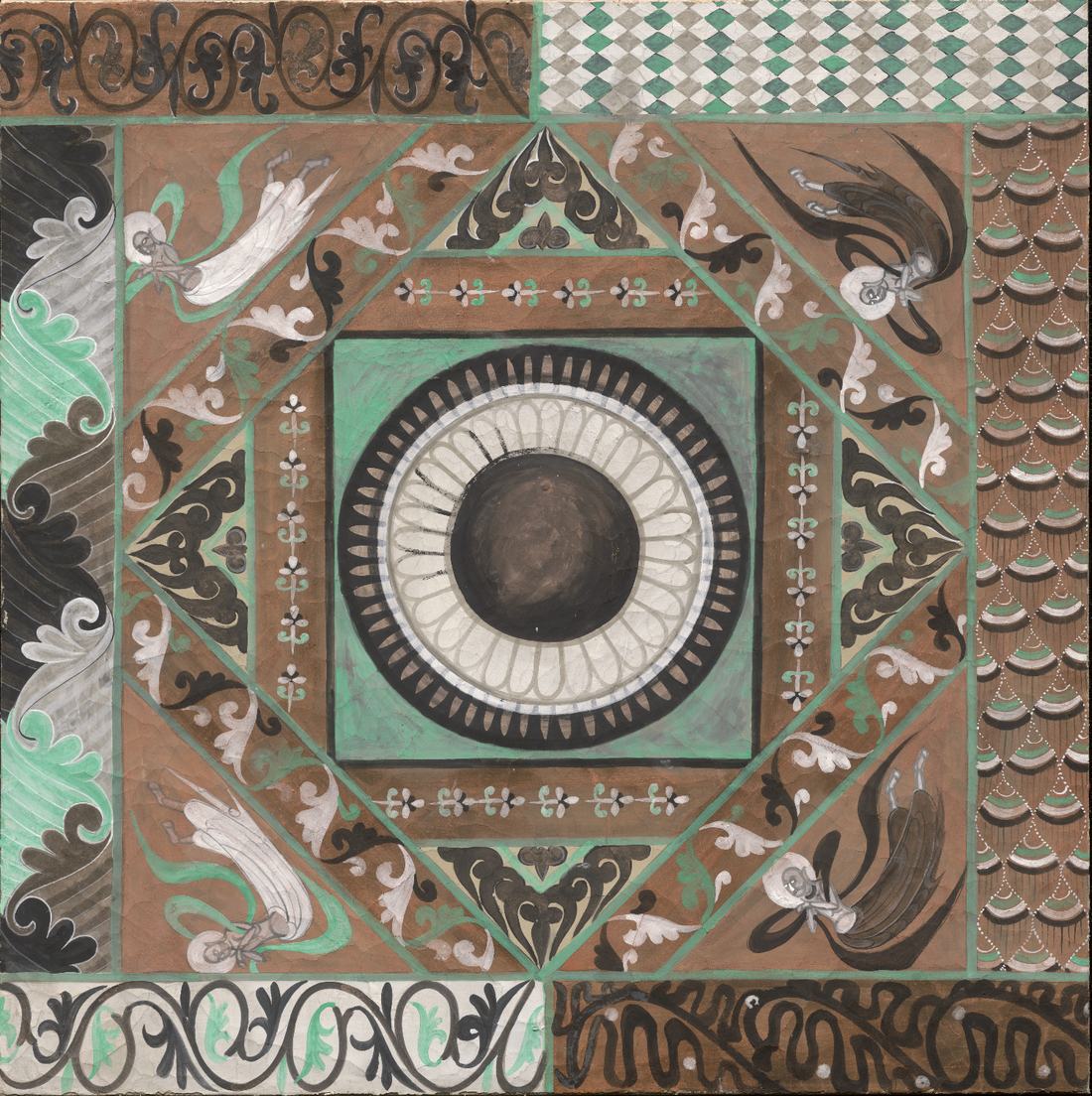
The story began with the painted ceiling of a Tang-dynasty cave at Dunhuang. Its roof had collapsed and the painting was damaged. In 2016, having recovered the use of gemstone and mineral pigments, Cheonbuldong Painting Academy reconstructed the ceiling mural.

—Foreword and “Origin”, Baoxiang in Bloom exhibition, TAIS Art Museum (2019).
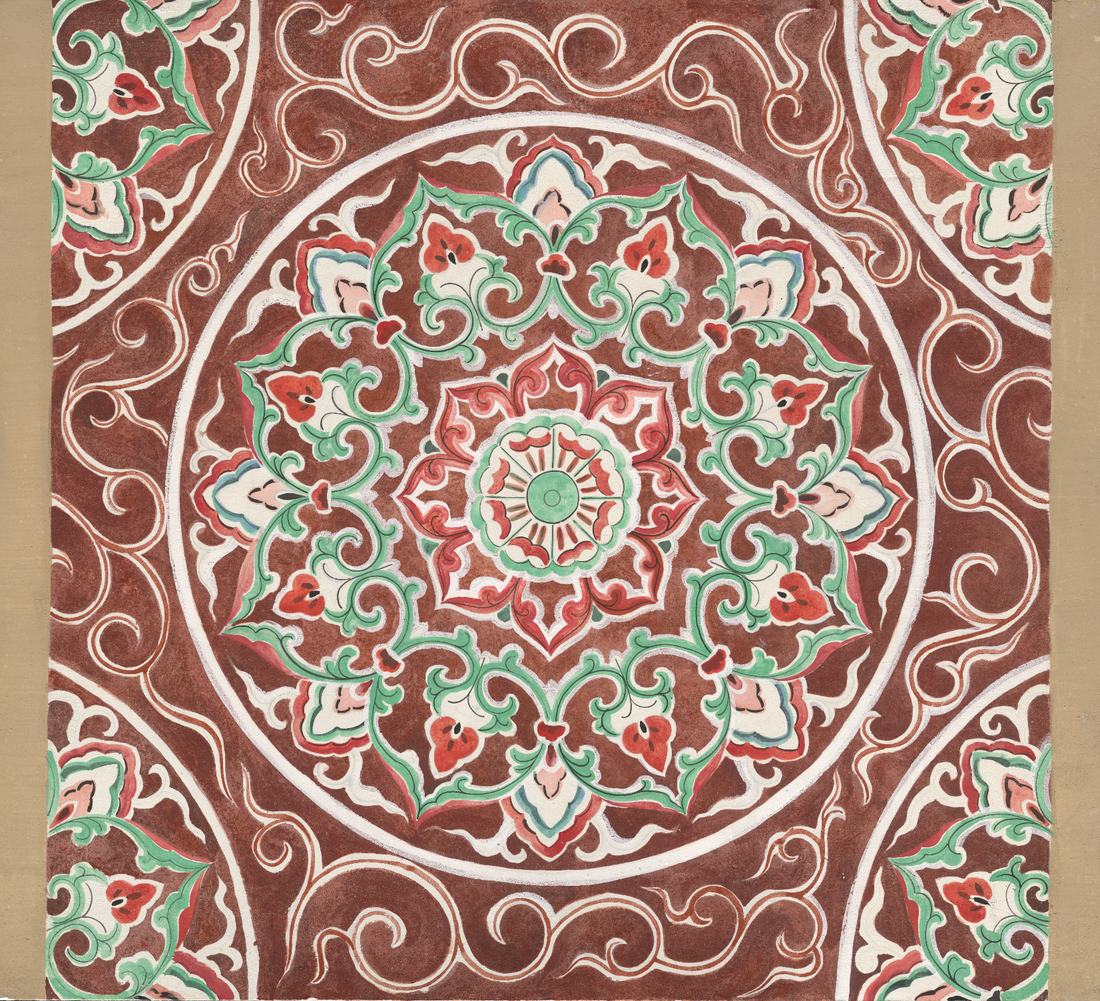
Tang Baoxiang Flower Ceiling Mural, restored in 2016
"Tang Baoxiang Flower Ceiling Mural" | Original: Painted ceiling of a Tang-dynasty cave at Dunhuang | Reconstruction in gemstone and mineral pigments by Cheonbuldong Painting Academy (2016). Collection: TAIS Art Museum © CHEONBULDONG

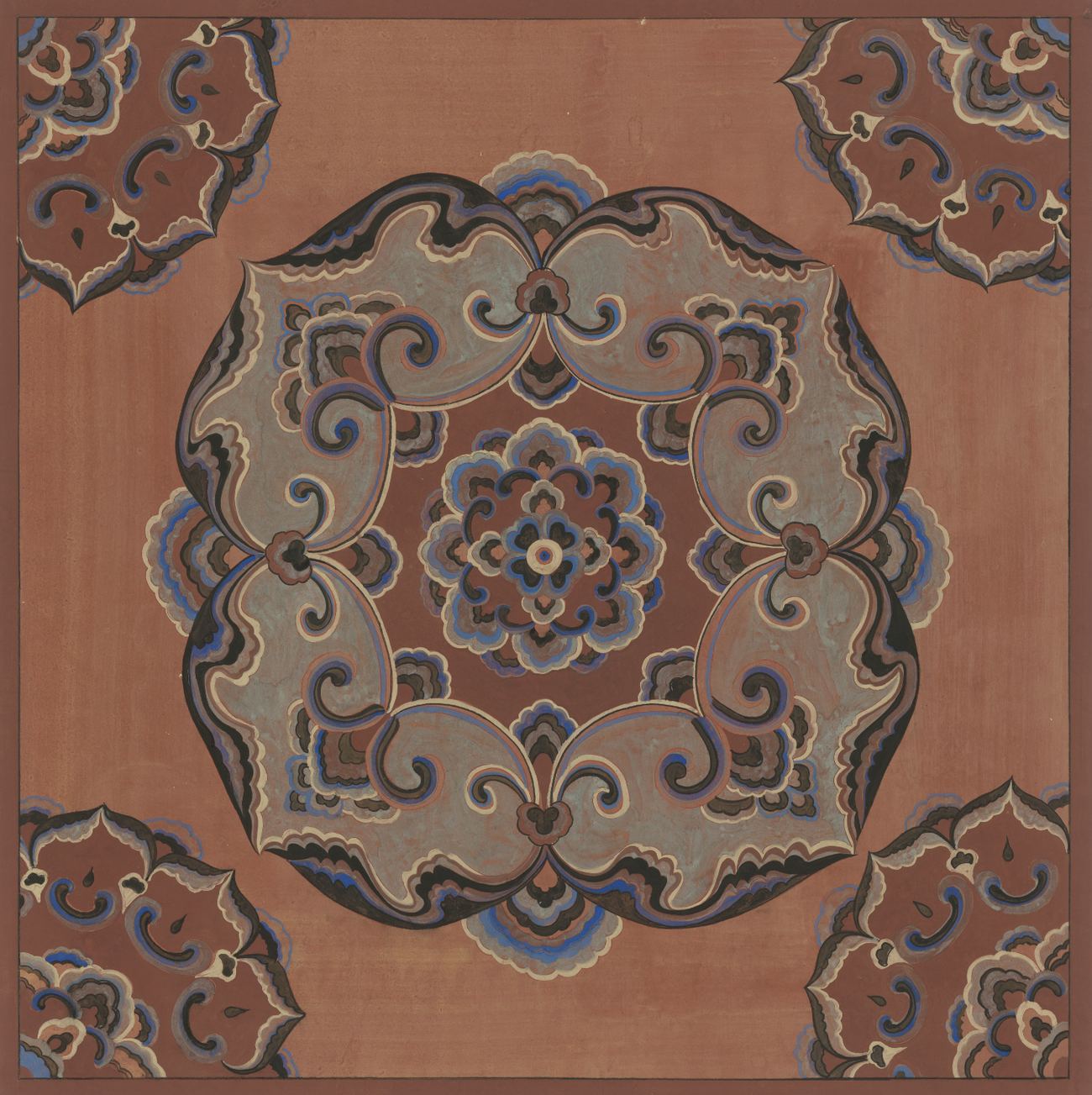
The baoxiang flower is an imagined blossom, combining the peony’s fullness, the lotus’s purity and the chrysanthemum’s resilience, entwined with honeysuckle. It gives form to an ideal offering.

The exhibition traces the lotus motif from Egypt through Central Asia, Persia and Kucha to Tang China. With Sogdian traders and Japanese envoys, related designs travelled into Persian carpets and Nishijin textiles. Across centuries, these motifs were absorbed and reinterpreted in the decorative arts of Asia and Europe.

—Baoxiang in Bloom exhibition introduction and gallery texts (2019–2020).
Dunhuang coffered ceiling, Cheonbuldong Painting Academy restored
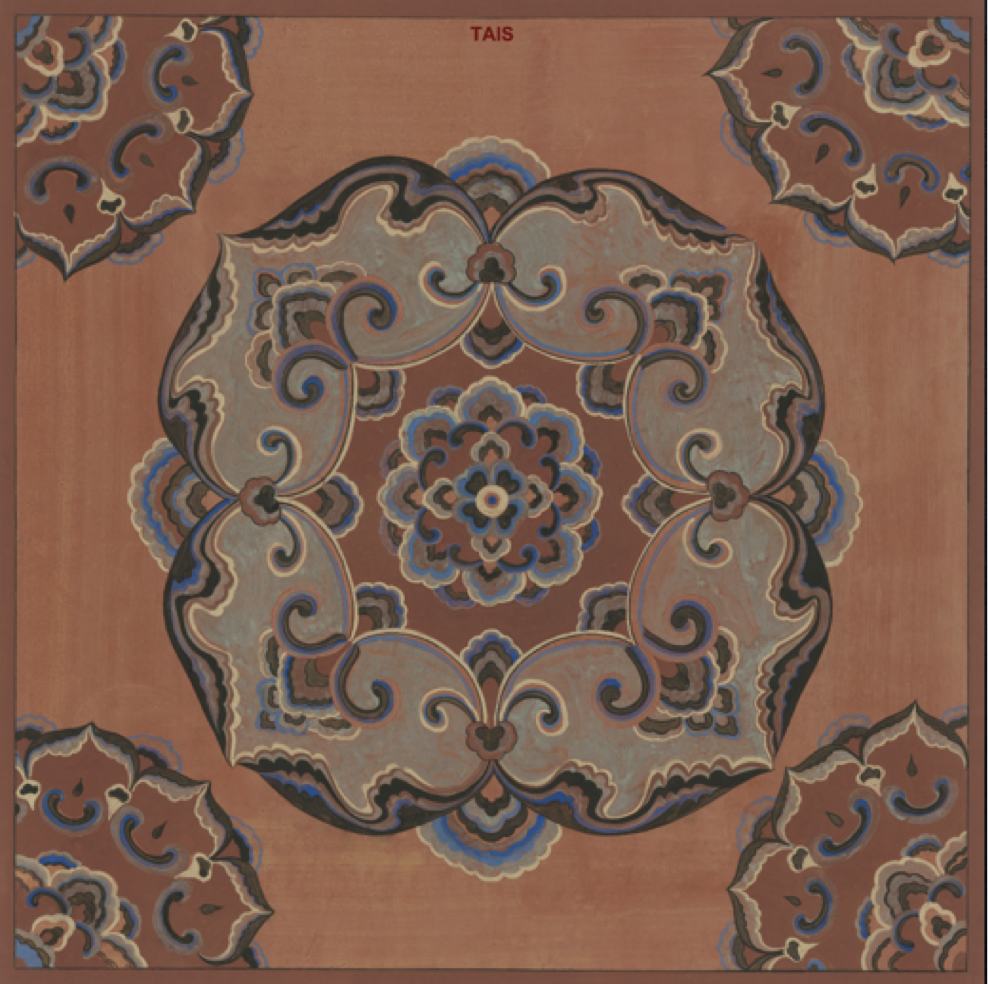
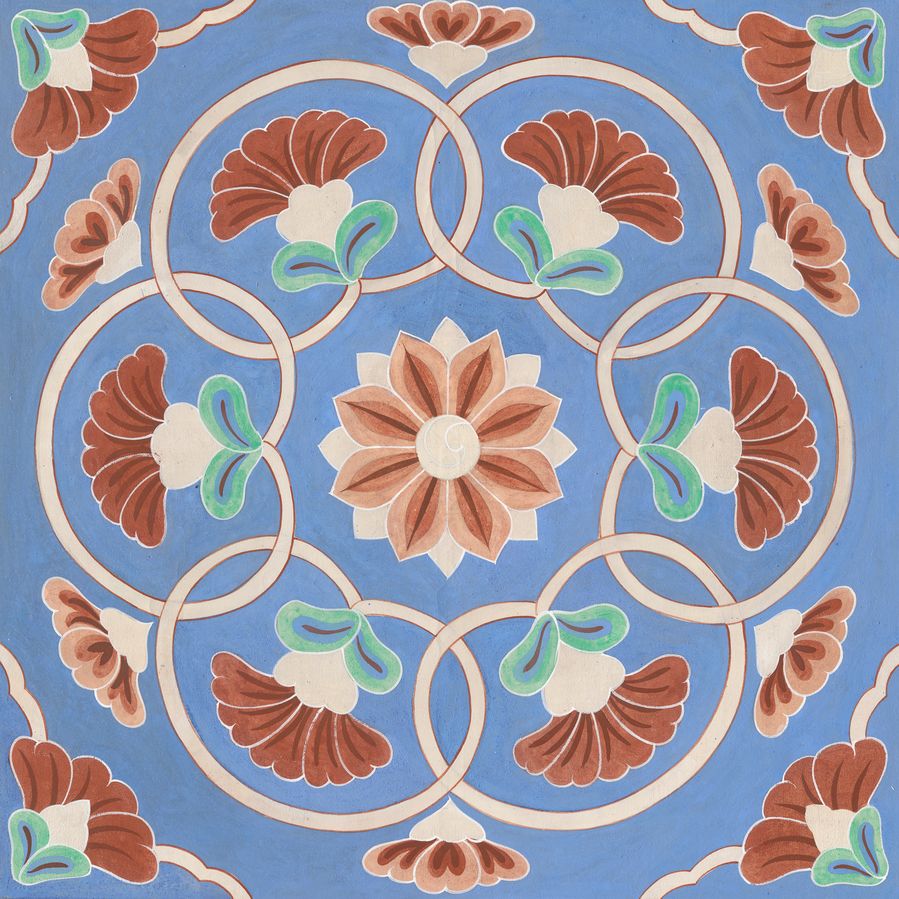
Tang Baoxiang Flower Ceiling Motif
Tang Baoxiang Flower · Small Motif
Tang Floral Roundel · Ceiling Motif on Silk
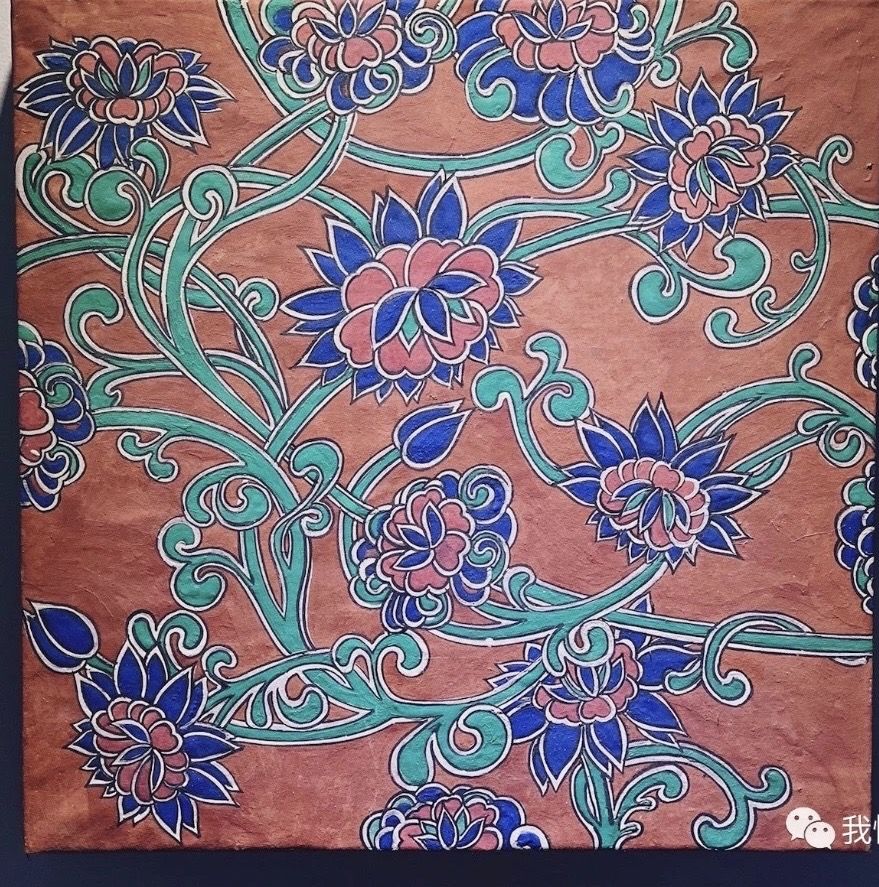
Gaochang Baoxiang Flower
Mati Temple Baoxiang Flower
Western Xia Baoxiang Flower
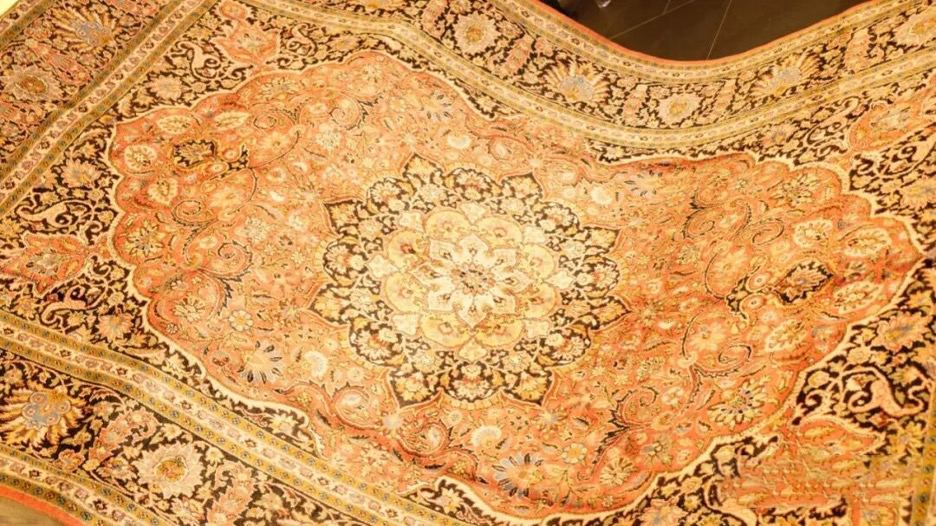
18th century antique Persian rug
Japanese Nishijin Textile
Spread eastward
Persia-Kucha line
Dunhuang coffered ceiling · Reconstruction by Cheonbuldong Painting Academy © CHEONBULDONG
Tang China
Tang Baoxiang Flower Ceiling Mural
Reconstruction by Cheonbuldong Painting Academy (2016) © CHEONBULDONG
Tang China
Tang Baoxiang Flower · Small Motif
Reconstruction by Cheonbuldong Painting Academy © CHEONBULDONG
Tang China
Tang Floral Roundel · Ceiling Motif on Silk
Reconstruction by Cheonbuldong Painting Academy © CHEONBULDONG
Gaochang
Gaochang Baoxiang Flower (Lapis Lazuli)
Original destroyed · Cheonbuldong Painting Academy restored © CHEONBULDONG
Hexi
Mati Temple Baoxiang Flower
Reconstruction by Cheonbuldong Painting Academy © CHEONBULDONG
Western Xia
Western Xia Baoxiang Flower
Reconstruction by Cheonbuldong Painting Academy © CHEONBULDONG
Travelling west
Antique Persian Carpet
18th century · Collection of TAIS Art Museum © CHEONBULDONG
Travelling east
Japanese Nishijin Textile
A surviving example of the motif’s transmission to Japan

These two objects show how floral motifs travelled and changed.

Scroll through the motif family tree. Explore the full collection in the Motif Library.

Hundreds of patterns had come back to life.

They deserved a life beyond the catalogue.

Act 10 · From Murals to Everyday Life

The rediscovered patterns deserved more than a place in a catalogue.
There was a way for this beauty tobecome part of everyday life.——

Bringing ancient culture into the present.

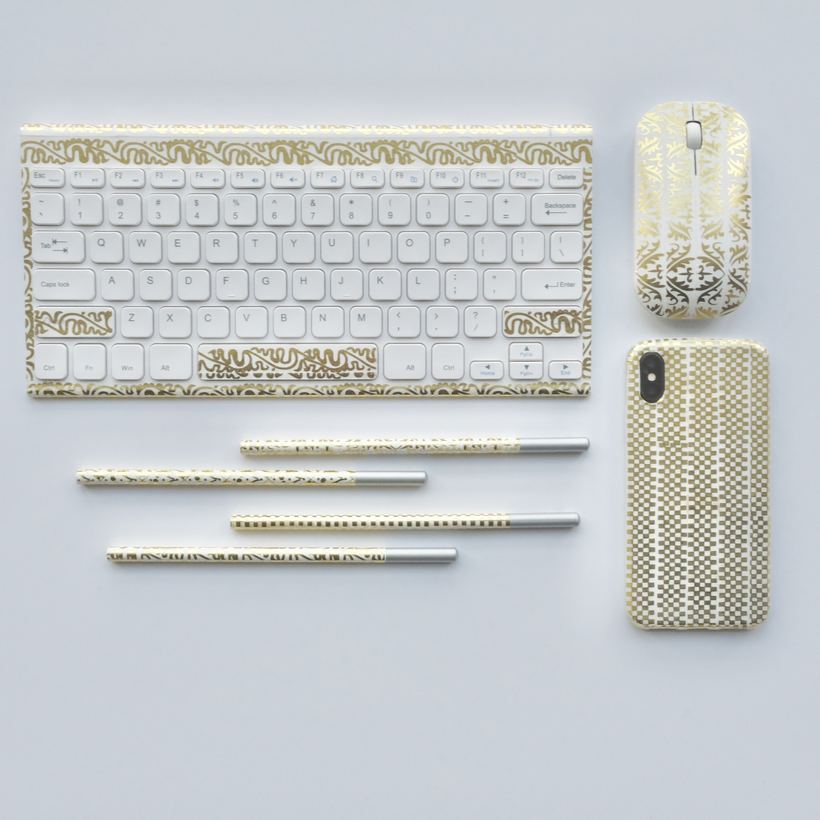
Patterned keyboard and phone case
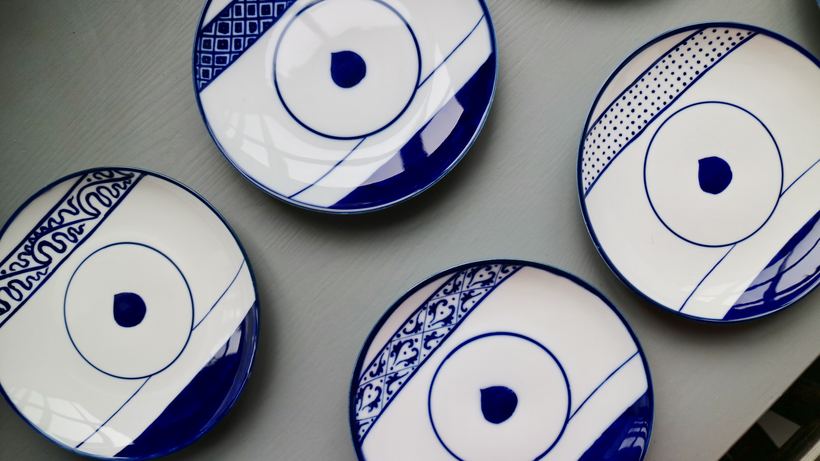
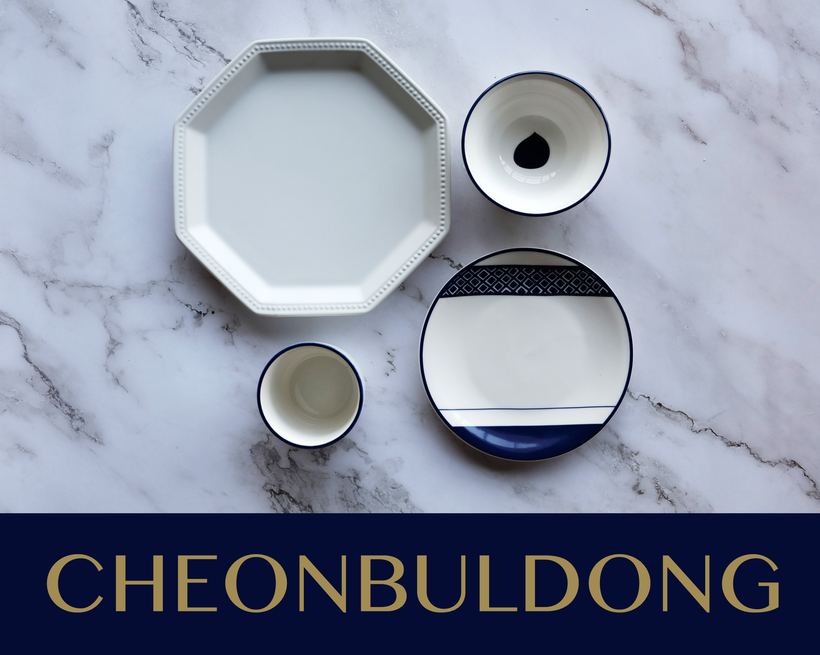
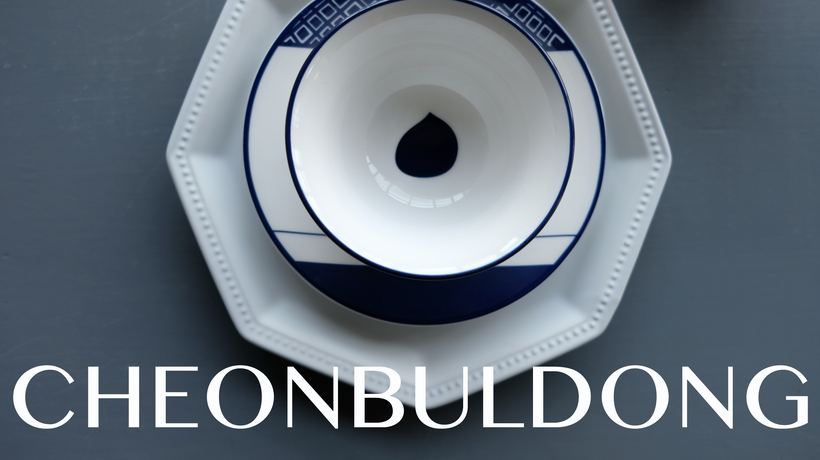
Blue and white Patterned Dinner Plate
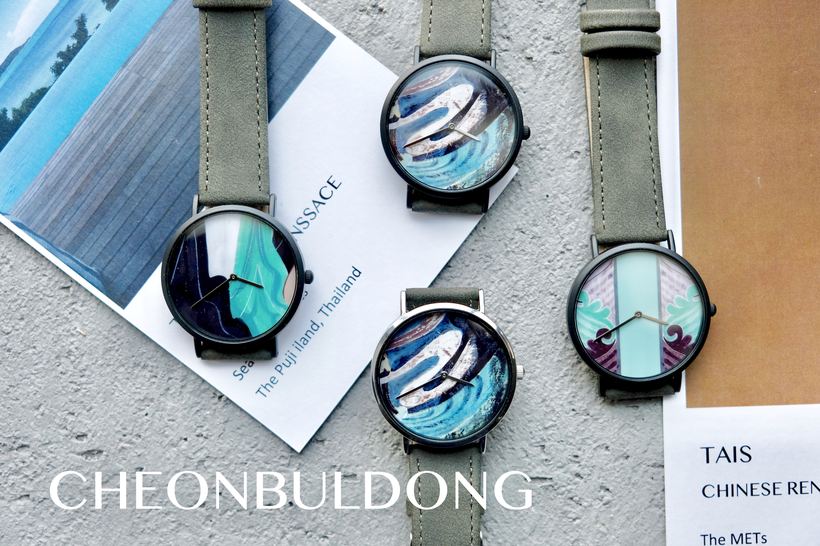
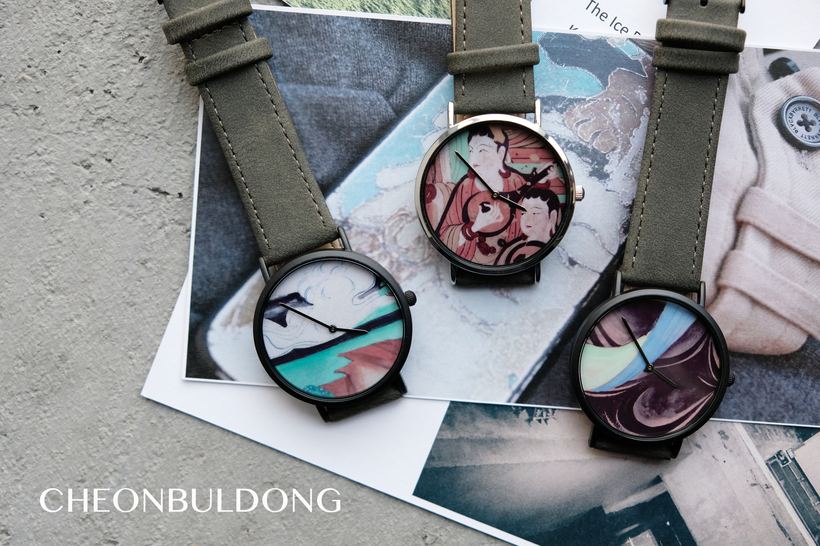
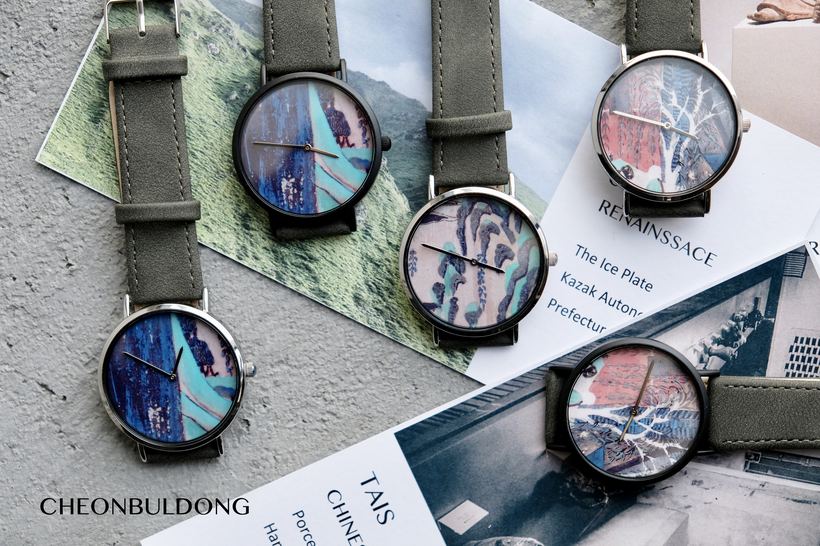
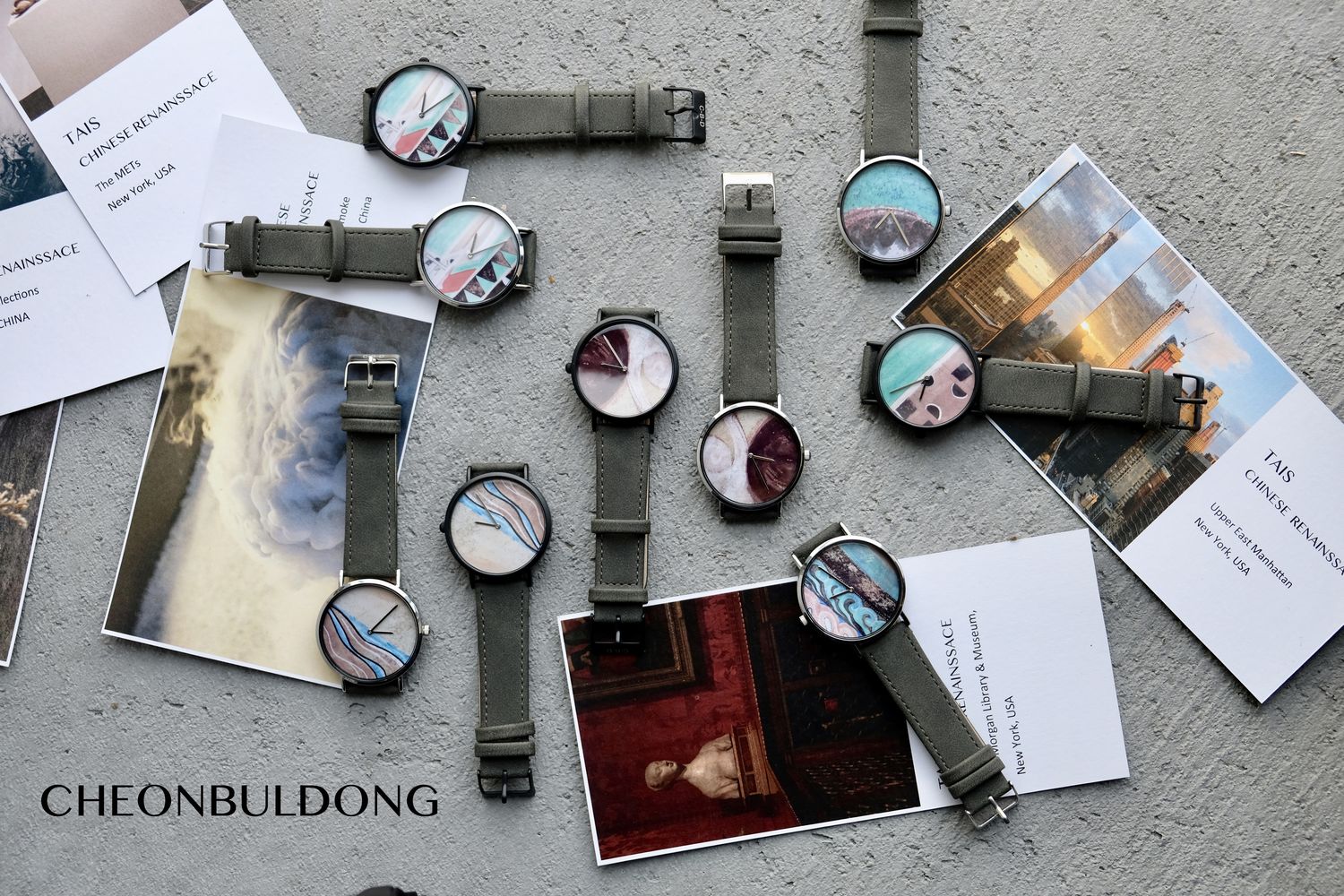
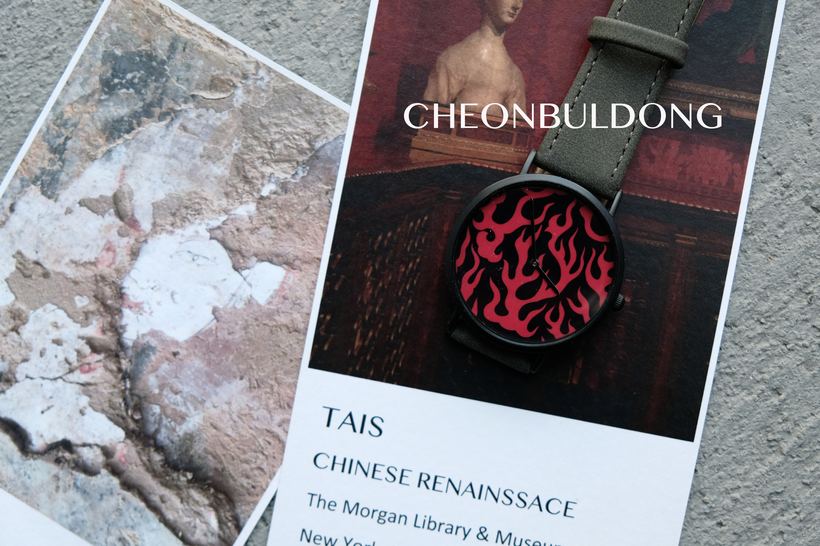
Motif Watch
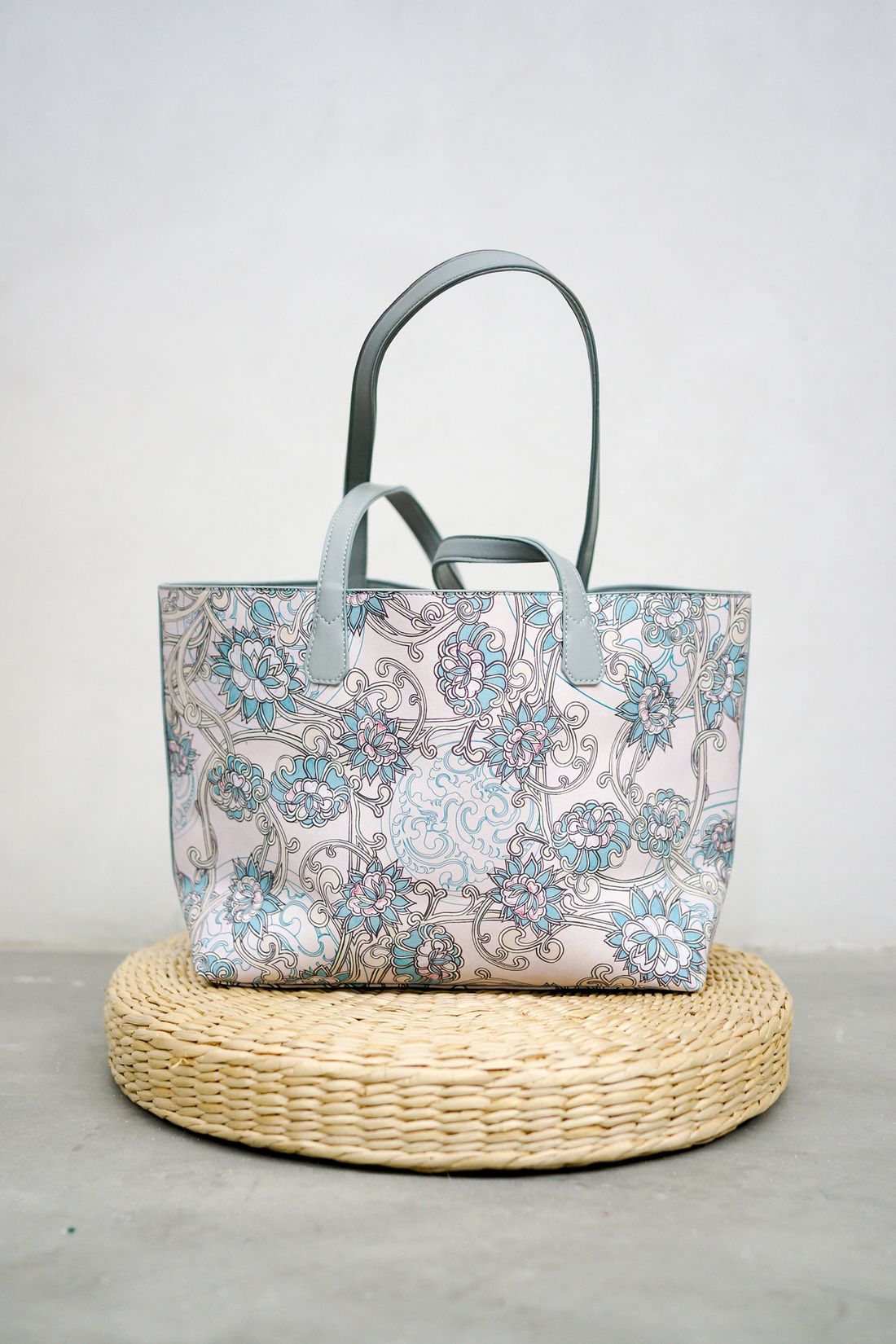
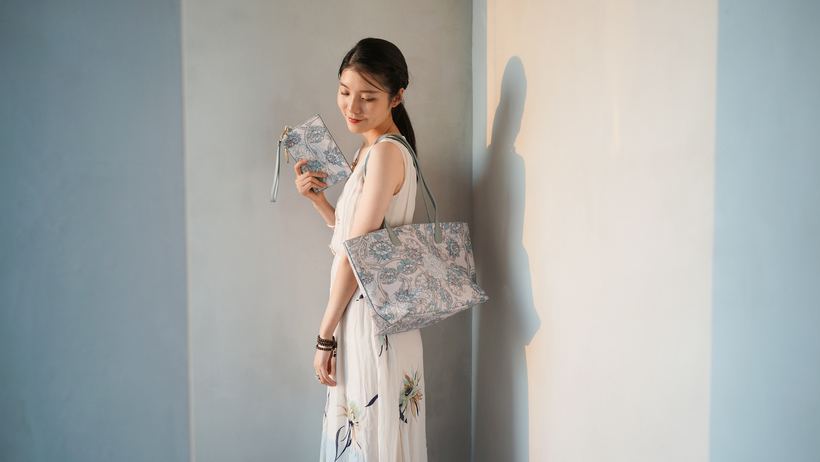
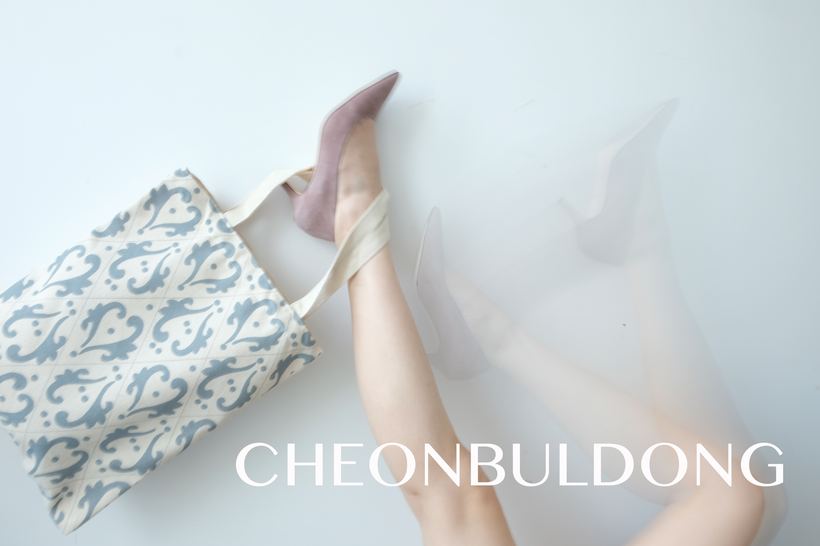
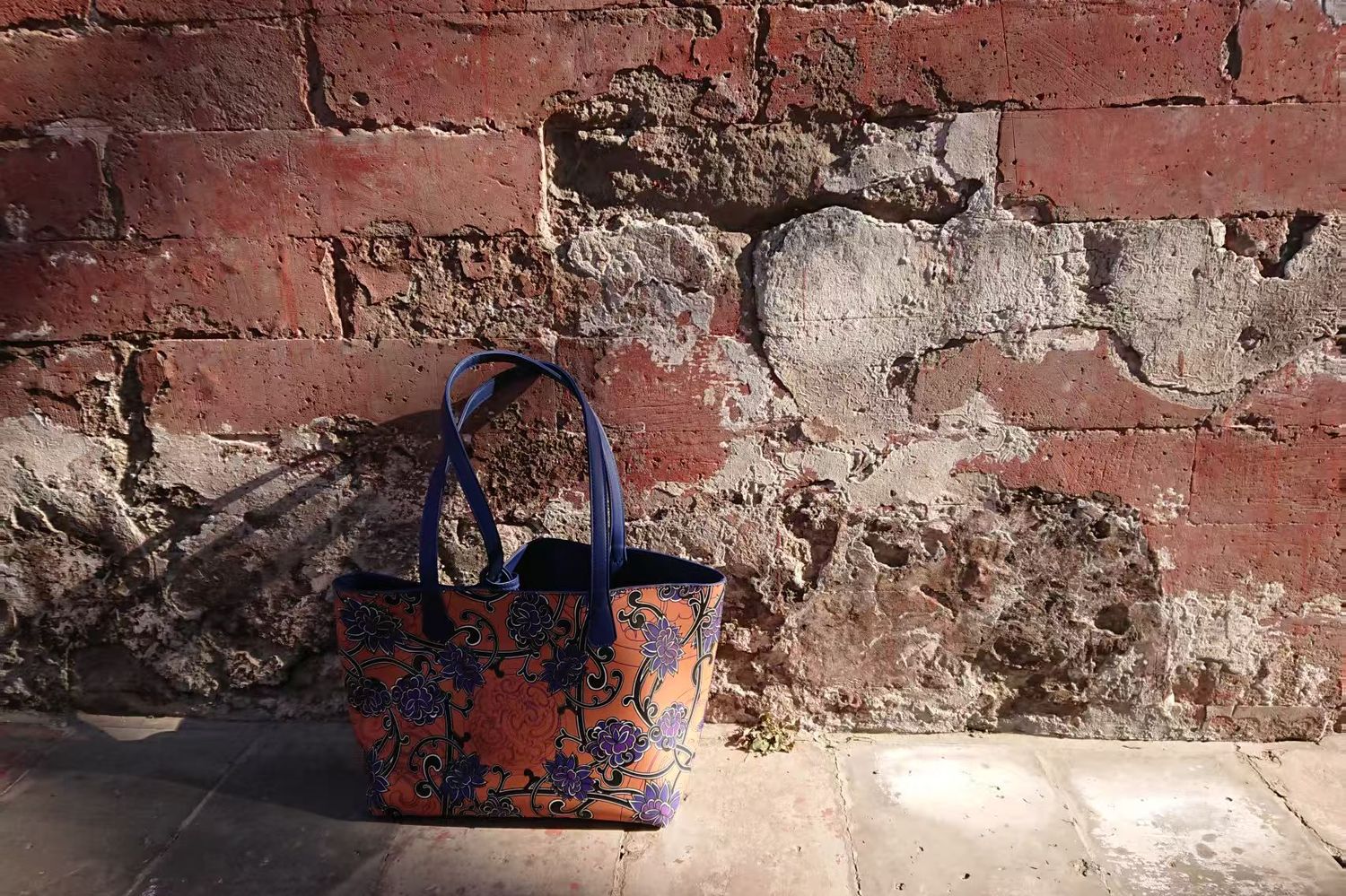
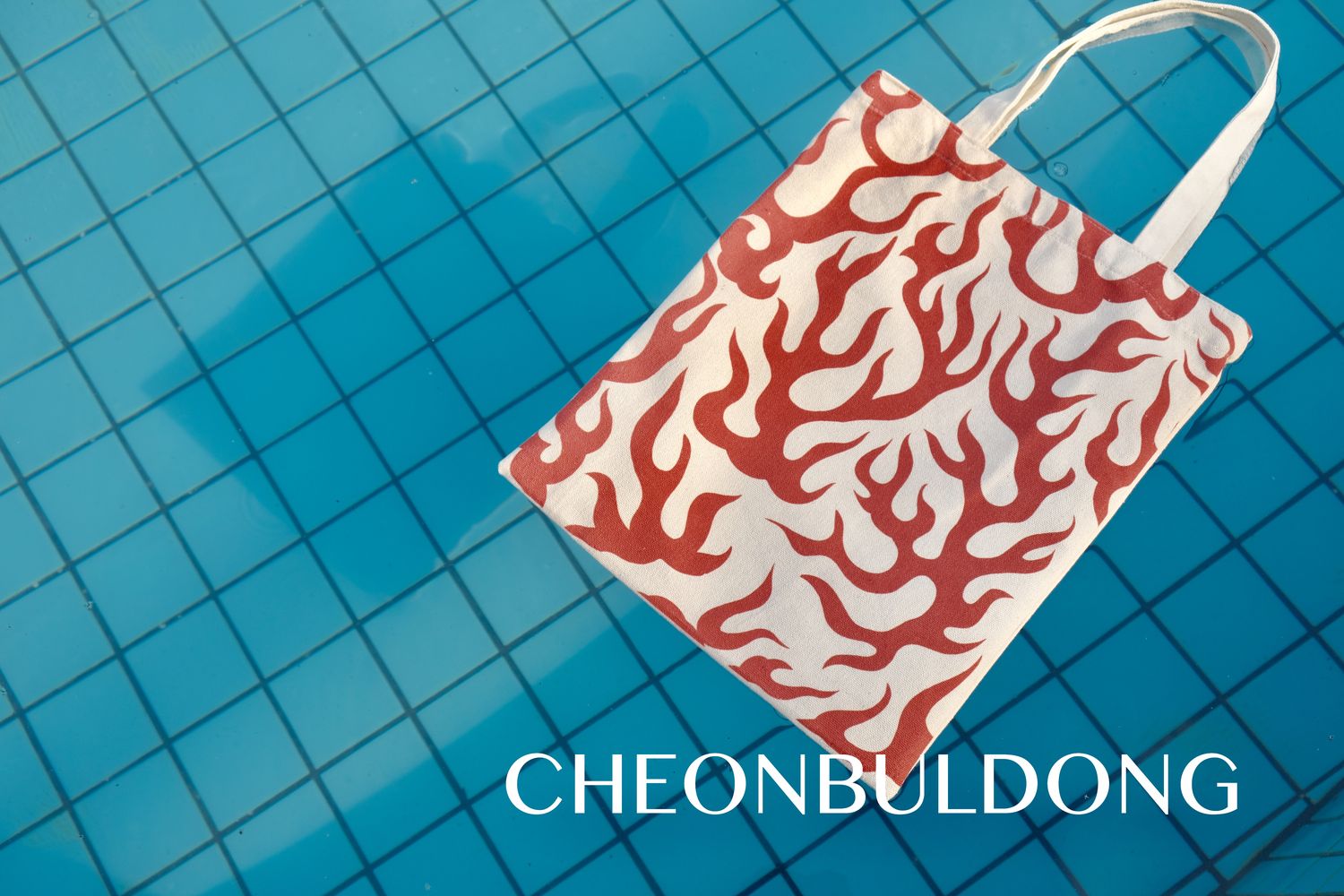
Coral red Patterned Canvas Bag
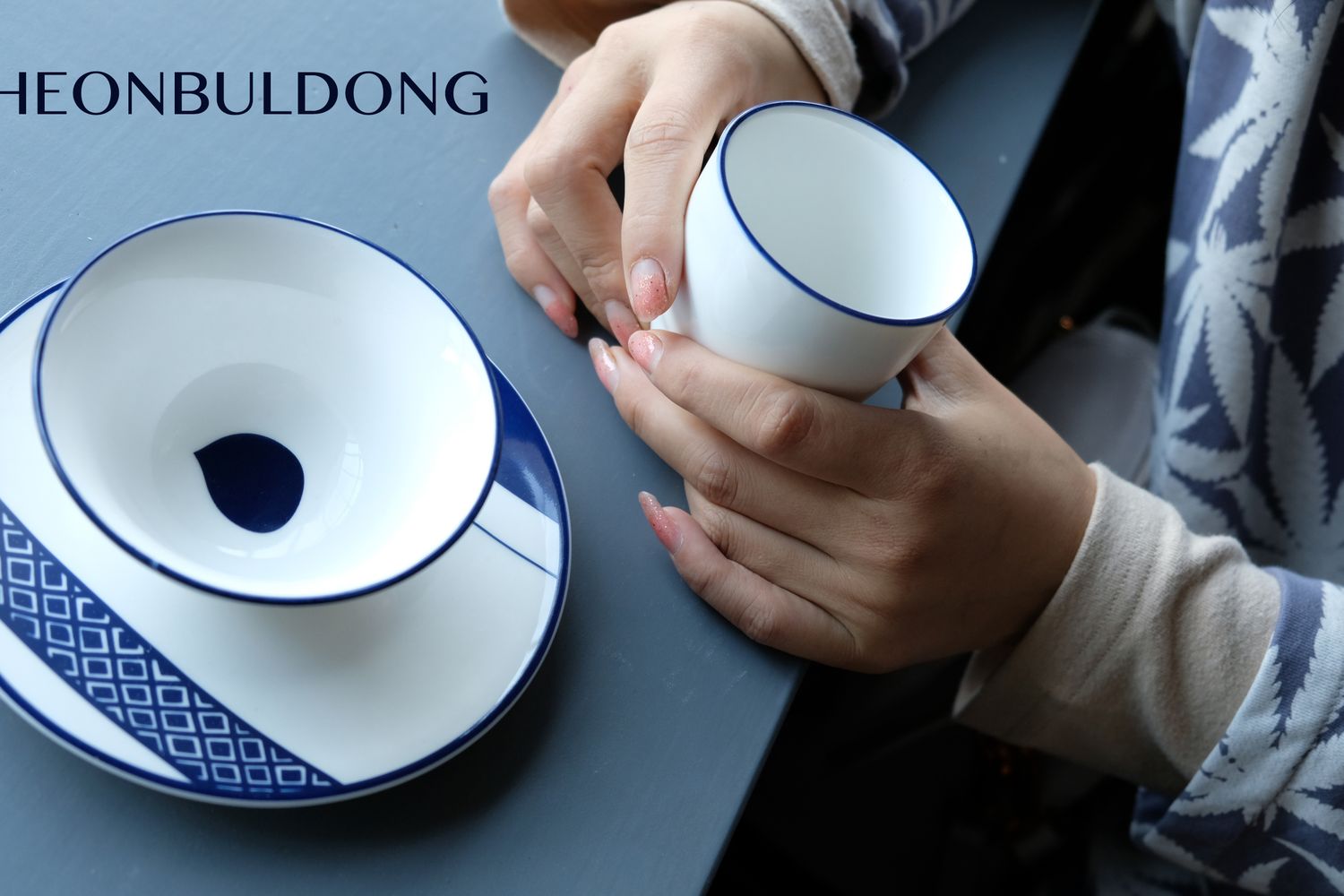
patterned tableware set
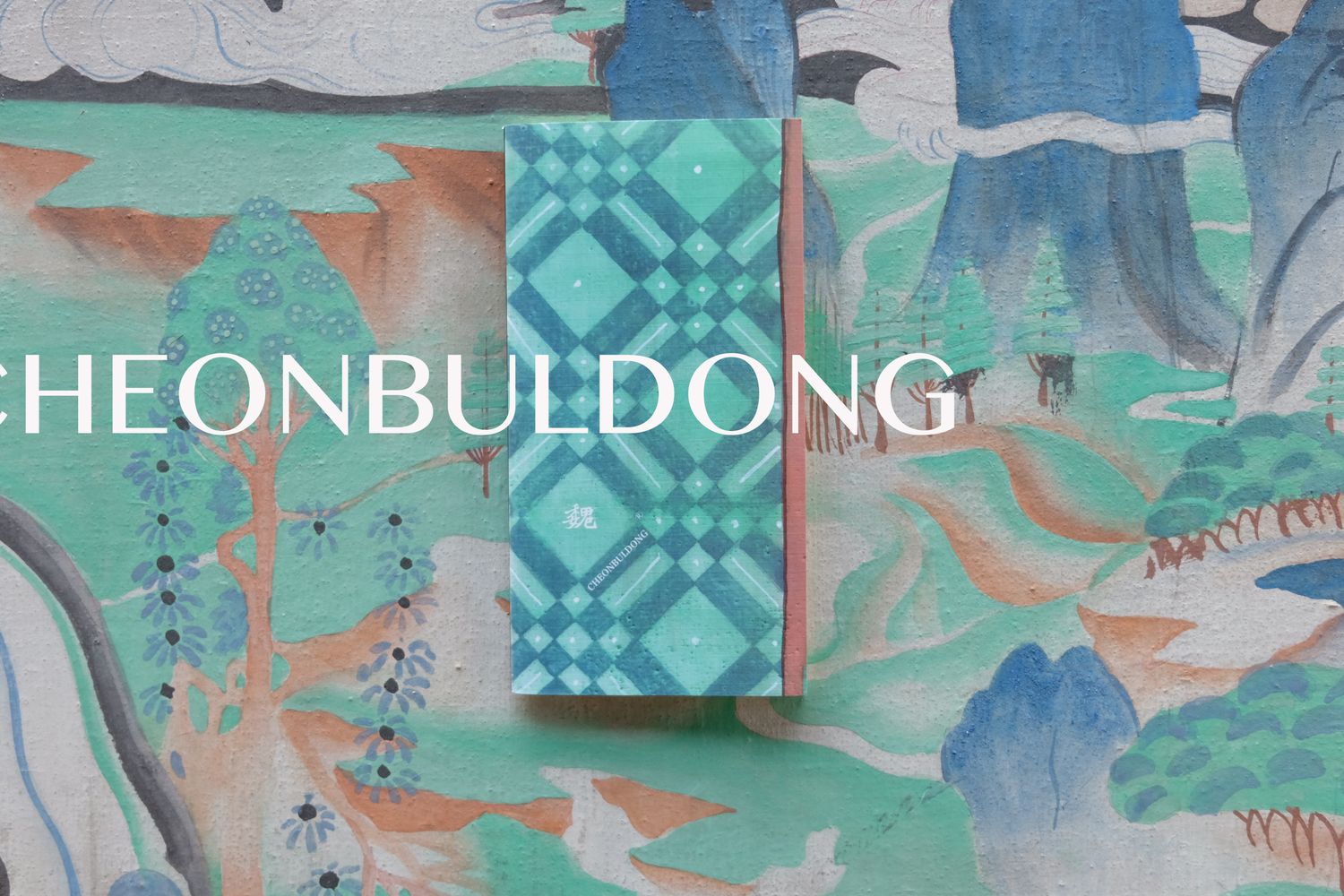
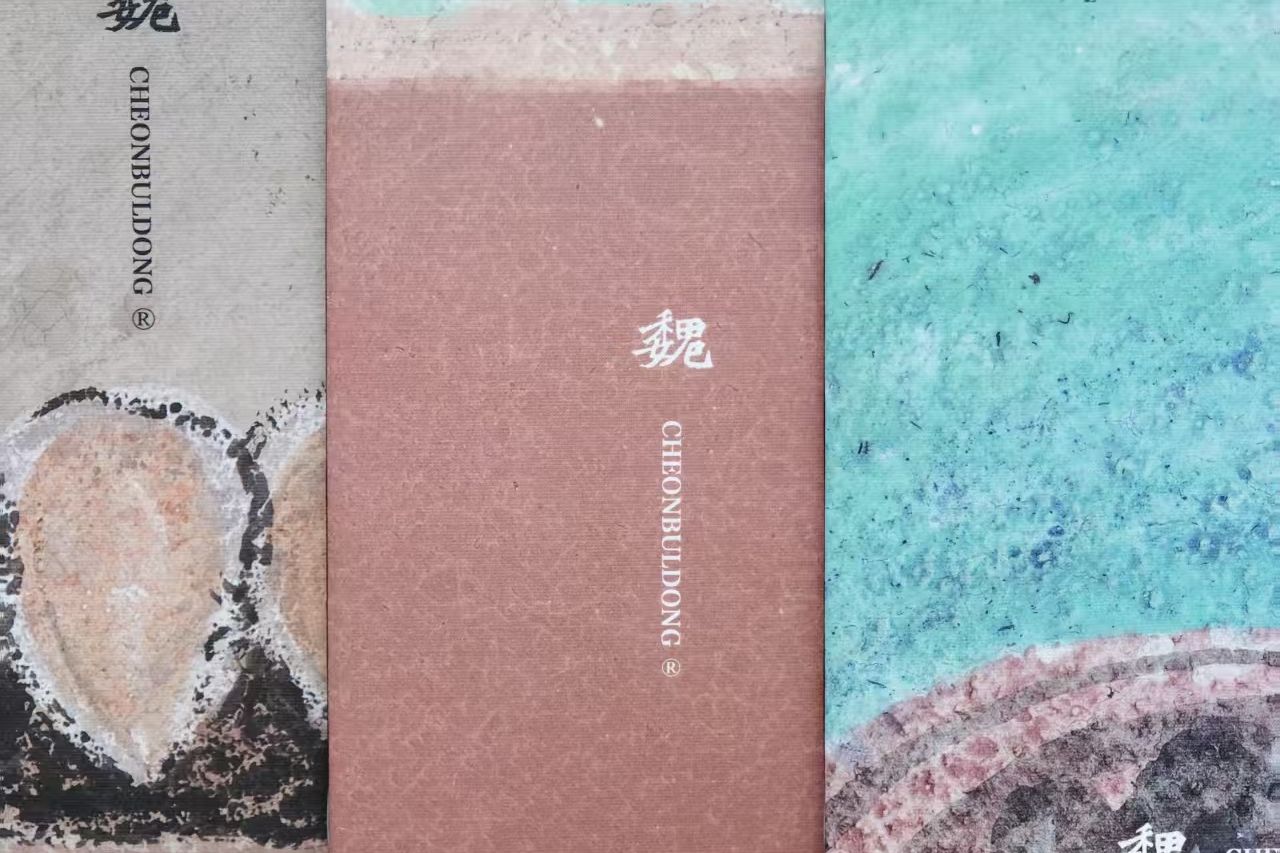
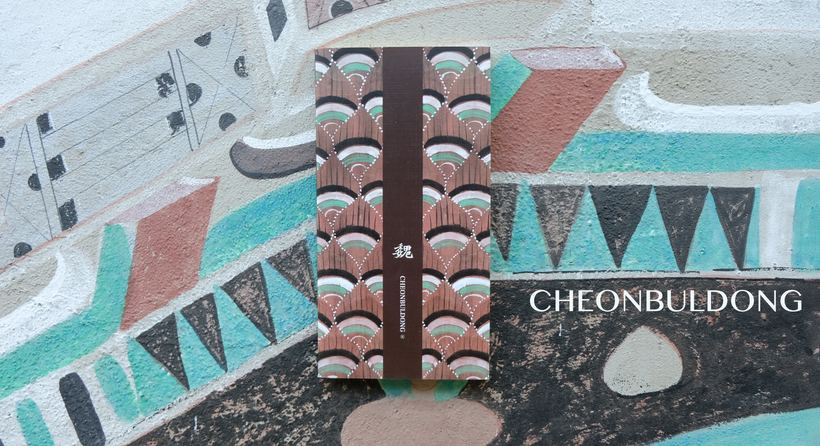
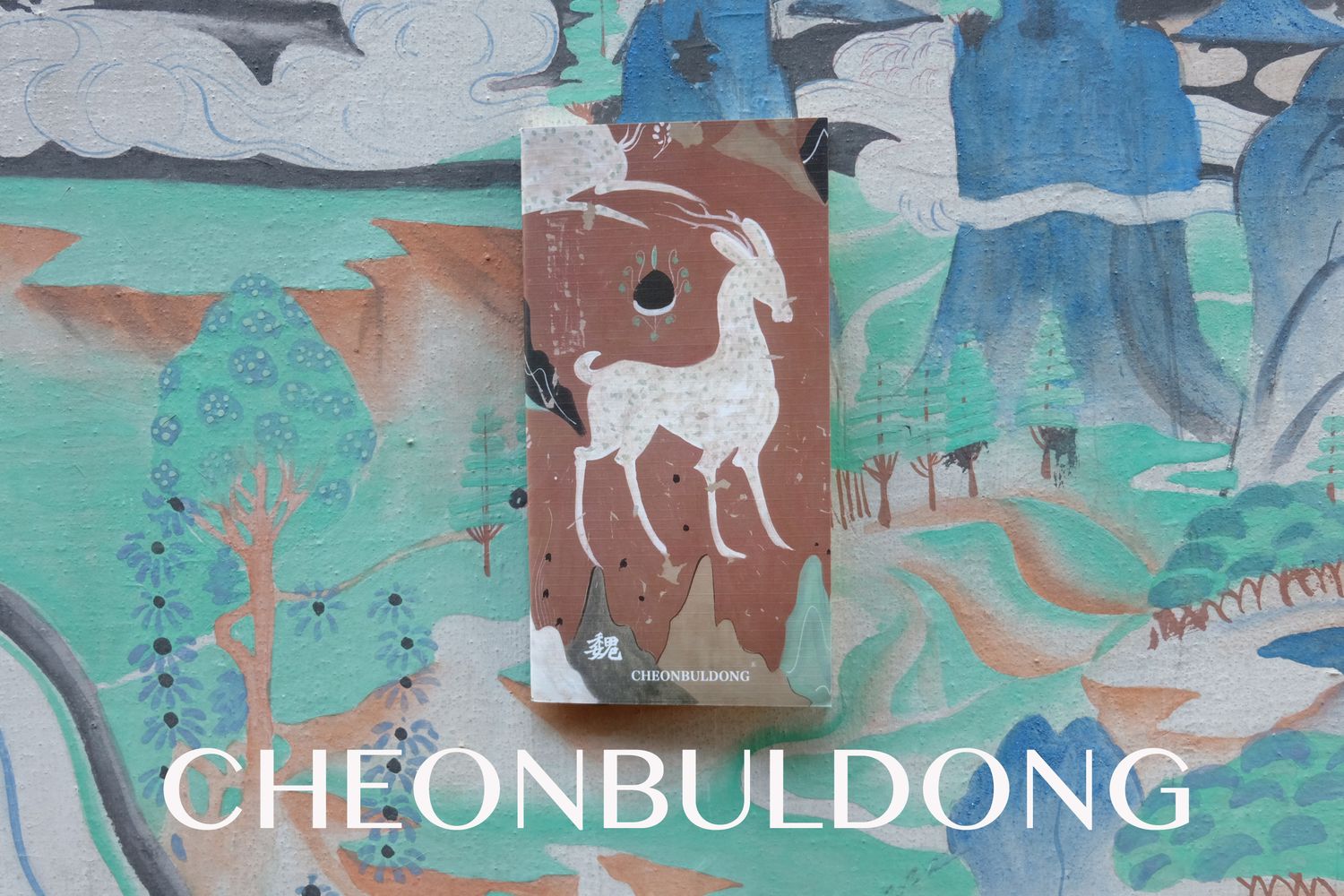
"Wei" character notebook
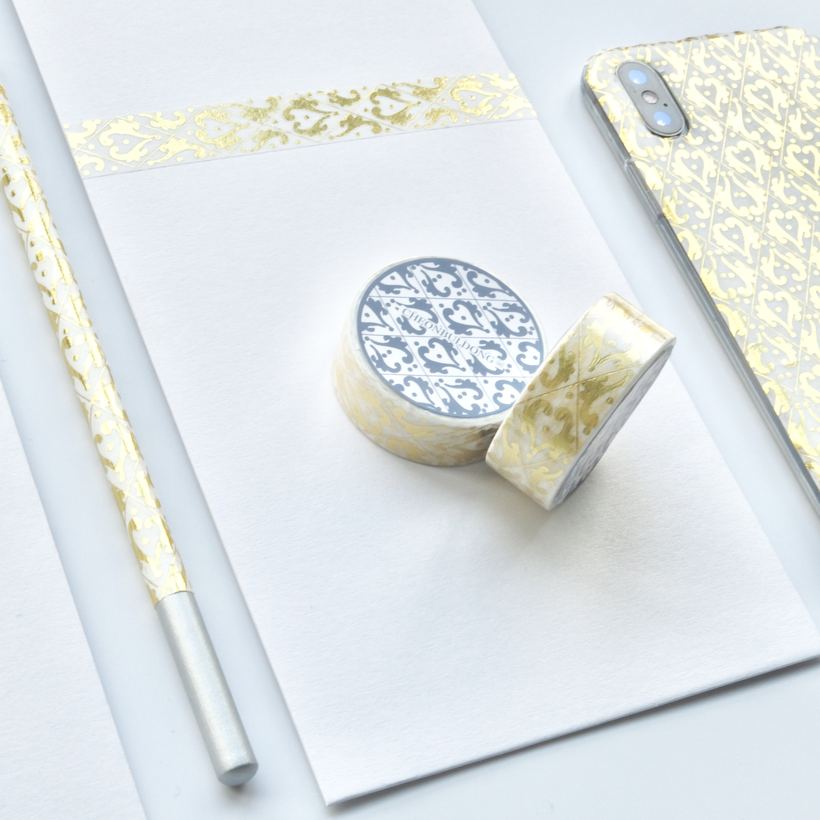
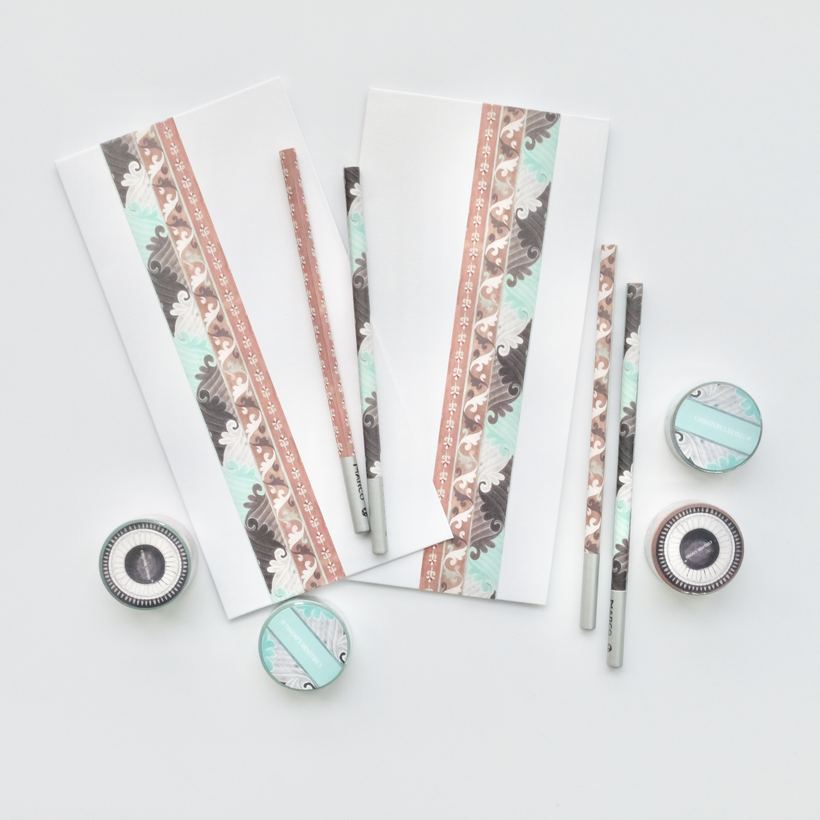
Patterned washi tape
Patterned Canvas Bag
Motif Watch
Motif Card
Pattern silk scarf
Nine-coloured Deer Card
Pattern bookmarks and badges
Pattern stickers
Patterned Clutch Bag
Motif Watch
Patterned Canvas Bag
Patterned Silk Scarf · Detail
Motif Watch
decorative keyboard
Patterned Dinner Plate
Pattern watch and exhibition label

A Selection of Designs | Produced by CHEONBULDONG

Hover over any item to see it return to its original color

“Chinese culture is an inheritance that belongs to all humanity. It should not be kept for one person alone. Sharing beautiful things makes them more meaningful, and more valuable.”

—Robert H. N. Ho, quoted in Yu Yizhou’s “Why We Reconstruct Murals” (TAIS Art Museum opening address)

Reconstruction and sharing were always part of the same work.

Just as we shared the methods for preparing pigments, we wanted beauty to be something people could take home.

CHEONBULDONG · Product Photography
Product Photography | Produced by CHEONBULDONG

The paintings had returned. The patterns had entered daily life. The methods were freely shared.

Now it was time to welcome everyone in.

2017

TAIS’s special exhibition opened to the public for the first time.
The results of the Silk Road project were ready to meet an audience.

—TAIS Art Museum Archive. Visitors were first welcomed in 2015; the special exhibition opened in 2017.
Act 11 · A Thousand Years of Splendor · Opening to the Public

From The Radiance of the Silk Road to A Thousand Years of Splendor.

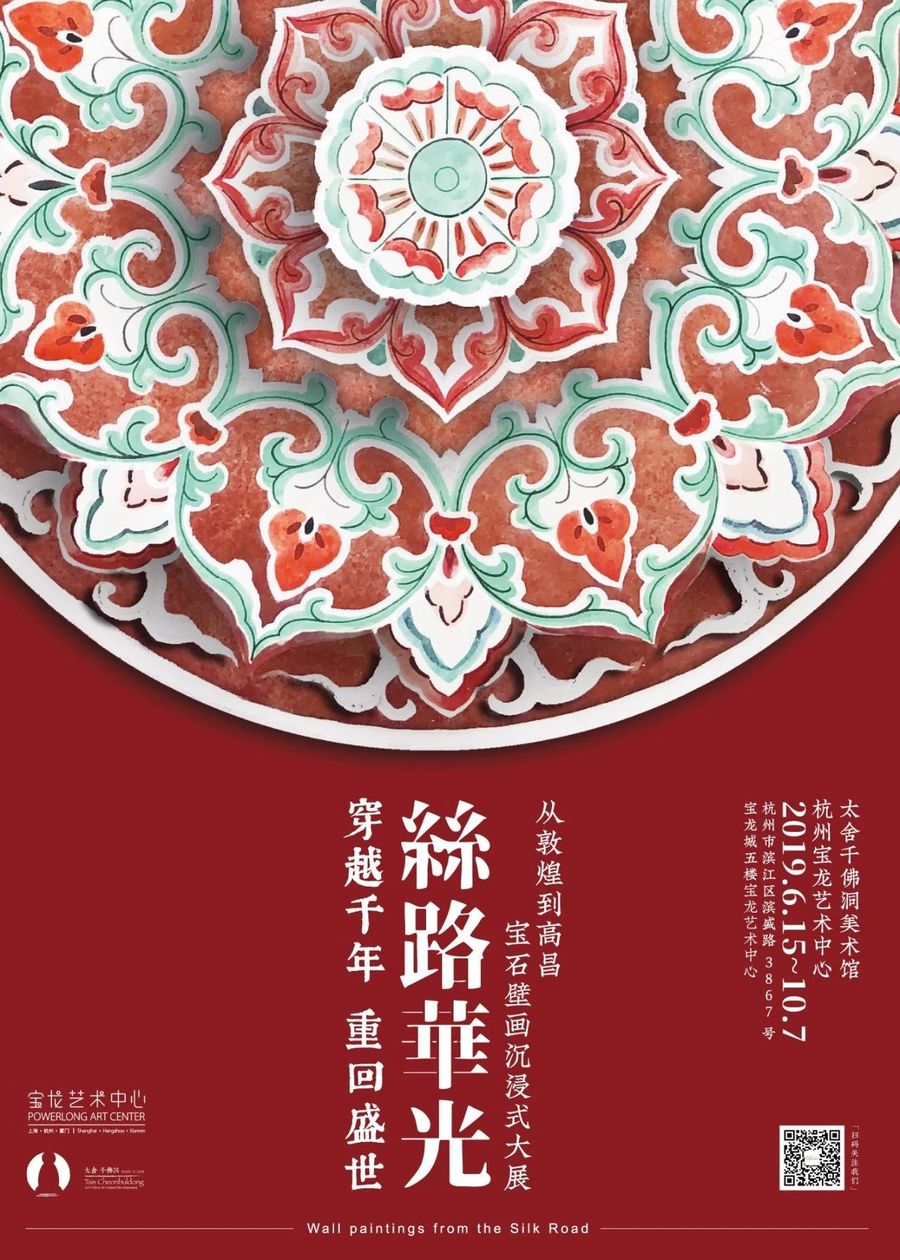
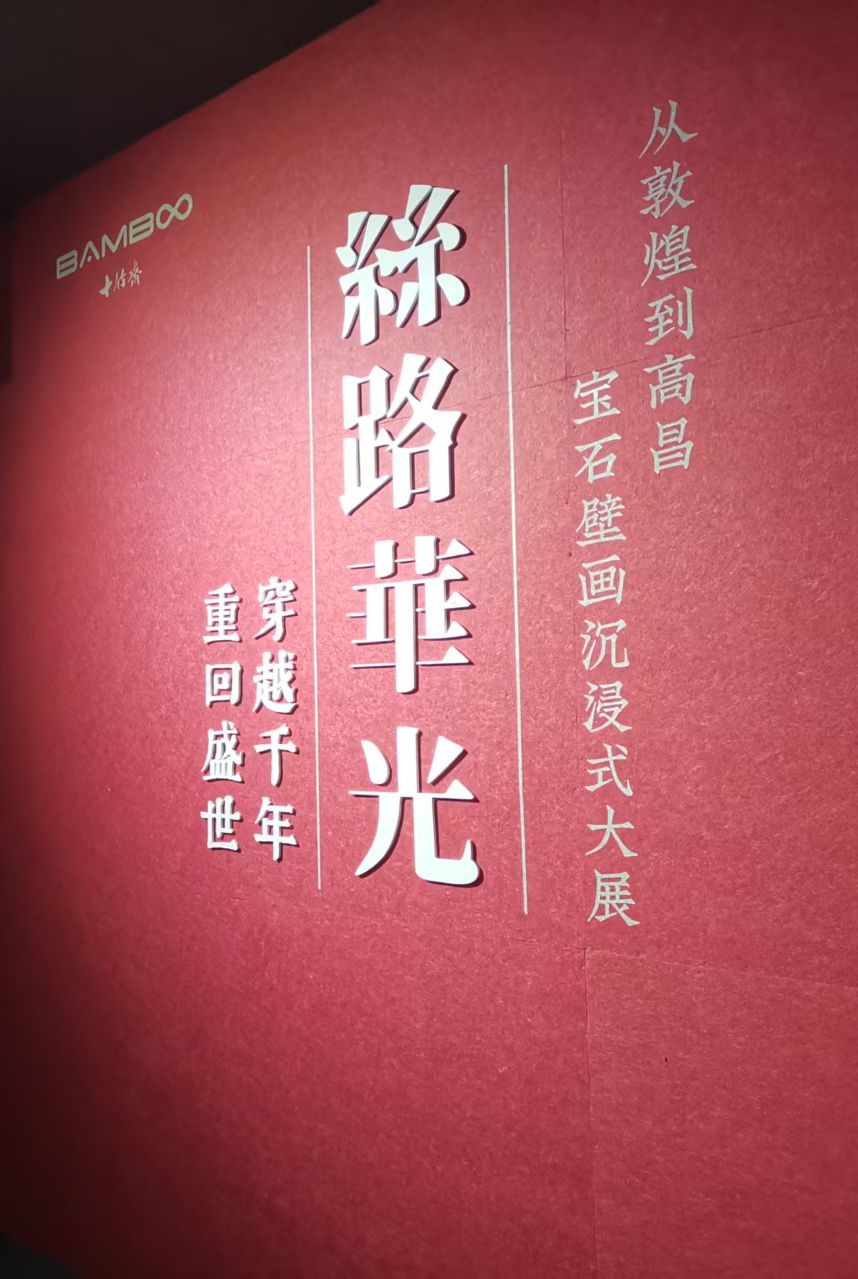
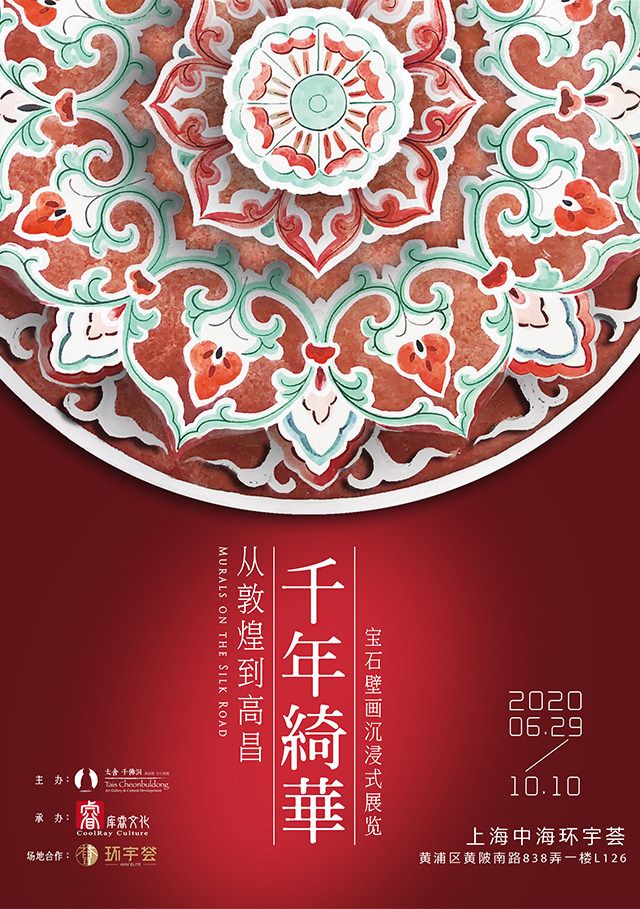
Hangzhou (June 2019), Nanjing (December 2019, with Shizhuzhai), Shanghai (2020, From Dunhuang to Gaochang), Shenzhen (2020, KK MALL) and Xi’an (Qujiang).

—Project chronology and “The Future”, A Thousand Years of Splendor.

Select a city to explore its exhibition archive.

A Thousand Years of Splendor Exhibition Poster
The Radiance of the Silk Road·Hangzhou Powerlong2019.6.15—10.7
The Radiance of the Silk Road Exhibition Poster
The Radiance of the Silk Road · Nanjing Shizhuzhai2019.12
A Thousand Years of Splendor Exhibition Poster
A Thousand Years of Splendor · Shanghai Zhonghai Huanyu Hui2020.6.29—10.10
A Thousand Years of Splendor Exhibition Poster
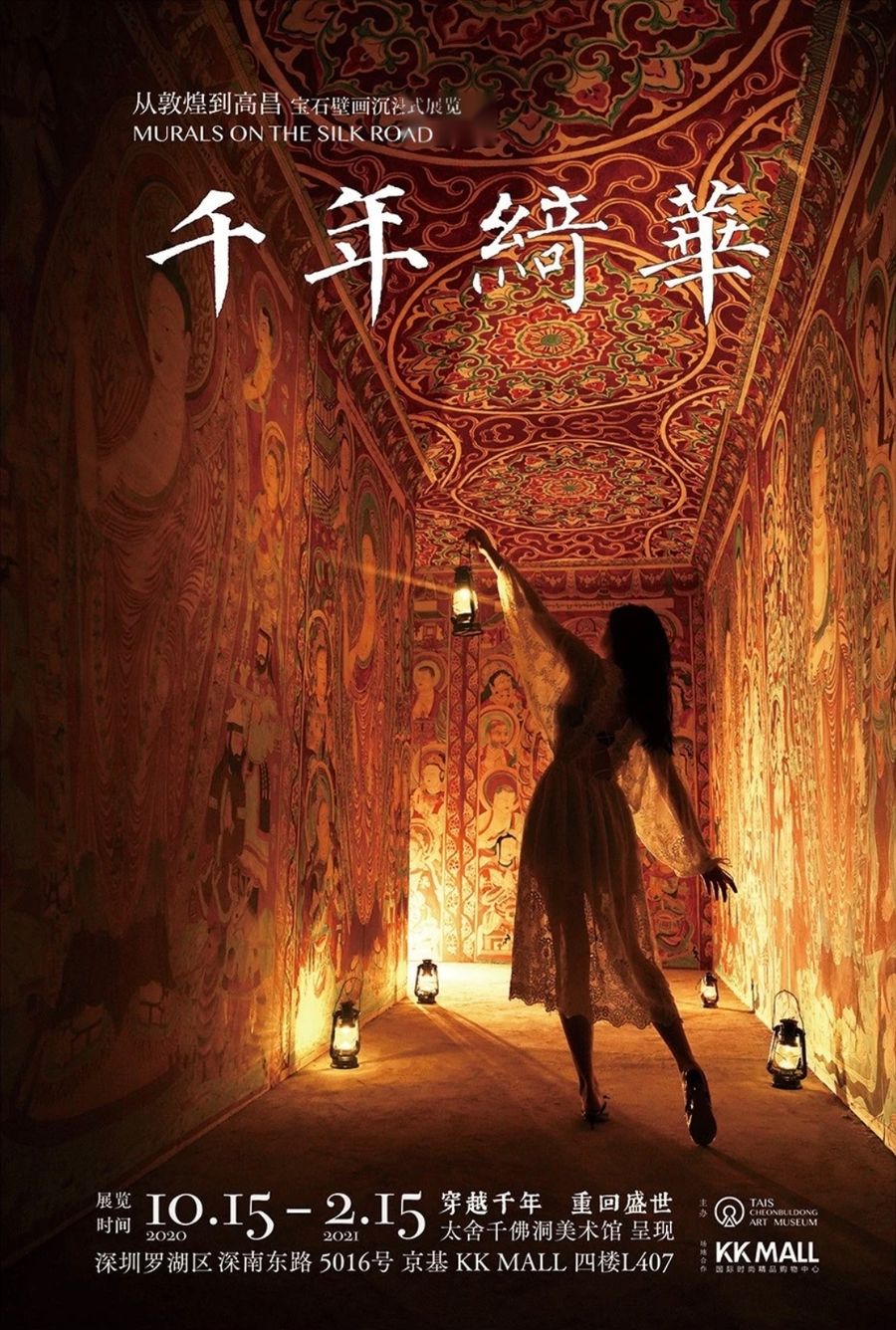
A Thousand Years of Splendor · Shenzhen Kingkey KK MALL2020.10.15—2021.2.15
A Thousand Years of Splendor Exhibition Poster
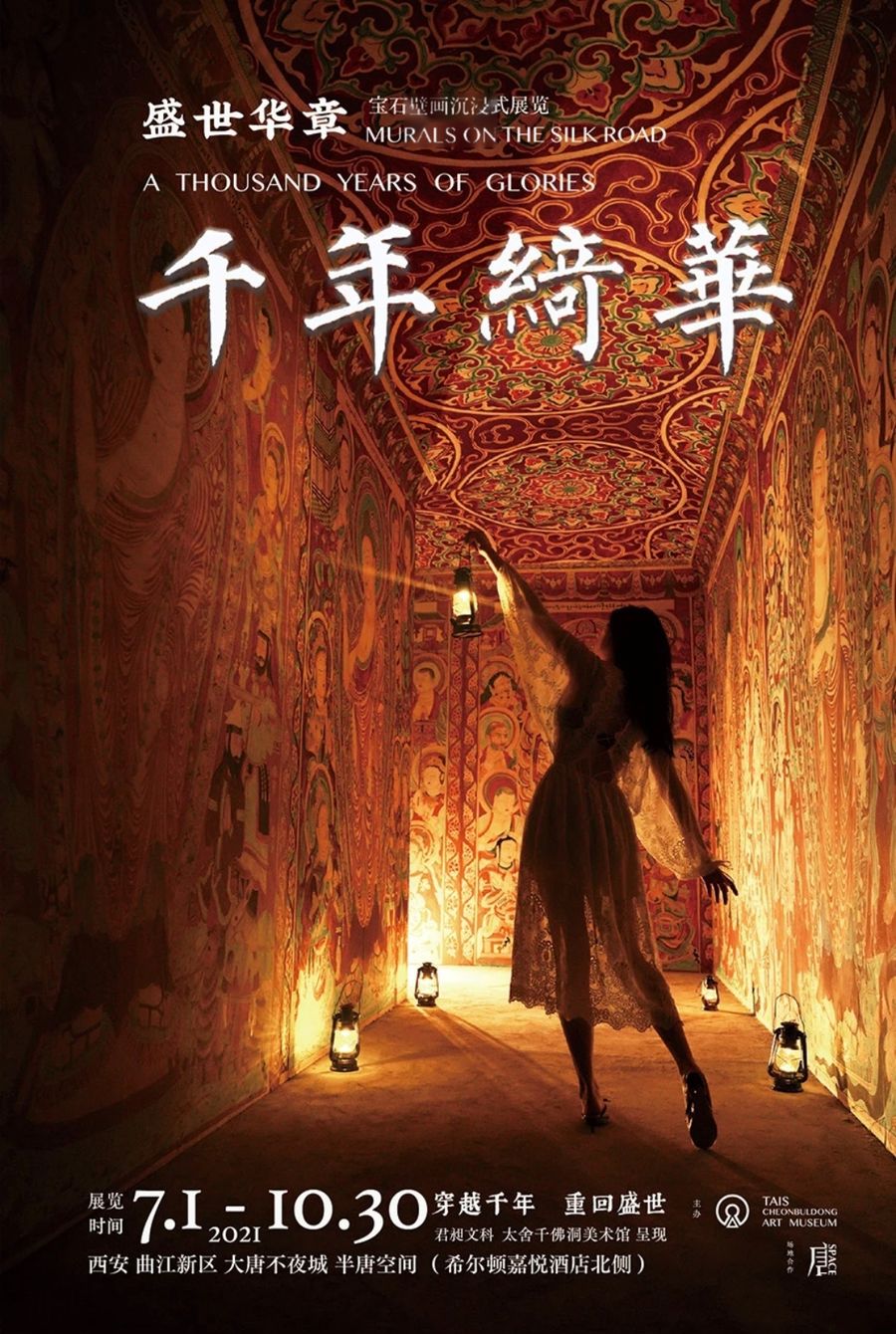
Splendours of a Golden Age · Xi’an Grand Tang Mall2021.7.1—10.30

Five-city tour poster © CHEONBULDONG

A Thousand Years of Splendor · Exhibition Film

A Thousand Years of Splendor · A Golden Age| TAIS Art Museum © CHEONBULDONG

On 3 October 2019, CCTV featured the exhibition in its National Day anniversary programme, alongside the Russian State Ballet and the Vienna Boys’ Choir.

On 7 October 2020, CCTV featured A Thousand Years of Splendor again in its National Day arts coverage.

CCTV report | Broadcast screen
15 Years
Since 2011
500,000+
Exhibition visits
9 countries
Countries visited for research
5 cities
Hangzhou · Nanjing · Shanghai · Shenzhen · Xi'an
Average exhibition run: 4 months per city
12,000+
Visitor posts
More than 100 million views of related topics
TOP 3
Among the city’s top three trending exhibitions during its run
The Radiance of the Silk Road Exhibition Entrance
01The Radiance of the Silk Road Exhibition EntranceNanjing Shizhuzhai · 2019 © CHEONBULDONG
Buddhist Narrative Murals · Gallery Wall
02Buddhist Narrative Murals · Installation ViewTAIS Art Museum © CHEONBULDONG
Lanterns and murals
03Exhibition · A lanternTAIS Art Museum © CHEONBULDONG
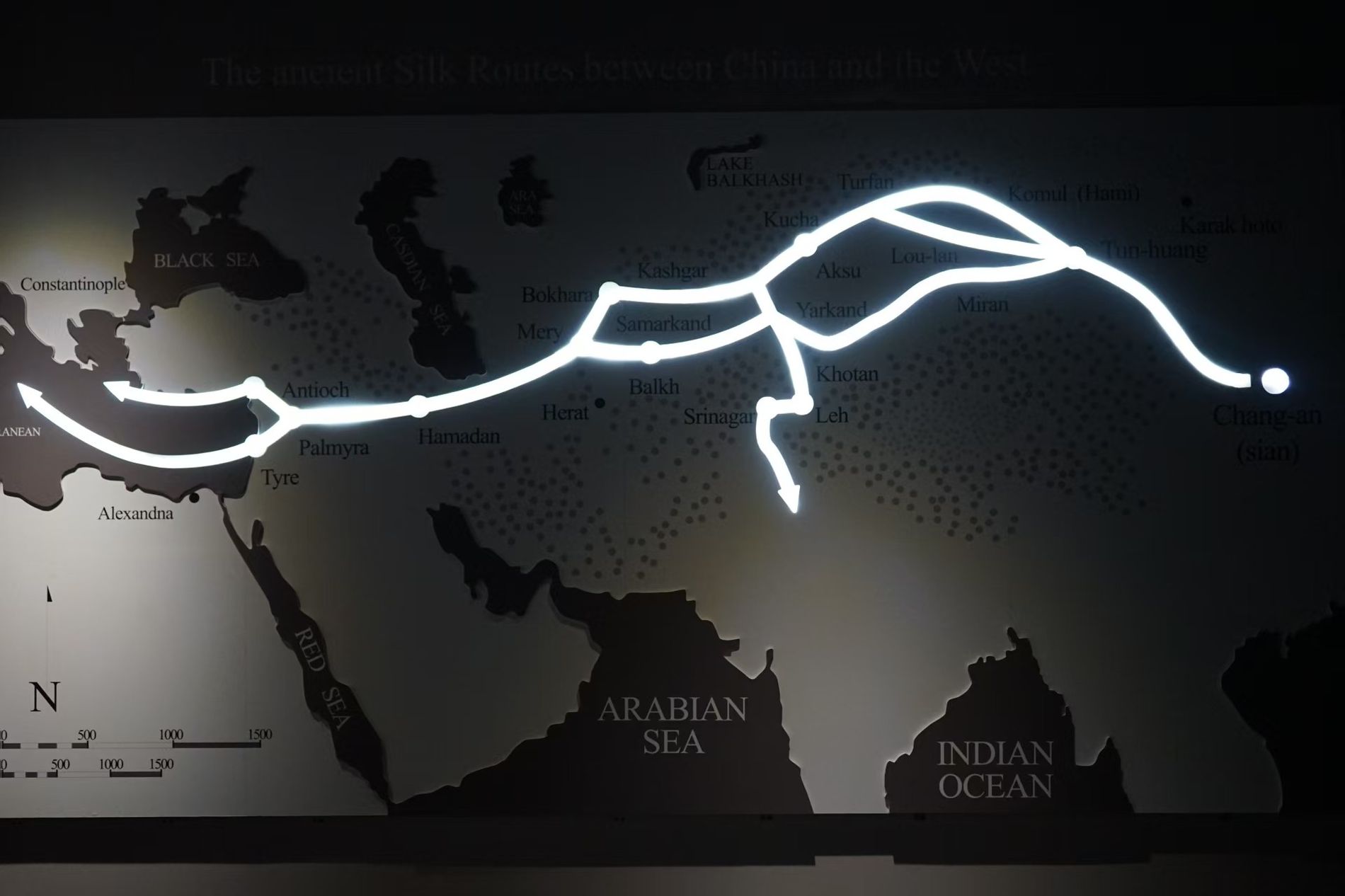
Silk Road Map · Light Installation
04Silk Road Map · Installation ViewTAIS Art Museum © CHEONBULDONG
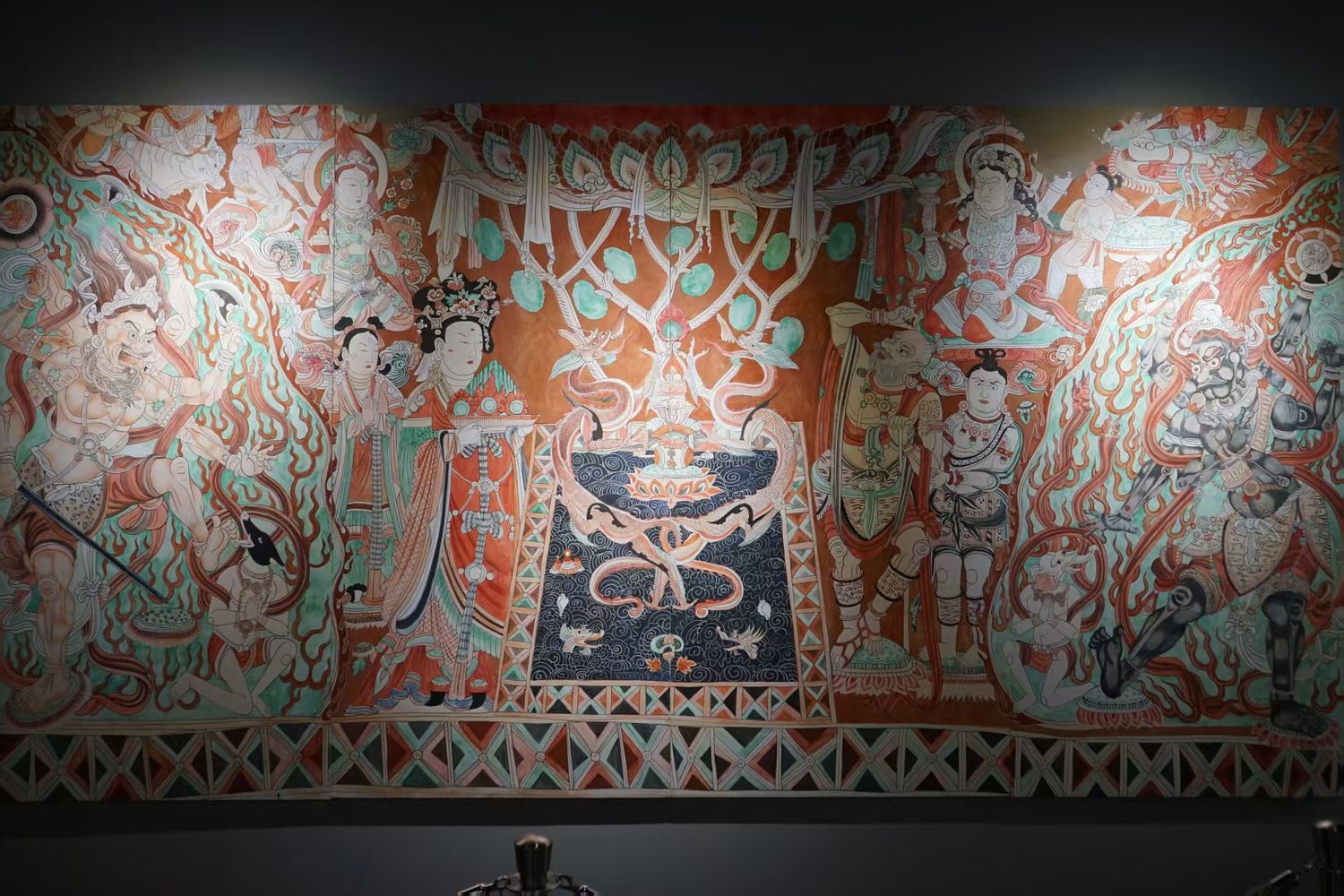
Pranidhi Paintings · Gallery Wall
05Pranidhi Paintings · Installation ViewTAIS Art Museum © CHEONBULDONG

Gallery Details

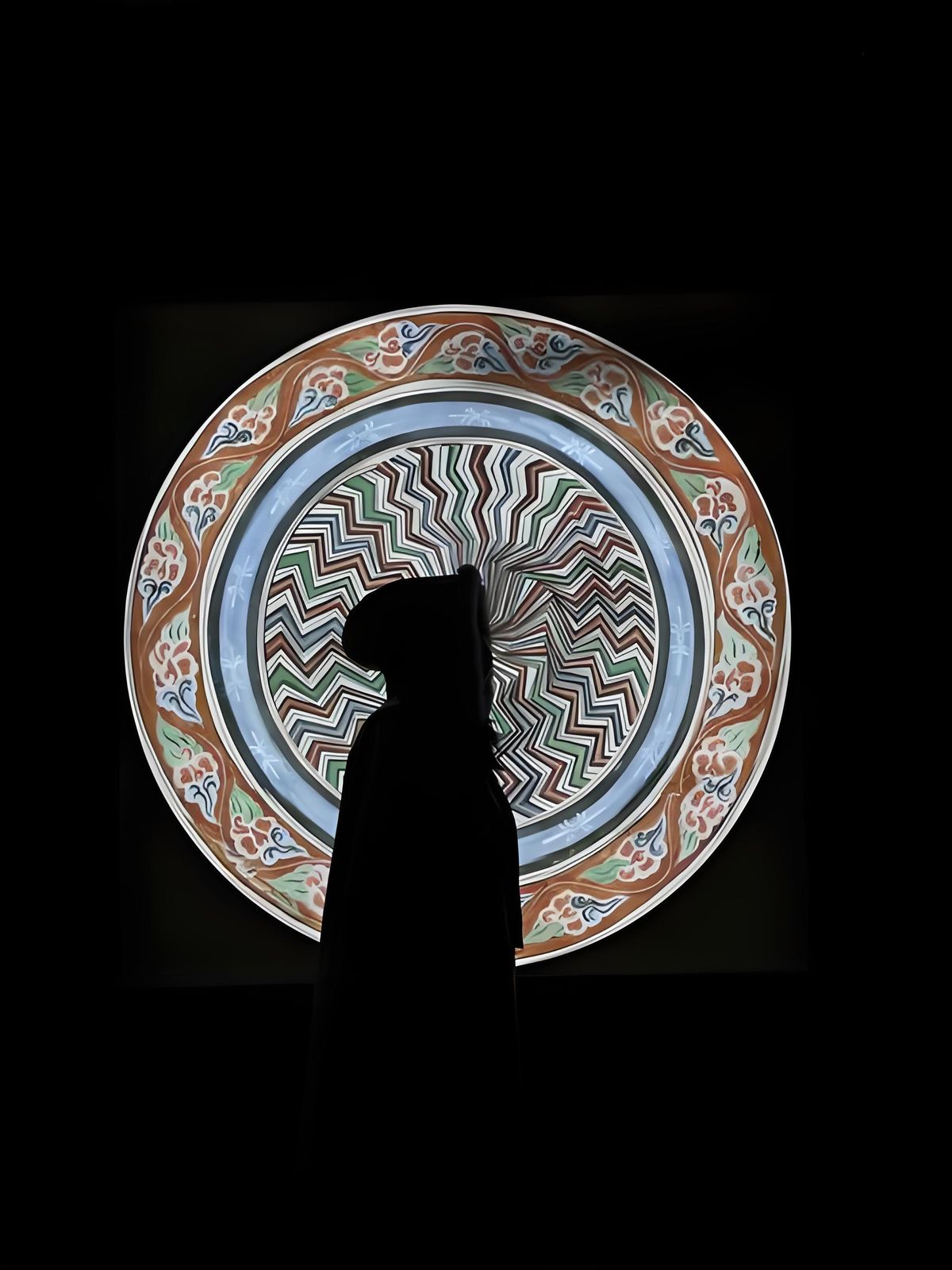
Large plate pattern display
Decorative Plates · Installation View© CHEONBULDONG
Pattern drapery array
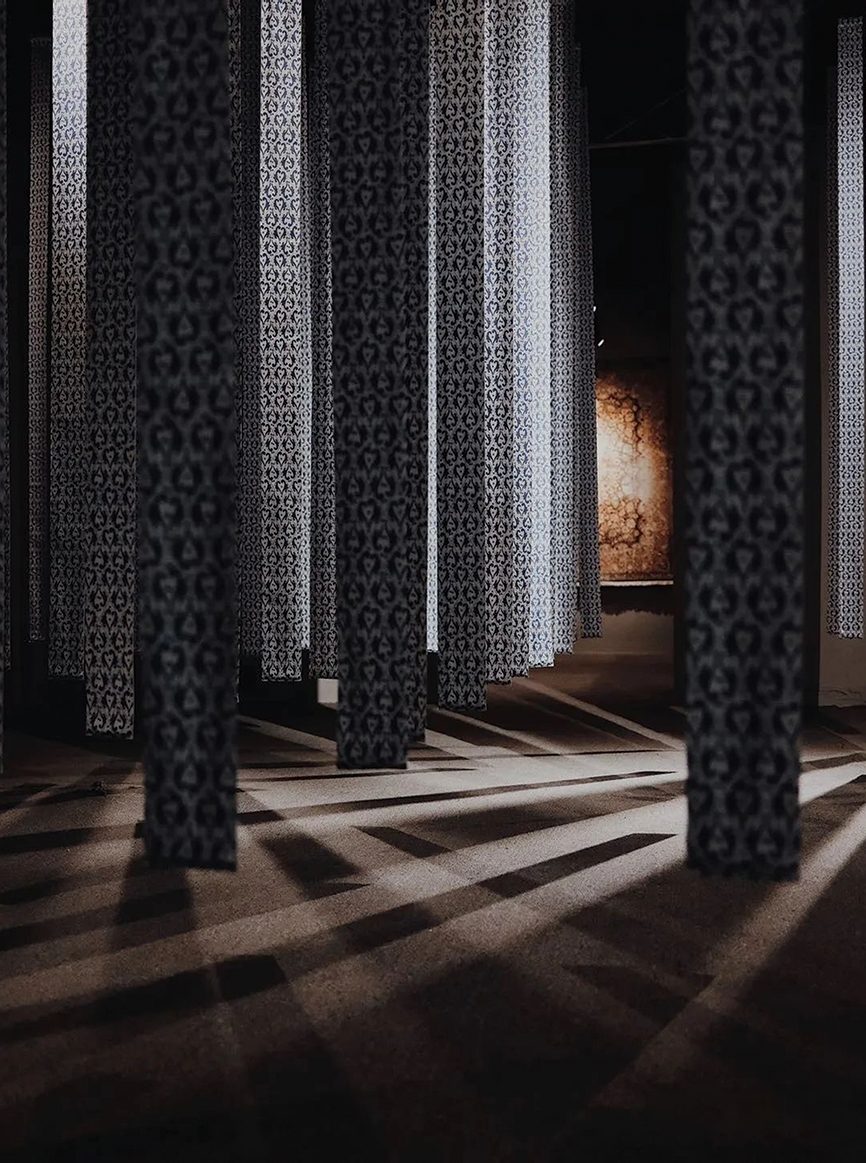
Printed Fabric Panels · Installation View© CHEONBULDONG
Arches and Corridors
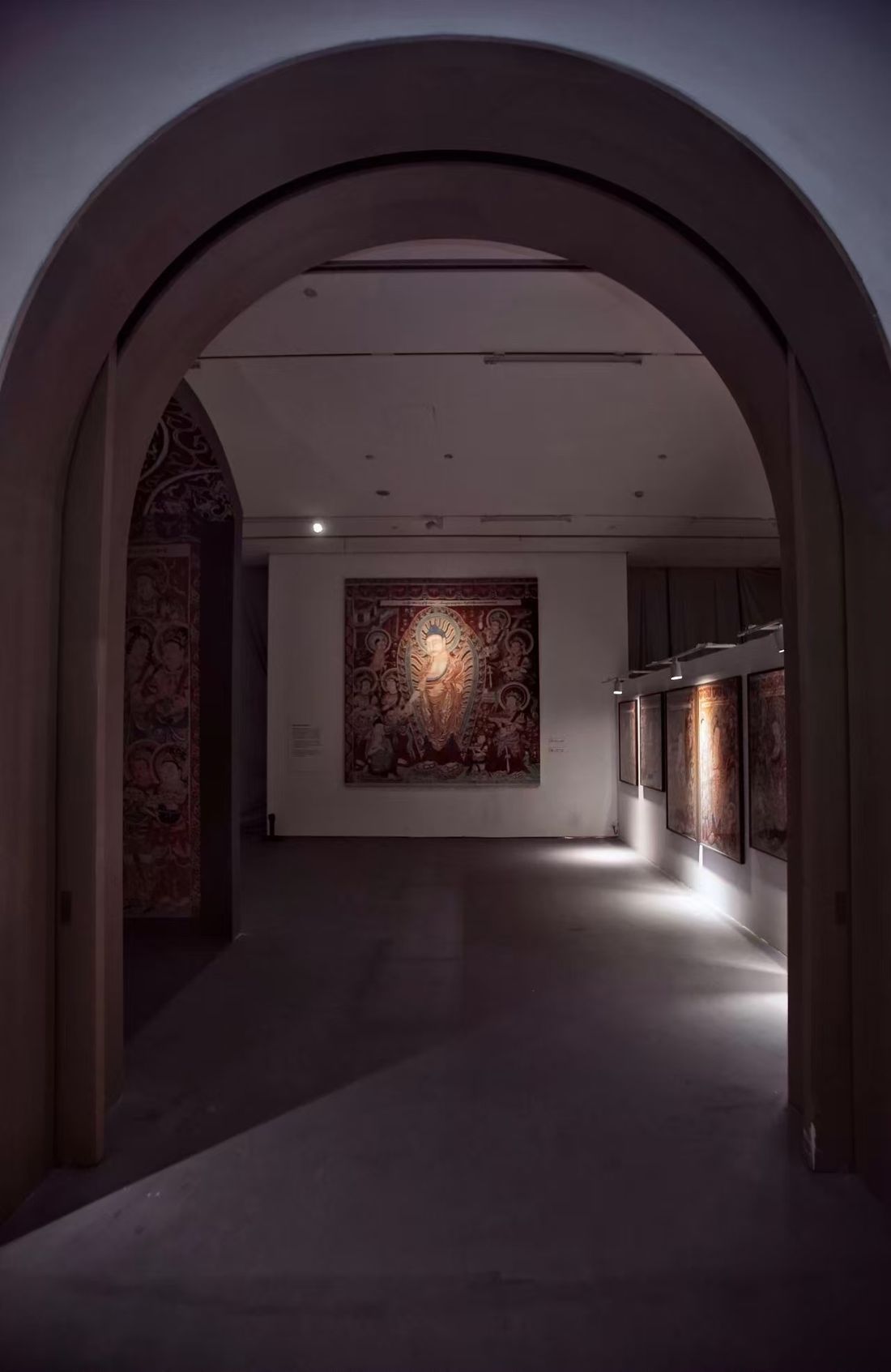
Archway · Installation View© CHEONBULDONG
Pattern and Carpet Gallery
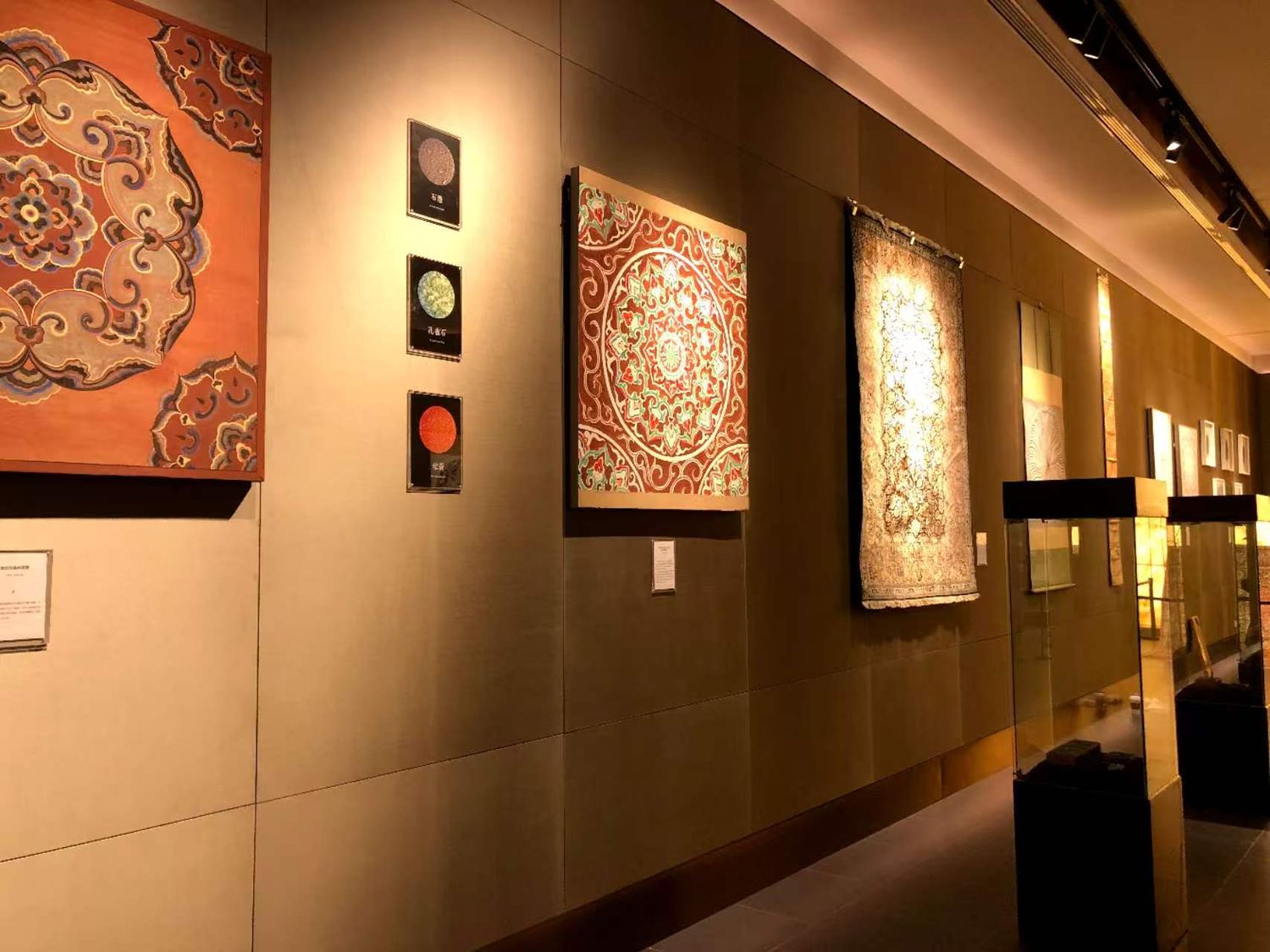
Motifs and Carpets · Installation View© CHEONBULDONG
Offerings to Bodhisattva Exhibition Wall
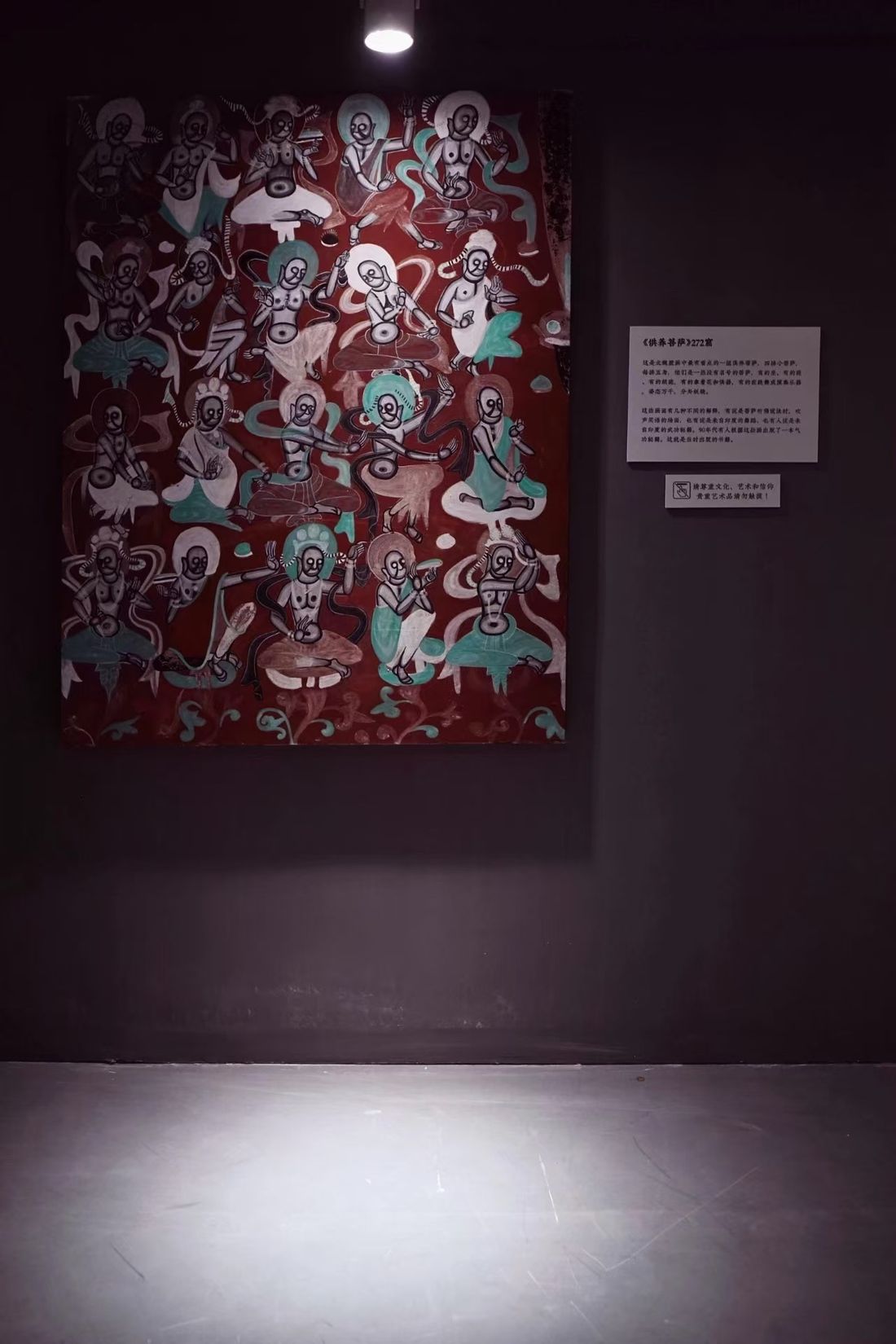
"Bodhisattva Making Offerings" · Exhibition Wall© CHEONBULDONG
mural gallery
Mural Gallery · Installation View© CHEONBULDONG
Exhibition of minerals and pigments
Minerals and Pigments · Installation View© CHEONBULDONG
Visitors in the exhibition hall
Visitors in the Gallery© CHEONBULDONG
Nanjing Exhibition · Installation View
Nanjing · Installation View© CHEONBULDONG

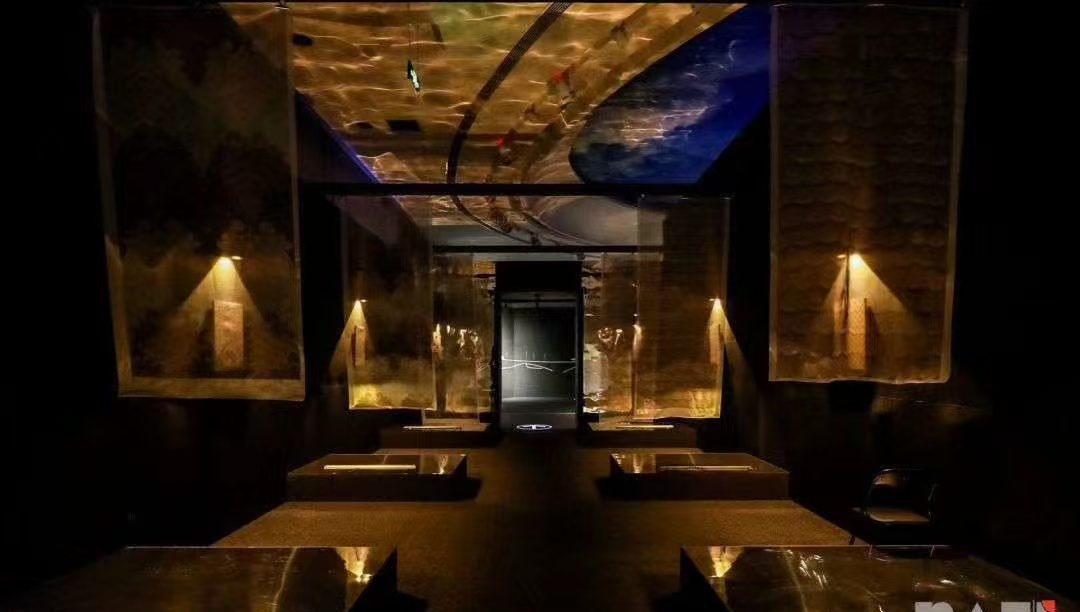
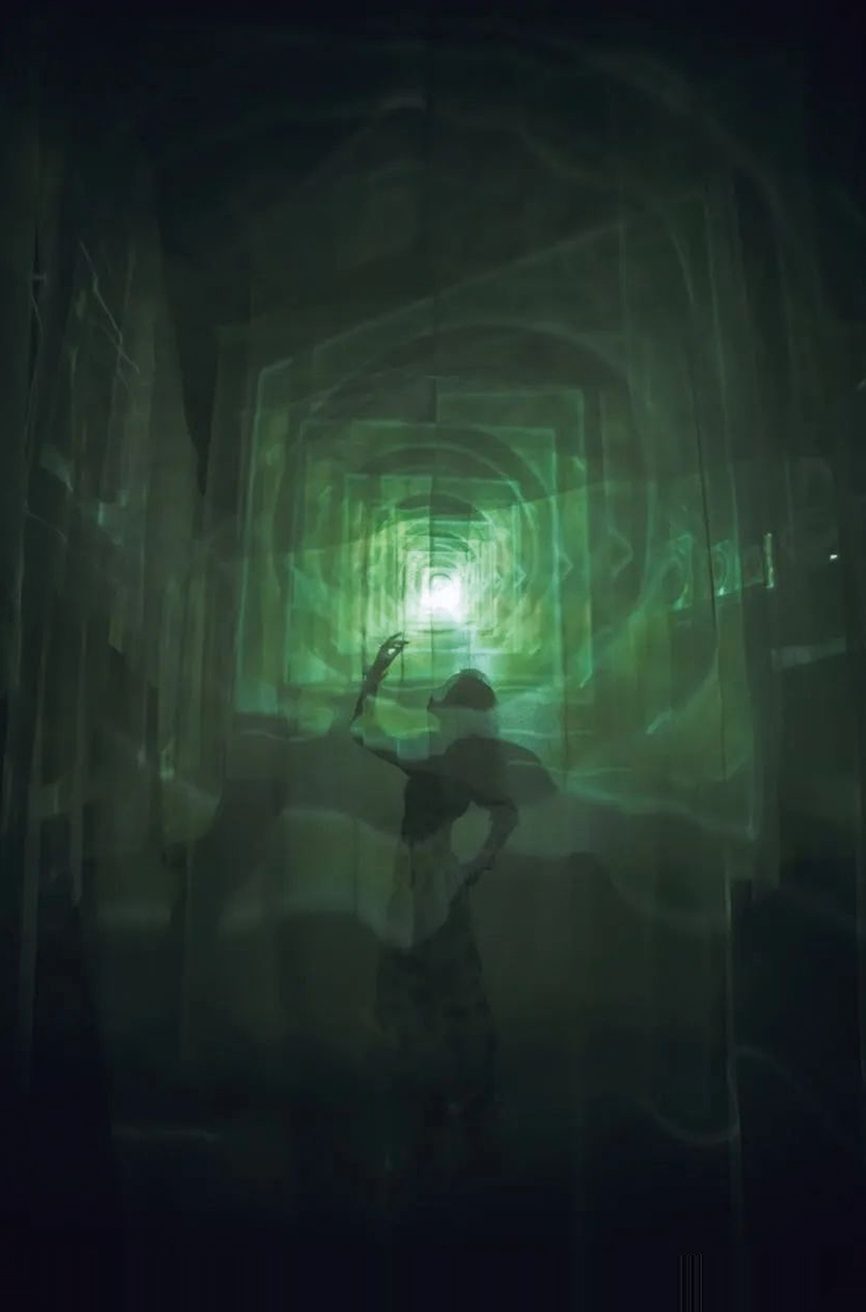
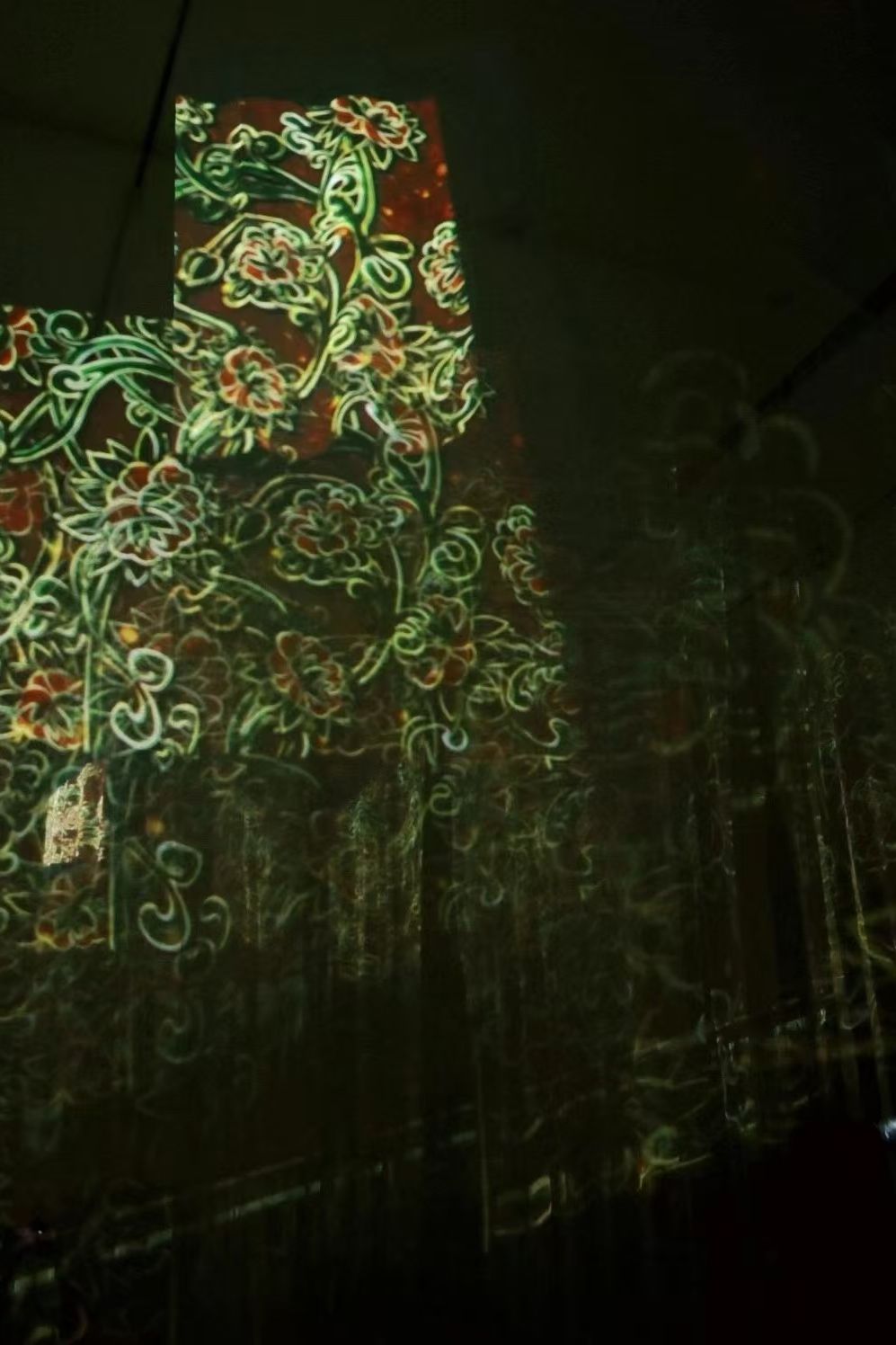
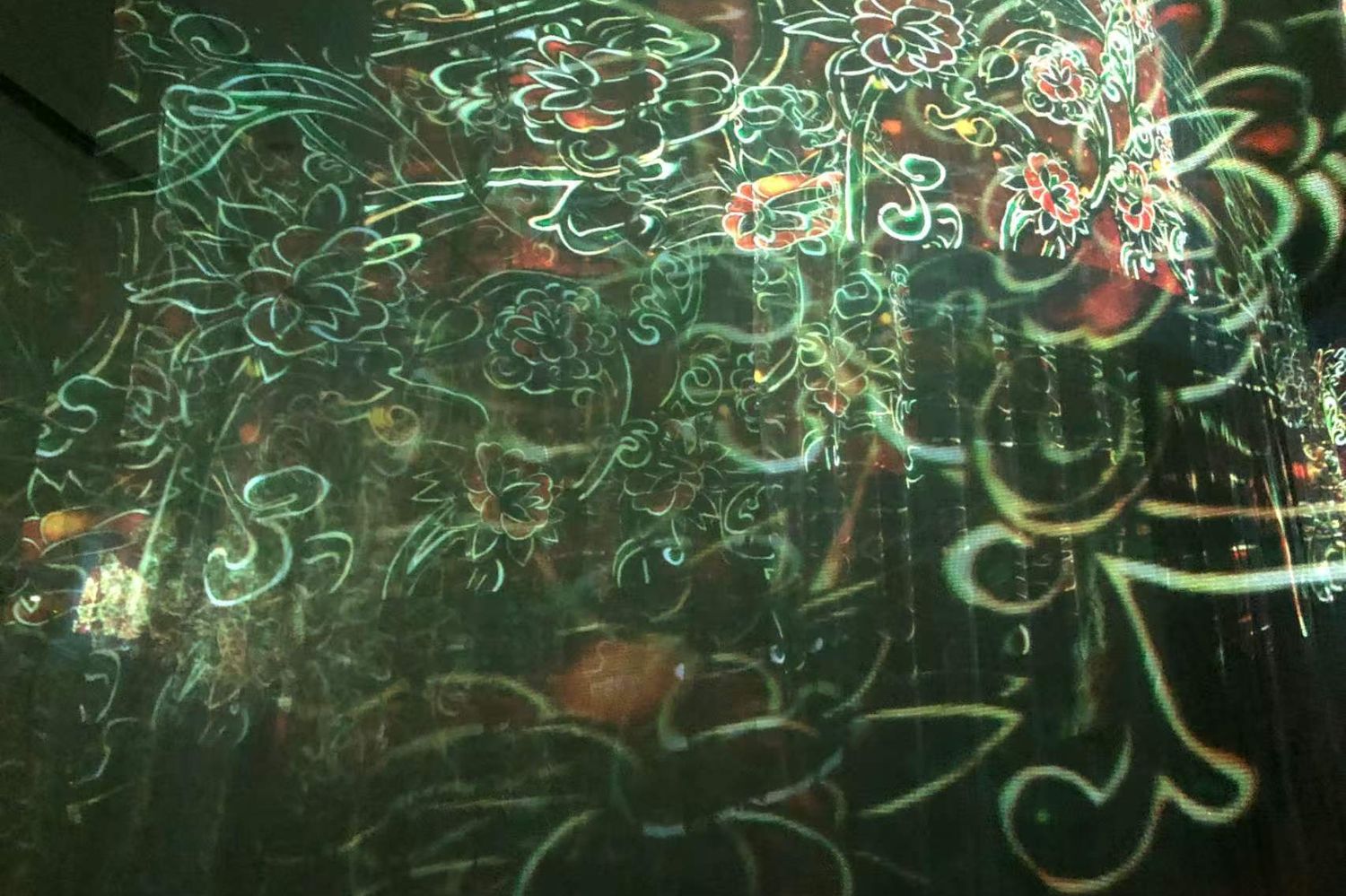
Immersive Installations · Sound and Light

Immersive light and shadow installation
"The Realm of Illusion"Immersive sound and light installation © CHEONBULDONG
Realm of Illusion · Immersive Installation
"The Realm of Illusion"Immersive sound and light installation © CHEONBULDONG
Realm of Illusion · Immersive Installation
"The Realm of Illusion"Exhibition site © CHEONBULDONG
light box pattern projection
Projected Motifs · Installation View© CHEONBULDONG
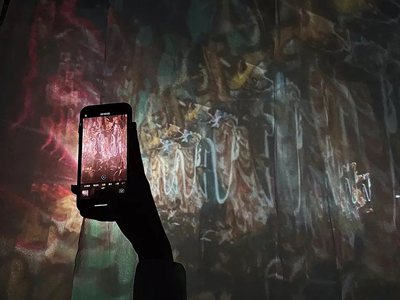
Audience taking photos of light and shadow wall
Visitors at the Light Installation© CHEONBULDONG
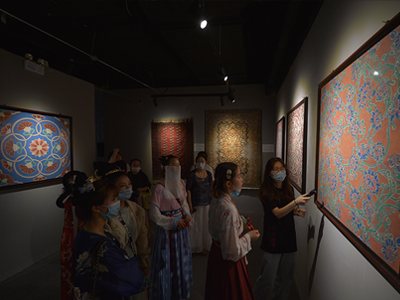
The audience listens to the explanation
A Guided Gallery Visit© CHEONBULDONG
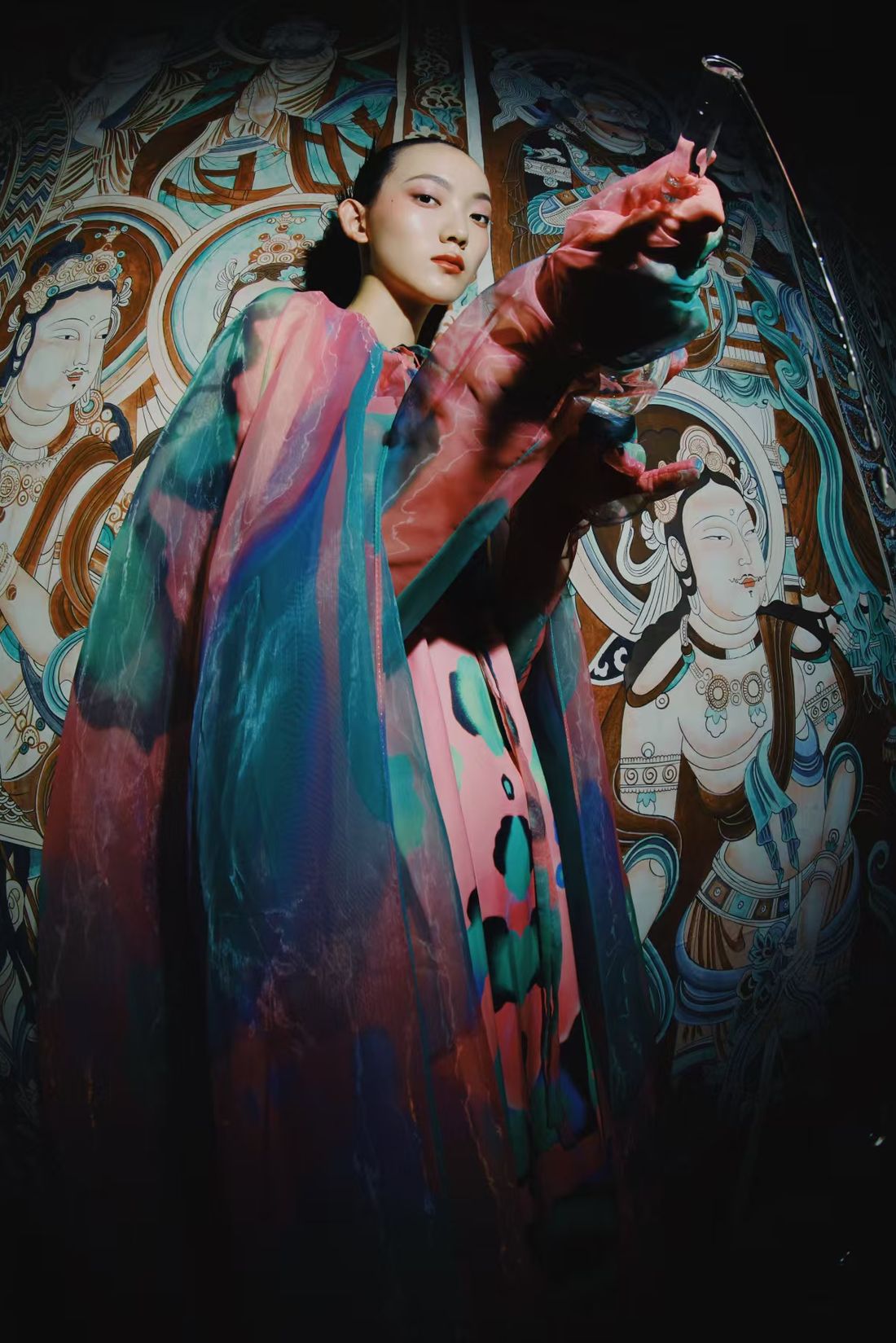
Jimmy You fashion shoot
Jimmy You fashion shootThe exhibition through a contemporary lens
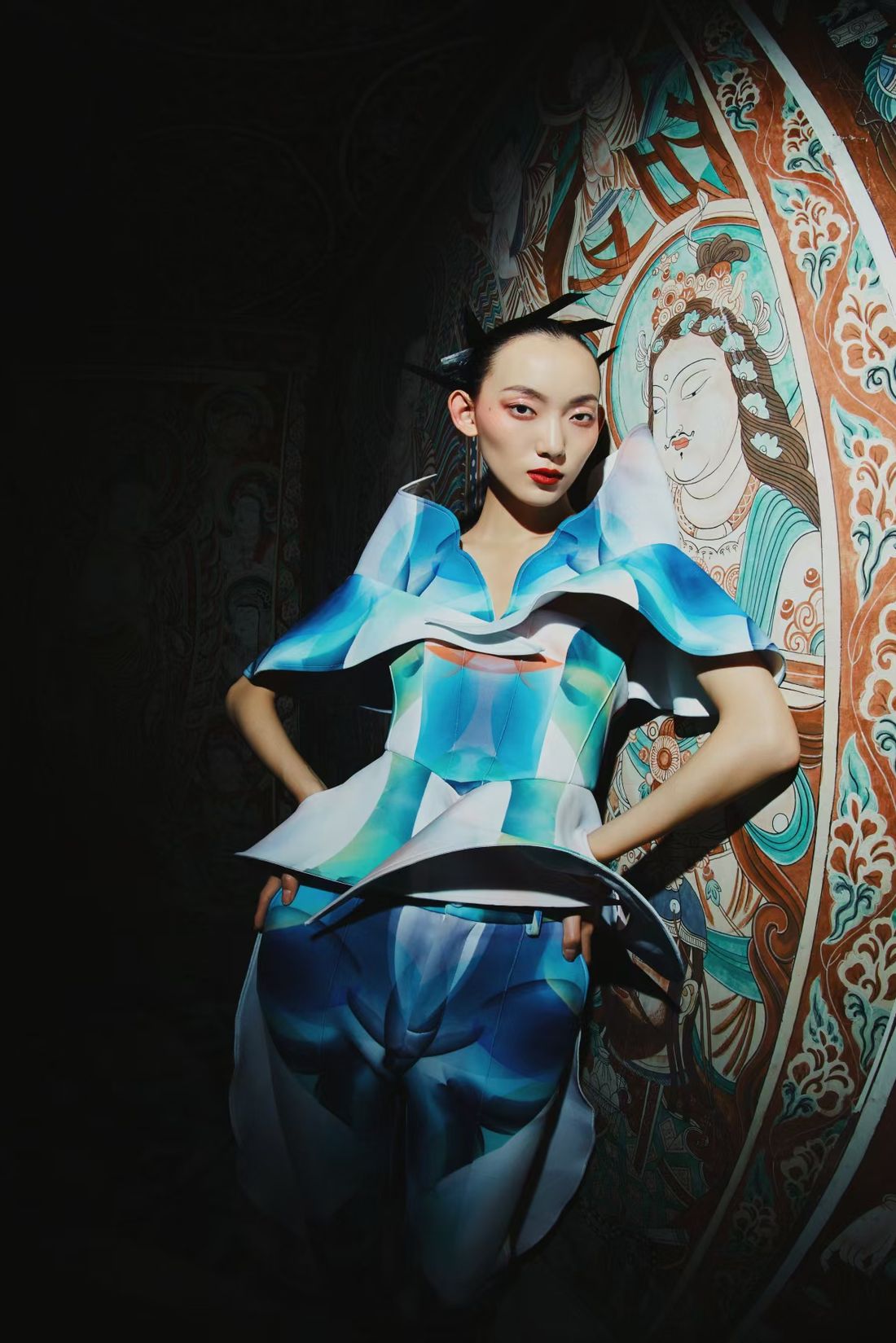
Jimmy You fashion shoot
Jimmy You fashion shootThe exhibition through a contemporary lens

“Sometimes we volunteer as guides. We meet visitors from all walks of life who stand quietly before the murals, sometimes for an entire day.”

—“The Future”, A Thousand Years of Splendor.

Fifteen years brought us here. What comes next?

Finale · An Answer for the Future

15 years · Colour research in seven countries · Tens of millions of words of source material
Hundreds of motifs · More than a hundred paintings
A twenty-one-metre corridor · 500,000 visitors

Half the corridor still waits.

“Half of Gaochang’s corridor remains unfinished. A corner of one painting still eludes us. Countless Silk Road caves remain at risk. The world deserves to know this history of cultures meeting.”

As more caves close and older scholars pass away, the surviving memories of lost works become harder to recover.

“We are still racing against time.”

—“The Future”, A Thousand Years of Splendor (TAIS Art Museum, 2020).

“Perhaps, with everyone’s help, this work will become an answer for the future.”

—“The Future”, A Thousand Years of Splendor.